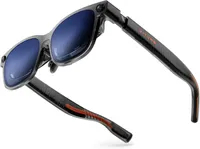
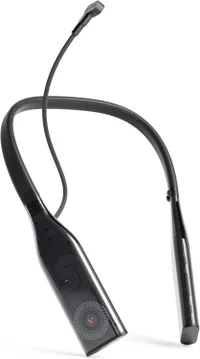
Let's get one thing straight immediately: if you wear the Viture Luma Ultra and the Pro Neckband in public, you are going to look like an absolute melt. That’s British speak for “a dweeb.”
People will stare. Teenagers will point. Baristas will ask if you need medical assistance. But sitting in Costa Coffee with a 120-inch OLED screen floating over my gigantic black americano, playing Nvidia GeForce Now while looking like a low-budget cyberpunk extra... I quickly realized the joke was entirely on them.
It got even better when I sat in the pub with no TV, but still managed to get the big screen experience watching England play in the World Cup! The old men sipping bitters can stare all they want, but I’m watching the Jude Bellingham masterclass while they’re not.
Now, obviously this is purpose-built for home and flight use — a separate wearable paired with 6DoF-enabled glasses for a spatial experience, which is Android-armed to download and take all your content with you for offline viewing. Wearing it in public like this is a ludicrous stress test “in the name of science.”
But it proved that while this combo of devices were a bit of a mess a few months ago before the software updates, Viture’s platform is maturing nicely here. It’s not the Android XR levels of the Xreal Aura, but it’s the essentials with a little extra on the side for (probably) far cheaper.
What I’m using this combo for mostly

So my two main use cases have been light work and play. The OS is built on Android 13, so you get all the Google apps you need to get stuff done, alongside Viture’s built-in entertainment apps and the Play Store to snag things like Netflix.
Let’s start with play, because this one is pretty obvious, right? It’s got Bluetooth, so you can connect a controller, fire up cloud gaming services like GeForce Now and play to your heart’s content on a giant screen. Also, shout-out to Viture’s PSPlay and XBXPlay apps too, which can stream your console to your glasses via remote play — these work perfect for when your wife wants to watch Bake Off, but you don’t want to stop your season on FC 26.
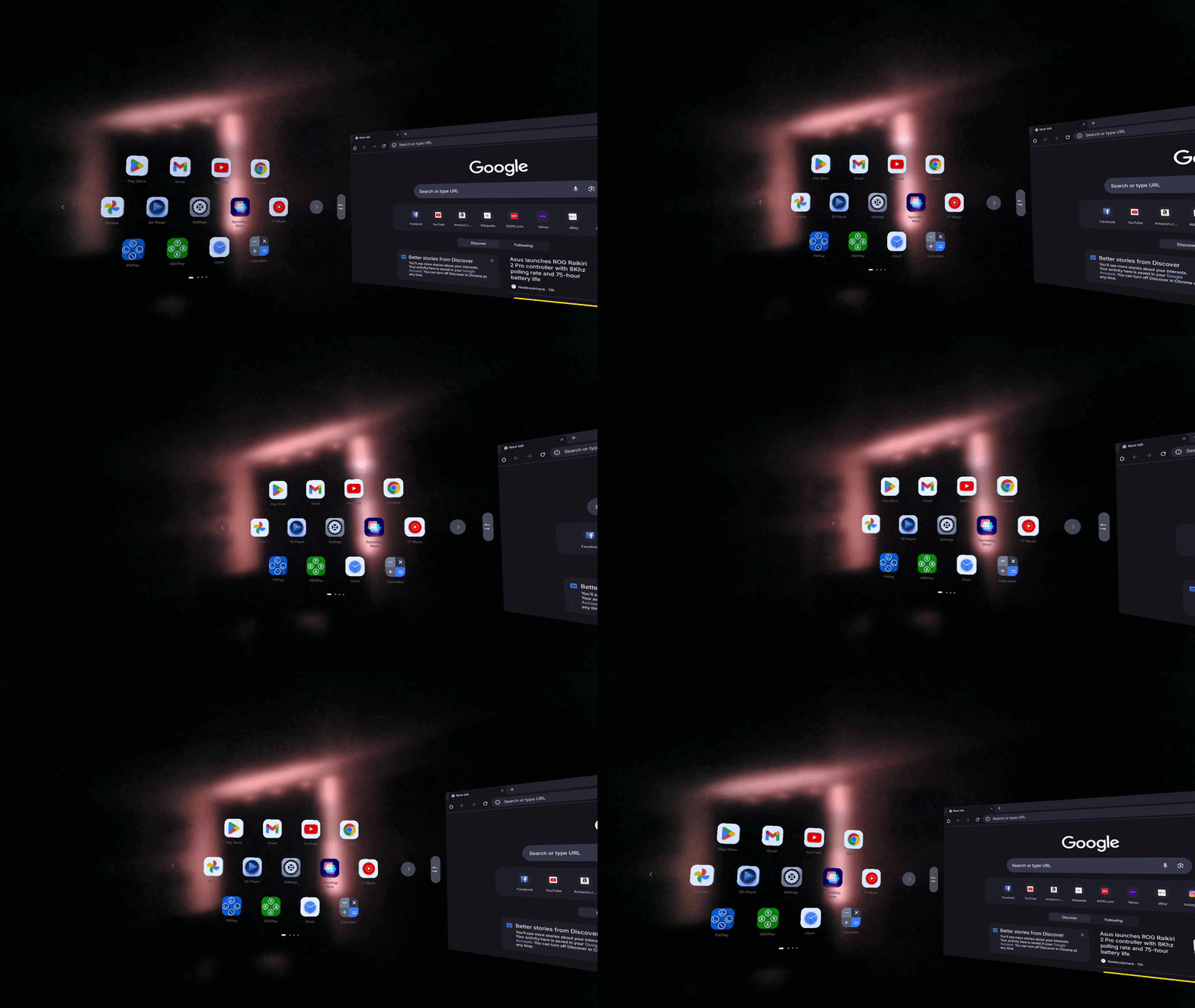
Then there’s the work side of it. Multi-screen support means I can have my Google Drive, Google Docs and Chrome open all at the same time to refer to files, research stories and type away on my bluetooth-connected keyboard. For anything more intensive, it’s clear that spatial computing still has some ways to go. But for that casual day-to-day, this has been fun.
Then we have to talk about the entertainment side of it, which now comes with Immersive 3D. If you’re new to this, Viture’s Spacewalker app has been dabbling with real-time 2D-to-3D content conversion on other devices, and it’s finally made its way to the Pro Neckband.
Is it a gimmick? Sure, just like how I’ve found 3D cinema to always be a gimmick. But I can’t deny it’s a damn fun gimmick to have when depth is added to the intense racing action scenes of something like “The Fast & The Furious.”
Truly spatial…ish

Viture’s been quietly updating the Pro Neckband in the background since it released a while ago, and one of the more crucial ones is making it play nice with that chip in the Luma Ultra glasses and the cameras for 6DoF tracking.
99% of AR glasses give you three degrees of freedom (3DoF), which registers rotational movement. Imagine sitting still in a swivel chair — you can look all around you (up, down, left and right) and the screen will stay locked in front of you. Where the illusion of tracking ends is if you were to lean forward to the screen, or get up and try to walk around it. The screen will stay the same distance from your eyes because there isn’t the tracking tech to do so.
Enter 6DoF, which takes those first three degrees, but then adds surging (moving forward and backward), heaving (moving up and down) and swaying (strafing left and right). You can physically walk around the screens floating in the space around you. That chip in the Luma Ultra tying up nicely with the built-in cameras and the computational power of the Neckband Pro allows for this…sort of.

You see, it all starts to kind of become awkward when hand tracking is involved. First of all, shout-out to Viture for figuring out tracking my tattoo-covered hands — both they and Xreal had this issue before, so it’s great to see everybody overcome my unnecessary challenge!
But it’s not completely reliable, and there are a few times when you’ll be left waving at yourself and pinching wildly in the air to try and get the system to recognize you. In those moments, however, there’s the Neckband Pro remote app for a trackpad or pointer. These came in clutch on flights (when 6DoF tracking is basically out the window) and for fixing those frustrating moments.
Not for everyone

So what did I learn from my experiment? Well, Viture’s been quietly cooking here. When I first got the Pro Neckband about a year ago, it wasn’t ready for primetime. The rough idea was there, but the experience was all over the place with apps flying away and near-zero tracking reliability.
The Neckband Pro itself is a lot better for users now, and when testing it with 3DoF glasses like the Beast and Luma Pro (even other glasses like the Xreal One with that adaptor), you’re now getting a solid spatial computing experience on-the-go with a decent-enough battery life to take you through around 3.5 hours in my time using it.

Would I like a longer battery life? Absolutely, and hopefully we can get some silicon-carbon battery tech to make up for the shortfall. Plus with the internals packed so tightly into this, make sure you don’t obscure the fan on the left arm.
But throw the Luma Ultra into the mix, and it clicks just that little bit better with the 6DoF capabilities and improved hand tracking. However, I’m fully aware this will not be a must-buy for everyone. The combination is nearly $900, which is a lot. Will it be cheaper than Xreal Aura? I’m willing to bet it will be, but that’s beside the point because $900 is VR headset money. You could get a couple of Meta Quest 3Ses for that.
However, if ultra portability is your thing, and your use cases can find that sweet spot that really makes the most of its capabilities, then you’ll have a lot of fun with it.

Follow Tom's Guide on Google News and add us as a preferred source to get our up-to-date news, analysis, and reviews in your feeds.
More from Tom's Guide
- I tested the $299 X By Xreal a01+ AR glasses over 25,000 miles of travel — they’re proof that we don’t need fancy spatial tracking, we just need a cheaper screen
- These camera-less smart glasses are a great anti-Meta alternative, but the AI still wants to record your life
- I’ve traveled over 50,000 miles testing smart glasses in 2026 — here are my 3 favorites that have launched this year so far