We've all been there. You arrive at work feeling tired and bleary-eyed after a night plagued by insomnia, only to be greeted by your bright-eyed co-worker who's running on a full sleep. Pouring yourself an extra-strong black coffee, you ask yourself, "What's the difference between me and them?"
Turns out, there can be a number of key differences between an insomniac and someone who gets at least seven hours of sleep a night. "People who consistently sleep well don't necessarily have perfect routines, but they often share certain behaviours," says Sam Sadighi, a certified sleep practitioner at Get Laid Beds.
Although everyone's experience is different, Sadighi says that people with insomnia also "often share some common patterns" that can disrupt sleep.
Here Saighi and Mike Wakeman, a pharmacist and sleep researcher at Evera Nutrition, reveal the key habits that separate the sleep deprived from those getting plenty of rest. Here are the five habits of insomniacs vs the top three habits for better sleep...
Key takeaways
- Insomniacs often worry about not getting enough sleep and clock watch, which can exacerbate their sleep issues.
- Irregular betimes and wake-up times are also common among insomniacs.
- People who consistently get 7 hours+ sleep a night often get enough daylight and establish a consistent sleep schedule and relaxing nighttime routine.
- However, good sleep habits aren't always enough to treat chronic insomnia. Anyone experiencing persistent sleep problems should speak to a doctor.
5 key differences: What insomniacs do
1. They try to force sleep
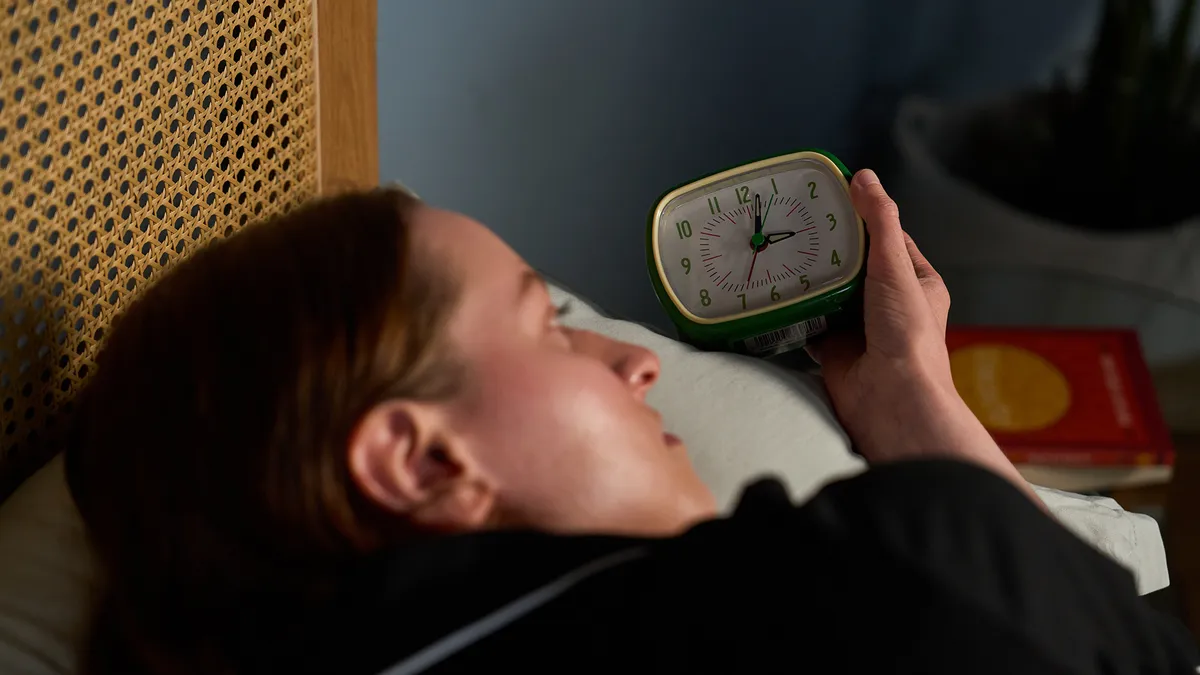
If you've ever found yourself, in the middle of the night, clock watching or calculating how much time you have left before you need to get up, then you're likely just making the problem worse.
"Automatic negative thoughts such as ‘I’ll never function tomorrow if I don’t fall asleep in the next 5 minutes…’ start to creep in," says Sadighi. "This is just going to stress you out and push sleep further away."
2. They have irregular sleep patterns
One of the most common sleep habits associated with insomnia is going to bed and waking up at different times every day.
"Going to bed at 10 p.m. one night and 1 a.m. the next makes it difficult for the body's internal clock to establish a consistent rhythm," says Wakeman.
"Trying to grab sleep whenever they can (understandably), means that they disrupt their circadian rhythm, which has been shown to actually make it all harder," agrees Sadighi.
3. They skip the wind-down routine

Nighttime routines should help you to relax and prepare you for bed, but not all activities that help you relax should be part of yours.
"Many people work, scroll through social media or watch television until the moment they try to sleep," says Wakeman.
In fact, every hour of screen time in bed (be it doomscrolling, answering work email, or binge-watching a new show) has been shown increase the risk of insomnia by 59%.
4. They rely on alcohol and caffeine

According, to Sadighi, many insomniacs rely on unhealthy habits to help them fall asleep or manage their daytime fatigue, but they actually exacerbate their sleep issues. She says the two main sleep crutches people use are alcohol and caffeine.
"Alcohol helps them fall asleep fast, but actually messes with their sleep cycles, and caffeine helps power them through the day, but they often have so much it then impacts the next night, causing a vicious cycle," the sleep consultant explains.
5. They stay indoors and sit too much
A 2024 study found that natural daylight, particularly in the morning, can improve sleep efficiency, while regular physical activity is consistently associated with better sleep quality.
"Spending little time outdoors and leading a sedentary lifestyle can make it harder to establish healthy sleep patterns" says Wakeman.
5 key differences: 3 things people who get 7+ hours sleep do
1. They get outside

Catching some rays may seem totally irrelevant to your sleep, but the amount of sunlight we get – and when we get it – can help us sleep.
"Daylight in the mornings has been shown to signify to our brains that it’s time to be awake, and dim lighting in the evening tells it that it’s time to start winding down ready for sleep," explains Sadighi.
Research shows that our 24-hour body clock hinges on light to know that it's daytime, as light triggers the production of energy-boosting hormone cortisol, and cues your body to produce sleep-promoting hormone melatonin later in the day.
2. They have a consistent sleep and wake time
The gold-standard sleep habit is setting yourself a bedtime and sticking to it. "And this includes weekends and days off," asserts Sadighi.
"People who sleep well often wake at similar times each day, helping reinforce their natural body clock," says Wakeman.
In fact, having fixed wake-up times and consistent bedtimes is a core part of Cognitive Behavioral Therapy for Insomnia (CBT-I), with studies showing that consistent bedtimes and wake-up times can help prevent adverse heath outcomes.
3. They have a wind-down routine

We've already established that working late and doomscrolling is the ultimate don't at bedtime if you want to fall asleep fast.
However, freeing yourself from emails and social media in the posts allows you to create a cosy and relaxing atmosphere that prepares your mind and body for sleep.
"Good sleepers often develop a regular bedtime routine," Wakeman suggests. "This might include dimming lights, putting away electronic devices, reading, gentle stretching or taking a warm bath."
"Whether it's breathing exercises or another relaxing activity, they allow both mind and body to transition towards sleep," explains Sadighi.
What is insomnia?

Sadighi defines insomnia as a sleep disorder that causes difficulty falling asleep, staying asleep, or waking up too early (or sometimes a combo of all three).
"Acute insomnia usually lasts for a few days or weeks and is usually triggered by something stressful or other life events," the founder of Easy Sleep Solutions says.
She goes on to say that acute insomnia often improves once the stress has reduced, but chronic insomnia can be trickier to treat.
"Chronic insomnia is where someone has difficulty falling asleep, staying asleep or waking too early for at least three nights a week for at least three months."
Why do we need 7+ hours of sleep?

Plenty of research now proves that getting at least seven hours of sleep a night is paramount for optimal health. In fact, a study reported that getting less than seven hours of sleep a night sleep decreases life expectancy more than a poor diet or lack of exercise.
Another study, which served as a springboard for the 7:1 sleep rule, found that getting at least seven hours of sleep (combined with consistently falling asleep within an hour window) five nights a week increases life expectancy.
“Typically most adults need around seven to nine hours of sleep each night for their body and brain to function at their best," says Wakeman.
"Research shows that during sleep, the brain consolidates memories, muscles recover, hormones are regulated and the immune system carries out important repair processes."
Can good sleep habits always cure insomnia?
While good sleep habits can improve sleep disorders, adopting these patterns won't cure all insomnia cases.
"Good sleep hygiene helpful for supporting healthy sleep, but on their own they are rarely enough to resolve chronic insomnia," warns Sadighi.
The sleep practitioner and psychologist says that the most effective first-line treatment for chronic insomnia is CBT-I, as it addresses the behaviours and thought patterns that maintain insomnia.

Different approaches are also need if insomnia co-occurs with conditions such mental health issues, sleep apnea, or and restless leg syndrome.
"In these cases, both the insomnia and any underlying factors may need to be assessed and treated in tandem," she says.
"If someone has struggled with insomnia for a while despite practising good sleep habits, it's worth seeking assessment from a sleep specialist rather than continuing to rely solely on general sleep tips," she adds.
Products to help you fall asleep fast