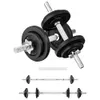
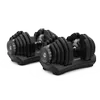
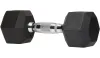
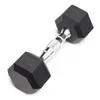
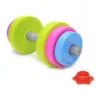
The “steering wheel” exercise targets your shoulders and engages your core muscles as well, making it a fun upper-body exercise to add to your chest day routine, as it’s a little bit unusual.
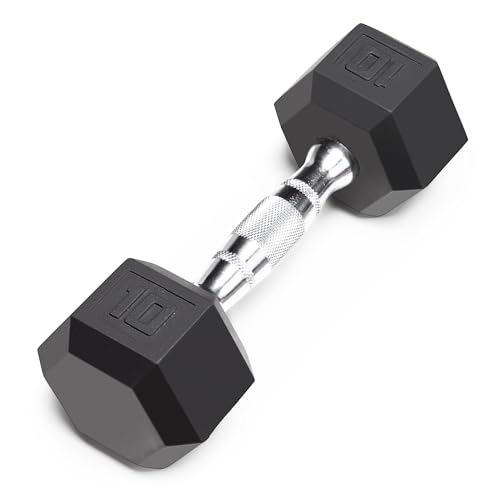
I like to use a barbell plate to really emphasize the steering wheel theme, but you can use a kettlebell or dumbbell instead. If you’re in the market for some weights, I recommend the best kettlebells for weightlifting, tested by my own fair hand.
As you’ve probably guessed, the steering wheel exercise involves holding a weight as if you were holding your steering wheel when driving, then rotating it from right to left and left to right.
Say hello to your shoulders and core — here’s how to do it.
How to do the “steering wheel” exercise
The steering wheel sounds like the sort of move you'd throw down on the dancefloor after a few beers, but while you can save it for the dancefloor, I would save it for the gym floor instead.
Grab a weight and follow these steps:
- Stand holding a weight with both hands — use a “9 and 3” hand position
- Engage your core and slightly tuck your pelvis under to maintain a strong torso without arching your back
- Relax your shoulders away from your ears — no hunching
- Extend your arms at shoulder height with a soft bend in your elbows
- Start rotating your weight from side to side, as if driving a car
- Aim for time-on-time-off, depending on your workout routine.
Test the weight first, then find a weight that feels challenging but allows you to maintain your form.
The benefits
Extending your arms and holding the position for a period of time tests the endurance and strength of your shoulders; this also holds your core muscles under tension to stabilize your torso as you stand and hold a weight away from your body.
You need your core muscles to work hard here to prevent your back from arching, especially when weight is situated away from the midline.
You need your core muscles to work hard here to prevent your back from arching, especially when weight is situated away from the midline. It's crucial for this reason alone that you choose a weight you can grip at shoulder height without losing form.
When muscles are held under tension, contracting without moving through a range of motion like flexion or extension, this is known as isometric contraction.
Isometric contractions are typically more low-impact (think planks or wall sits, for example), but kick up a deep burn in the working muscles regardless, making it a test of pure endurance.
You'll also feel the steering wheel exercise across the fronts of your shoulders, known as the anterior deltoids, and your upper chest and arms. The only movement to be generated from this move is when you begin rotating the "wheel," but everything waist-down should stay static.
How long can you hang on for?
More from Tom's Guide
- Over 60? According to a trainer, these three exercises are non-negotiable for strong, healthy knees
- Slash your biological age by up to 16 years by doing this one thing during your daily walk — new study says
- I walked 5,500 steps with the Apple Watch 10 vs Garmin Forerunner 570 — here's the winner