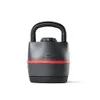
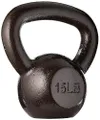
To crush the kettlebell crush curl, you just need to tighten your grip on one of the best kettlebells for weightlifting. The biceps curl variation targets — you guessed it — the biceps, using a similar arm position to the popular hammer curl.
It’s the perfect addition to stale arm workouts, so I added the kettlebell crush curl to my routine each day for one week to see what the exercise would do for my body. Spoiler before we jump in — I haven’t developed arms to rival Arnold Schwarzenegger, sadly.
While I’d need to work a little more consistently over the next few months to bulge up my biceps, I took away a few worthwhile lessons when performing crush curls regularly. Here they are.
How to do kettlebell crush curls

How:
- Flip your kettlebell bell-side up and grip it with both hands
- Position your feet hip or shoulder width apart
- Gently brace your stomach to engage your core muscles and stand tall without arching your back or leaning forward
- Start with your arms extended in front of your hips and crush the bell as hard as you can
- As you squeeze, curl the kettlebell upward slowly and with control, pause as the bell reaches your chest, then lower it back down
- Keep your elbows close to your body, and to make the move harder, remove your fingers from the bell.
I did 50 kettlebell crush curls every day for a week — here’s what happened to my upper body
Outside of a fitness challenge setting, you wouldn’t perform biceps curls every day. These small synergist muscles fatigue quickly and are less resistant to exercise stressors than big and powerful muscle groups like your glutes, quads, or various back muscles like the trapezius or latissimus dorsi.
For this reason, and depending on how you exercise, consider scheduling upper body or arm workouts several times a week to avoid overtraining.
I noticed better muscular engagement
The crush curl made it into master kettlebell trainer Mike Silverman’s 3 best kettlebell exercises for sculpting your back and biceps muscles. It’s a beautiful method for increasing muscular engagement and brings the anterior deltoids (the fronts of your shoulders) and chest muscles into the game alongside your biceps.
So, not quite the isolation we expect from a biceps curl then. And I certainly felt the difference. I slowed the exercise to four seconds, curling upward, paused at the top for two seconds, and then lowered the kettlebell for four seconds, maximizing a muscle-torching technique called time under tension.
Overall? Much better upper-body engagement. And I worked harder to control the bell.
I lifted lighter weight
I usually choose 10kg weights for regular dumbbell biceps curls, but I didn’t need anywhere near a 20kg kettlebell to build intensity for crush curls. Just slowing the exercise and crushing the bell with both hands did enough to send me into familiar shaky arm pain zone territory. I could lift lighter and focus on form while still working my arms hard.
I fatigued quicker
I don’t find 50 biceps curls overly challenging outside the expected fatigue you get from isolating one muscle group, but I fatigued far quicker with 50 crush curls. The engagement from crushing the bell with both hands felt intense, and I got a serious pump from each rep.
Biceps curls are mostly programmed as accessory exercises alongside lifts like the ‘big 5’ in weight training, including the bench press or overhead press. If you plan to include kettlebell crush curls in your workouts, consider the order — you’ll want your biceps to be fresh to support compound exercises first, finishing on exhaustive sets like these to fatigue them.
I set the exercise up as a finisher (if you’re short on those, we put together a bunch of fiery 5-minute finishers you can try) and hit my 50 reps as programmed. Slowing the exercise down meant it took longer than expected to complete — and my arms were totally smoked by the end of 5 sets of 10 reps daily. Job done.
Verdict
The kettlebell crush curl is one to consider if you'd like to up the ante and engage more muscle groups. I find it more efficient than standard biceps curls, and more fun, too. If you want to make the upper body kettlebell exercise even harder, lift your fingers away and press with your palms only.
I certainly plan to add the kettlebell crush curl to more upper-body workouts as an alternative to biceps curls; they hit more muscles, improve muscular engagement, and squeezing your kettlebell as hard as you can during reps is a total stress-buster.
More from Tom's Guide
- Forget crunches — build a stronger core with this 10-minute standing abs workout
- Zumba finally launches an app, so you can dance your way fit at home
- My favorite high-tech Columbia insulated jacket is now just $55 at REI