I test fitness tech for a living, and two of the newest products on my wrist right now are the Garmin Forerunner 70, Garmin’s latest, entry-level running watch, and the Fitbit Air, a $99 screenless fitness tracker. To see how the affordable Fitbit compared to Garmin’s $249 Foreunner 70, I strapped both to my wrist and headed out for a 4-mile (6.4-kilometer) run.
Of course, to truly place the two watches head-to-head, we’d need to do more extensive testing, and we will, but after seeing what happened when my colleague Dan took these devices on a walk test, I was intrigued and ready to test for myself. Read on to find out more.
Fitbit Air vs Garmin Forerunner 70: The main differences
Of course, before we dive into my results, it’s worth pointing out the very obvious differences between the two fitness trackers. Firstly, from a price perspective, the Fitbit Air is $99/£85, and the Garmin Forerunner 70 is $249/£219.
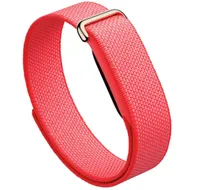
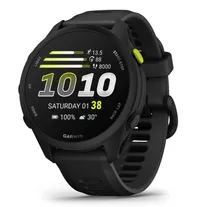
The Fitbit Air is completely screenless, like the Whoop 5.0 or the Oura Ring 5; it’s designed to disappear and silently track all your health metrics completely. To check on any progress, you’ll need to use the Google Health app. The Garmin Forerunner 70 has a 1.2-inch AMOLED touchscreen. You’ll be able to use the watch to check your stats on the run and your smartphone notifications throughout the day.

From a GPS perspective, the Fitbit Air doesn’t have any. To track an outdoor run, it uses the GPS from your phone. The Garmin Forerunner 70 has built-in multi-band GPS, so if you’re looking for a device to use to train for your first 5K, it’s a no-brainer.
Finally, to unlock AI-powered health coaching, which, during my testing, I genuinely found useful, you’ll need to subscribe to Google Health Premium. This costs an additional $9.99/£7.99 per month. Garmin’s Connect app is free.

Fitbit Air vs Garmin Forerunner 70: Run test
The chances are, however, most people aren’t deciding which of these two devices to buy, as they serve different purposes. So let’s jump into how the $99 Fitbit Air compares to the Garmin Forerunner 70, which is more than double the price.
It’s worth noting that I didn’t set the run up on the Google Health app; I let the tracker use the auto-detect workout feature to realize I was running. Because of this, there is no GPS map from the Fitbit.
The Garmin Forerunner 70 recorded my run as 4 miles exactly, taking 32 minutes and 51 seconds, with an average pace of 8:12 minutes per mile. The Fitbit Air recorded my run as 3.8 miles, but said I was running for 48 minutes and 36 seconds, and that my average pace was 12:45 minutes per mile.
Of course, this issue is almost definitely down to the fact that I walked my son to nursery pre-run, and home from the coffee shop post-run. Plus, without telling the tracker I’d started a workout, it obviously didn’t start recording at the right time, hence the difference in mileage.

From a heart rate perspective, however, the $99 tracker was pretty much spot on. My Garmin Forerunner 70 recorded my average heart rate as 143 beats per minute. If I take out the data from my walk to my son’s daycare, the Fitbit Air had a similar reading of 145 beats per minute.
The Forerunner 70 predicted I burned a total of 316 active calories on my run. The Fitbit Air estimated it was 317 calories.
Fitbit Air vs Garmin Forerunner 70: Verdict
While I’m impressed with how well the Fitbit Air read my heart rate on the run, I’d say if you are using the affordable device to track your running workouts, it’s essential to start the workout in the companion app itself to avoid the auto-detect issues I had.
Of course, one downside to all of the screenless wearables is that you get no live feedback when running, unless you look at your phone, but this isn’t a bad thing. Running to feel is an essential part of most training blocks, and every running coach I’ve ever worked with has encouraged me to ignore my watch and listen to my body, especially on easy runs.
I’ll be doing more testing, but from this easy run, I’m impressed at how accurate the Fitbit Air was when measuring my heart rate. Of course, if you’re doing any serious training, I’d still recommend the Garmin, but if you’re looking to keep an eye on your daily stats, with a tracker that disappears on your wrist, the Fitbit Air is a strong contender.

Follow Tom's Guide on Google News and add us as a preferred source to get our up-to-date news, analysis, and reviews in your feeds.
More from Tom's Guide
- Garmin just added WhatsApp support to a huge number of watches — here’s how to unlock it
- The Fitbit Air is basically just a screen-less Fitbit Inspire 3 — and that’s a very good thing
- I spent one week with a wallet-friendly Garmin Forerunner 970 dupe — 5 things that stand out about the $300 cheaper Amazfit Cheetah 2 Pro