Which new screen-free fitness tracker is more accurate, the Fitbit Air or the Garmin Cirqa? I decided to find out by popping one on either wrist and logging a long walk.
Even though the Garmin Cirqa is twice the cost of the Fitbit Air — $199 vs $99 — these two trackers have a lot in common. Screen-free, your primary method for interacting with either is through the companion app. That said, the Cirqa also has one physical button to start and stop workouts.
More importantly, neither has onboard GPS, so both require you to bring your paired phone along when logging an outdoor workout so that they can piggyback off its location and elevation data.
Now, on to the test!
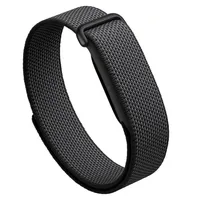
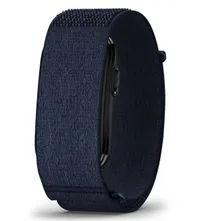
Fitbit Air vs Garmin Cirqa: Walk test rules

I manually counted 7,000 steps — using my trusty $6 tally counter to log every hundred — with the Fitbit Air on my left wrist and the Garmin Cirqa on my right wrist to determine which is the more accurate fitness tracker.
I also ran Strava on my iPhone 16 Plus for additional step count, distance, elevation, and pace data. For the Fitbit Air, I manually began a walking workout from the Google Health app. For the Garmin Cirqa, I started the workout by pressing the single button. This proved to be a mistake.
Fitbit Air vs Garmin Cirqa: Walk test results
| Header Cell - Column 0 | Fitbit Air |
Garmin Cirqa |
Control |
|---|---|---|---|
Steps |
6,990 steps |
7,070 steps |
7,000 steps (manual count) |
Distance |
3.86 miles |
not provided |
3.86 miles (Strava) |
Climb |
236 feet |
not provided |
405 feet (Strava) |
Average pace |
16 mins 17 secs |
not provided |
16 mins 35 secs (Strava) |
Average heart rate |
115 bpm |
123 bpm |
n/a |
Max heart rate |
135 bpm |
160 bpm |
n/a |
Calories burned |
532 calories |
464 calories |
n/a |
It took me about one hour to walk 7,000 steps around sunny Seattle, Washington, a step count total that all three tracking methods came remarkably close to. For these tests, I consider any tally within 100 steps of my actual total to be outstanding.
Ultimately, the Fitbit Air undercounted by a mere ten steps, while the Garmin Cirqa overcounted by 70. Strava, meanwhile, overcounted by ten.
Unfortunately, because the Cirqa logged my efforts as a generic workout rather than an outdoor walk, it frustratingly didn't register any distance, climb, or pace data for this test.
The Fitbit Air, on the other hand, logged the same distance as Strava, which isn't too surprising given both are making use of the same GPS data. However, its climb data is seemingly waaaay off. This is neither the first nor the second time I've had an issue with climb data when it comes to the Air.
Fortunately, the Air's pace data is much more aligned with Strava's.
The lack of consistency between the Air and Cirqa for heart rate data is a tad concerning. Without control data, it's hard to say for sure which watch is more accurate in this regard, but I suspect it's the Garmin, given my walk involved quickly ascending several very steep hills, which definitely got the blood pumping.
Samsung Galaxy Watch Ultra 2 vs Apple Watch Ultra 3: Winner

Despite continuing to struggle with climb data, the Fitbit Air beats the Garmin Cirqa in this walk test head-to-head by a small but legit margin. This is similar to the results my colleague Jane discovered when she tested these two gadgets against one another in a 4,000-step comparison.
Stay tuned for more testing and coverage of the Garmin Cirqa, including my full review, coming soon.

Follow Tom's Guide on Google News and add us as a preferred source to get our up-to-date news, analysis, and reviews in your feeds.
More from Tom's Guide
- Can the $99 Fitbit Air beat the $799 Apple Watch Ultra 3 at fitness tracking? I manually counted 4,500 steps to find out
- I walked 4,000 steps with the Apple Watch Ultra 3 vs Samsung Galaxy Watch Ultra 2 — and the winning margin was razor-thin
- Oura vs Whoop vs Fitbit Air — 5 questions to ask yourself before buying a screen-free fitness tracker