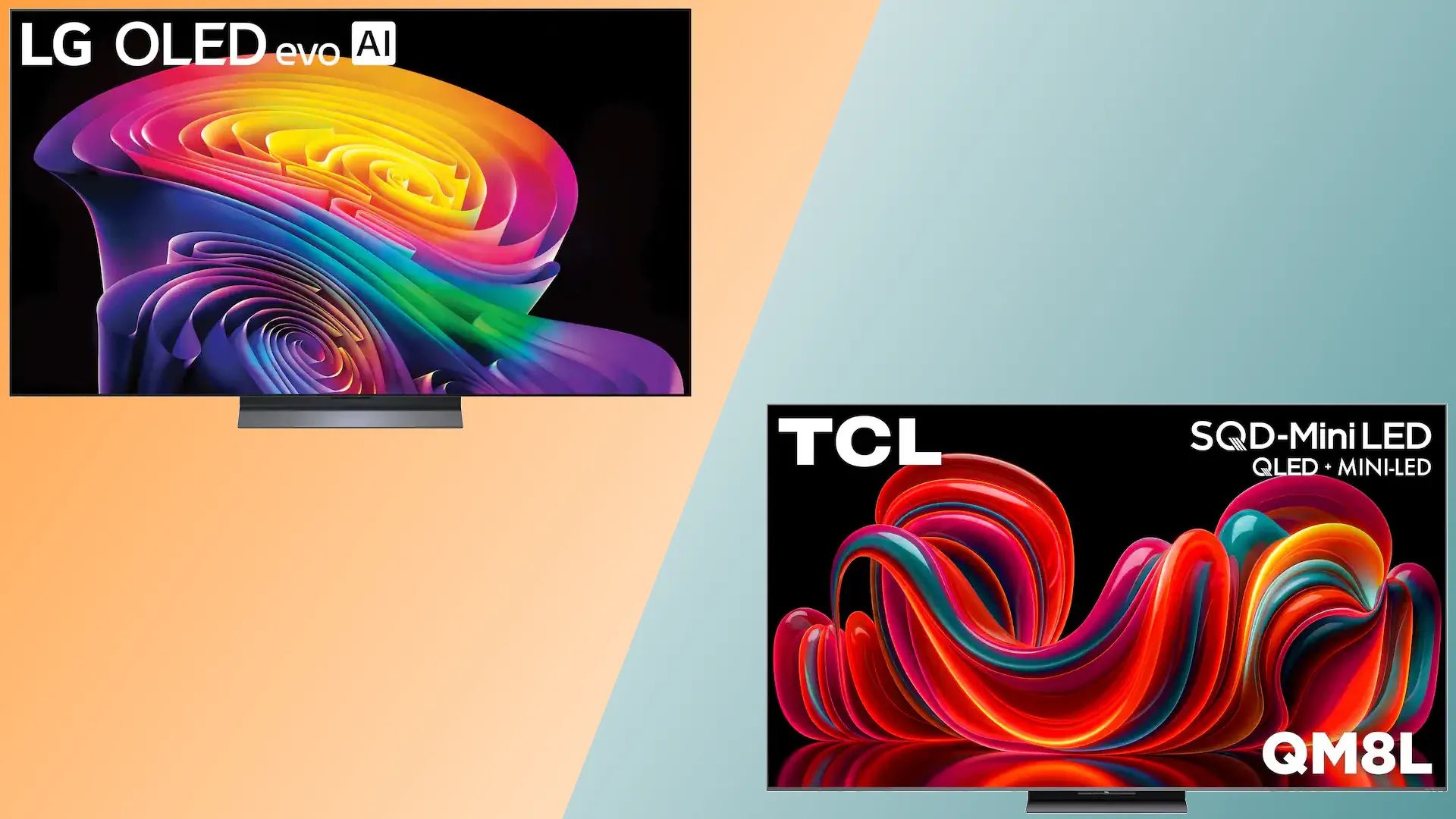
If you're shopping for a TV in 2026, there's a chance you'll find yourself choosing between two types: OLED and Super Quantum Dot (SQD) Mini-LED.
OLED TVs have been available for over a decade, while SQD Mini-LED TVs just made it to shelves this year. Several brands make and sell OLED TVs, while only one brand — TCL — offers SQD sets.
Despite the fact that OLED has been around the block much longer, both technologies come with their own strengths and weaknesses. If you're hoping to buy the best TV for your viewing habits and home setup, I can help.
OLED: strengths and weaknesses

Known as one of the top TV technologies available today, OLED has been compelling people to ooh and ahh for as long as I've been covering the TV industry. The key to its success is contrast.
While LED-based TVs rely on a dedicated backlight either behind the screen or along its edges, every single pixel in an OLED display is self-illuminating. This has a tremendously positive impact on picture quality.
Without the need for a backlight, OLED TVs can produce perfect black levels, entirely free of the hazy light bloom and haloing effect often seen on LED TVs. This has the added bonus of making bright objects appear even brighter.
Since every pixel is self-lit, the overall contrast of an OLED-driven picture is off the charts.
Since every pixel is self-lit, the overall contrast of an OLED-driven picture is off the charts. Tiny clusters of bright pixels practically pop off the screen, infusing the image with the depth and clarity your eyes are used to seeing during everyday life.
The most affordable OLED TVs are pricier than the cheapest LED TVs, while high-end OLEDs typically cost at least a few thousand bucks. This is one of the reasons why many folks — TV-reviewers and shoppers alike — gravitate towards mid-range OLED TVs like the LG C5.
OLED TVs aren't for everyone, however. While they often come with excellent color volume, bright, premium LED TVs tend to come with purer, bolder color. Some quantum dot-enhanced OLED TVs (like the Samsung S95F) can go toe to toe with the most-colorful LED TVs, but by and large, LED-based sets in upper price ranges pack punchier palettes.
And, while OLED TVs have made great strides in recent years when it comes to overall brightness, they still have quite a long way to go. This is especially true when it comes to full-screen brightness; on average, LED TVs have an overall brighter presentation, as OLEDs need to regulate their heat more diligently.
Super Quantum Dot: strengths and weaknesses

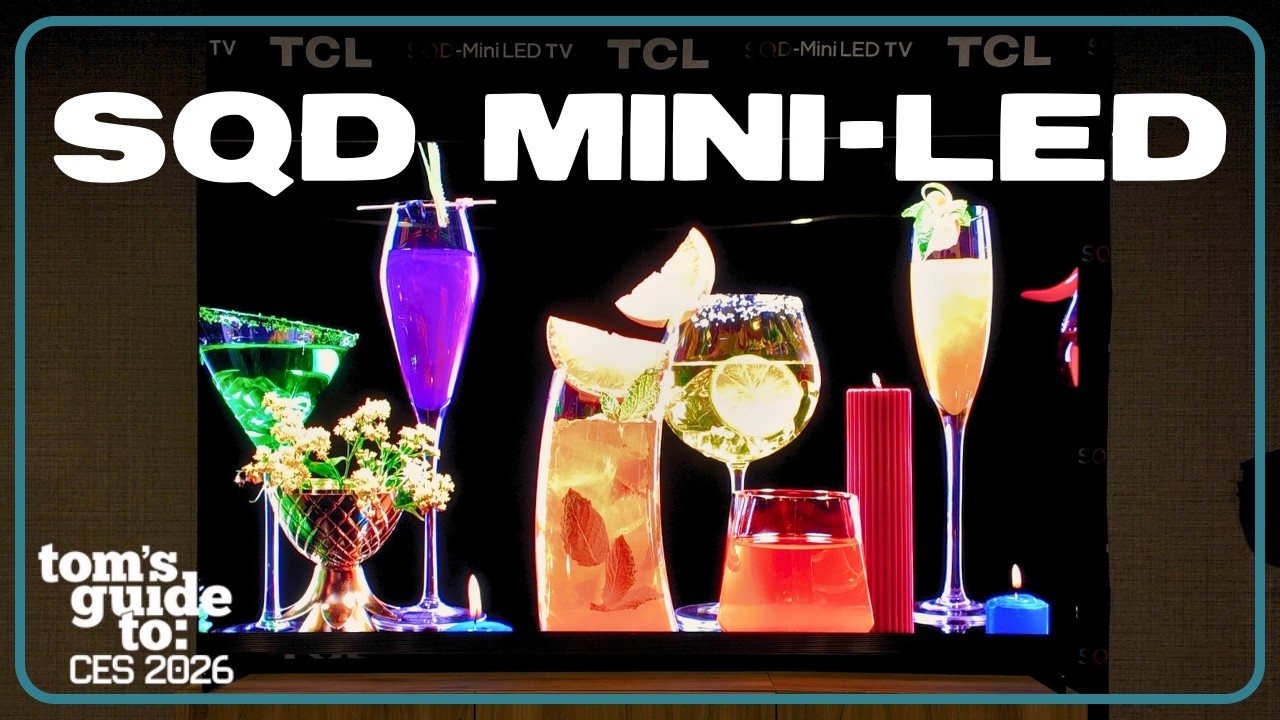
SQD TVs are a new spin on the tried-and-true combo of Mini-LED backlighting and quantum dot color. Despite many similarities between good ol' fashioned QLEDs and SQD TVs, the latter promises — and, according to recent test results, delivers — brighter, purer color than what you'll usually see on an LED TV with garden-variety quantum dots.
The Super Quantum Dot recipe is comprised of several ingredients: reformulated quantum dots; a new, advanced color filter to harness those quantum dots; and some onboard, software-based algorithms designed to keep colors consistent. (TCL, the brand behind SQD technology, refers to that last bit as its Advanced Color Purity Algorithm.)
We've had the luxury of testing two SQD TVs so far in 2026 —the TCL X11L and the TCL QM8L — and the results confirm that SQD technology is pushing brighter, bolder color compared to most quantum dot-equipped LED TVs. Both SQD TVs we've tested are also among the brightest we've tested all year, too. This makes sense, as they're both premium Mini-LED displays first and foremost.
In terms of cost, SQD TVs start at a lower price as you might think: The QM8L, for instance, just went on sale for $1,799, which is comparable to many OLED TVs.
As Mini-LED TVs, you can expect the same tradeoffs with SQD as you would with any run-of-the-mill Mini-LED set: Its viewing angles aren't quite as accommodating as OLED; it's not capable of perfect black levels unless large swaths of the backlight array are completely dimmed; and pixel-level dimming is impossible.
It's also worth point out that, so far, we've only tested a handful of SQD TVs, and they all happened to be high-end Mini-LED-based sets with excellent brightness and backlight control. This might not be the case with a lower-end SQD set.
OLED vs SQD: outlook

Just as I would recommend a mid-range or high-end Mini-LED TV to someone looking for a bright, colorful picture that will hold up even in sunny living rooms, I recommend SQD TVs to folks looking for a bright, eye-catching presentation.
OLED TVs, on the other hand, are perfect companions for viewers who value an accurate, cinematic picture that will likely look jaw-droppingly good regardless of what's on the screen. These premium TVs tend to be luxury purchases precisely because of their picture quality, so keep that in mind if you're shopping for the best possible performance.
While the brightest OLED TVs are often the most expensive, even mid-range OLEDs (like the aforementioned LG C5) are bright enough for most spaces. However, if you do most of your viewing in a sun-soaked living room and want your TV to rise to that particular occasion, an SQD Mini-LED TV is the safer bet.

Follow Tom's Guide on Google News and add us as a preferred source to get our up-to-date news, analysis, and reviews in your feeds. Subscribe to Tom's Guide on YouTube and follow us on TikTok.
More from Tom's Guide