The TCL QM8L is a 2026 Mini-LED TV that leverages a new type of display technology (Super Quantum Dot) for brighter color. According to our tests, the QM8L's picture is bright, punchy and accurate, and it rounds out its impressive performance with a thorough collection of features.
The TCL QM9K, on the other hand, made its debut last year. It's one of the brightest Mini-LED TVs we've ever tested, but it's not equipped with TCL's Super Quantum Dot (SQD) technology, so it's not quite as colorful as the QM8L. However, as it's a 2025 TV, it can be bought for much less than the newer QM8L.
If you're in the market for a bright, high-performance Mini-LED TV this year, you may find yourself sizing up these two TCL TVs. Here's how they compare — from performance to features and price.
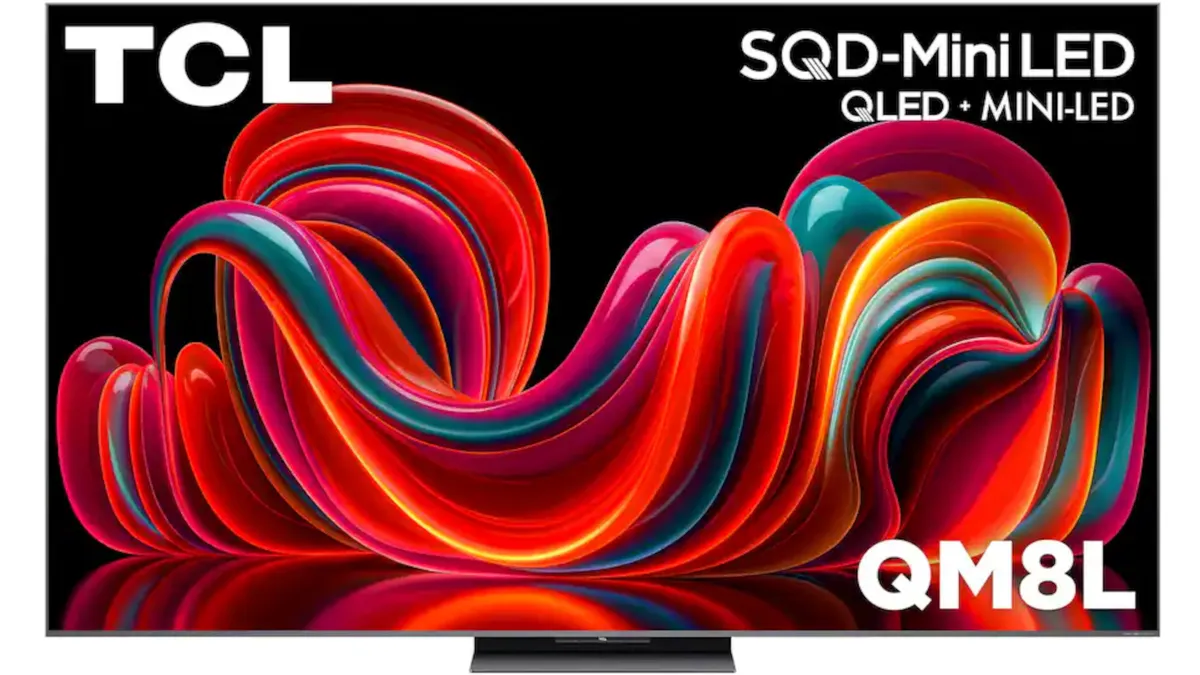
A brand-new TV for 2026, the QM8L leverages TCL's newest display technology, Super Quantum Dot, to enhance its color and overall brightness. It's a slightly better-performing TV than last year's QM9K, but as a newer model, you'll pay more for it.
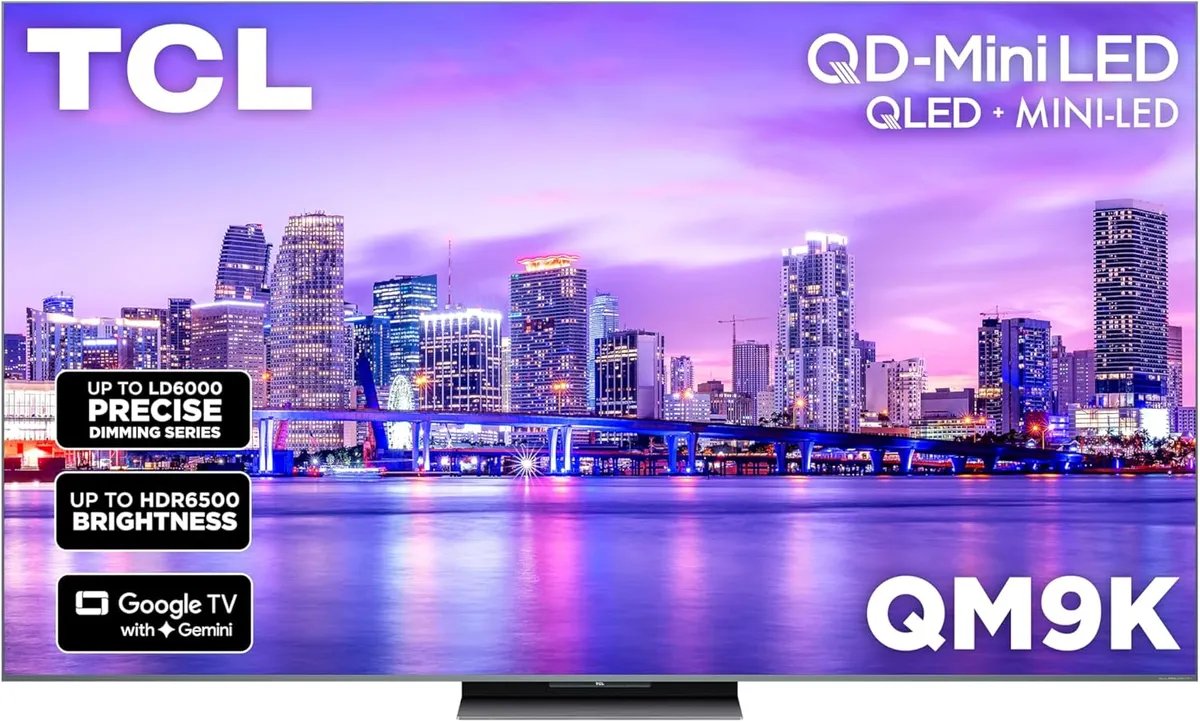
The QM9K isn't as colorful as the SQD-equipped QM8L, but its overall performance profile (including brightness) is otherwise similar. As a year-old model, it's cheaper than the QM8L, making it a better pick for people who want to save money.
TCL QM8L vs QM9K: specs compared
| Header Cell - Column 0 | TCL QM8L |
TCL QM9K |
|---|---|---|
Sizes |
65", 75", 85", 98" |
65", 75", 85", 98" |
Ports |
4x HDMI 2.1 |
2x HDMI 2.1, 2x HDMI 2.0 |
Resolution |
3,840 x 2,160p |
3,840 x 2,160p |
Refresh rate |
144Hz |
144Hz |
HDR |
Dolby Vision, HDR10+, HDR10, HLG |
Dolby Vision, HDR10+, HDR10, HLG |
Smart TV software |
Google TV |
Google TV |
ATSC 3.0 support? |
Yes |
Yes |
Processor |
TSR AI Pro Processor |
TCL AIPQ Pro Processor |
Both of these TVs are available in screen sizes ranging from 65 to 98 inches. This means that people shopping for something smaller will have to shop other options. In addition, both sets support Dolby Vision and the royalty-free version of Dolby Vision, HDR10+.
Another nice bonus is that, regardless of whichever TV you opt for, you'll be getting ATSC 3.0 support as a key feature. ATSC 3.0 allows over-the-air broadcasts to arrive in their native 4K resolution via antenna. UHD broadcasts are still relatively hard to come by, but if you watch your fair share of over-the-air broadcasts via antenna, this is a nice feature to have in your back pocket.
One of the primary differences between these sets has to do with their connectivity options. The QM8L offers a full suite of HDMI 2.1 inputs, but on the QM9K, you'll only find two high-bandwidth, HDMI 2.1 inputs. The QM9K's remaining pair of ports is of the HDMI 2.0 variety. As a result, the QM8L is better equipped for folks who plan on connecting multiple gaming devices, as they won't have to worry about a console being relegated to a less-capable, HDMI 2.0 port.
Winner: TCL QM8L
TCL QM8L vs QM9K: design
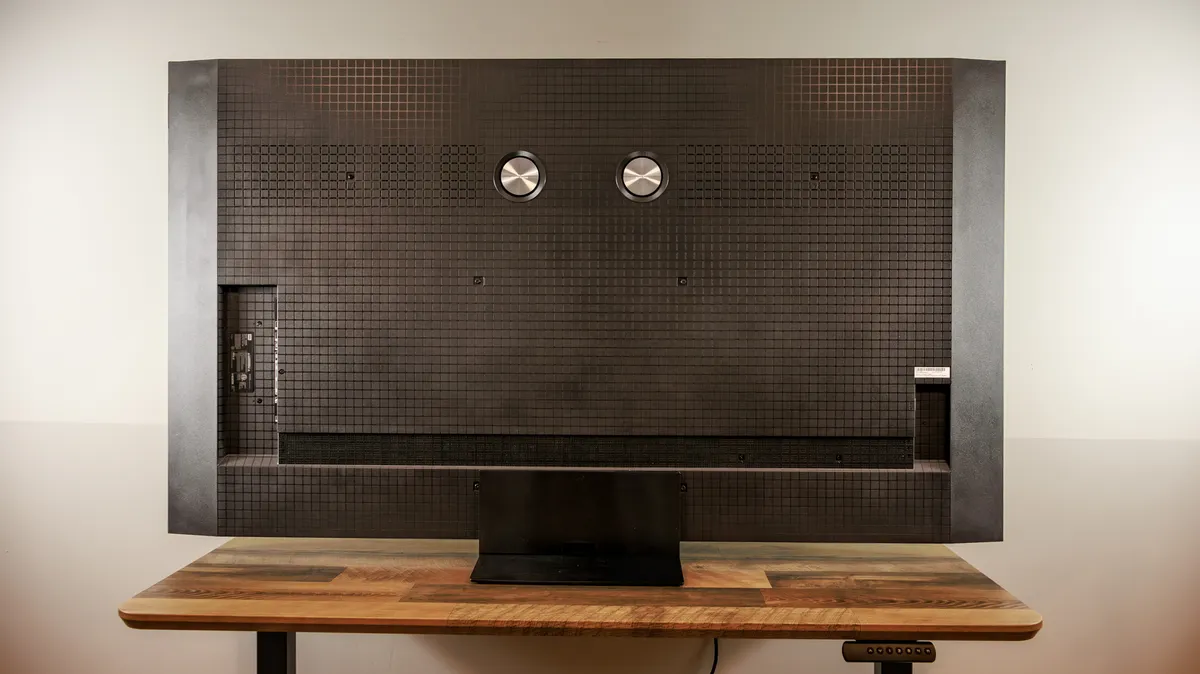
Thanks in part to its display technology, the TCL QM8L (seen above) is bulkier than many LED-based sets. That said, its overall look is mostly refined.
The QM8L's chassis bulges out of the back of the panel, but not to an extreme degree. It rests on a heavy, pedestal-style stand that sits below the center of the screen. This design decision is helpful, as it allows people to place the QM8L on a narrower piece of furniture even if they opt for one of the larger screen sizes.

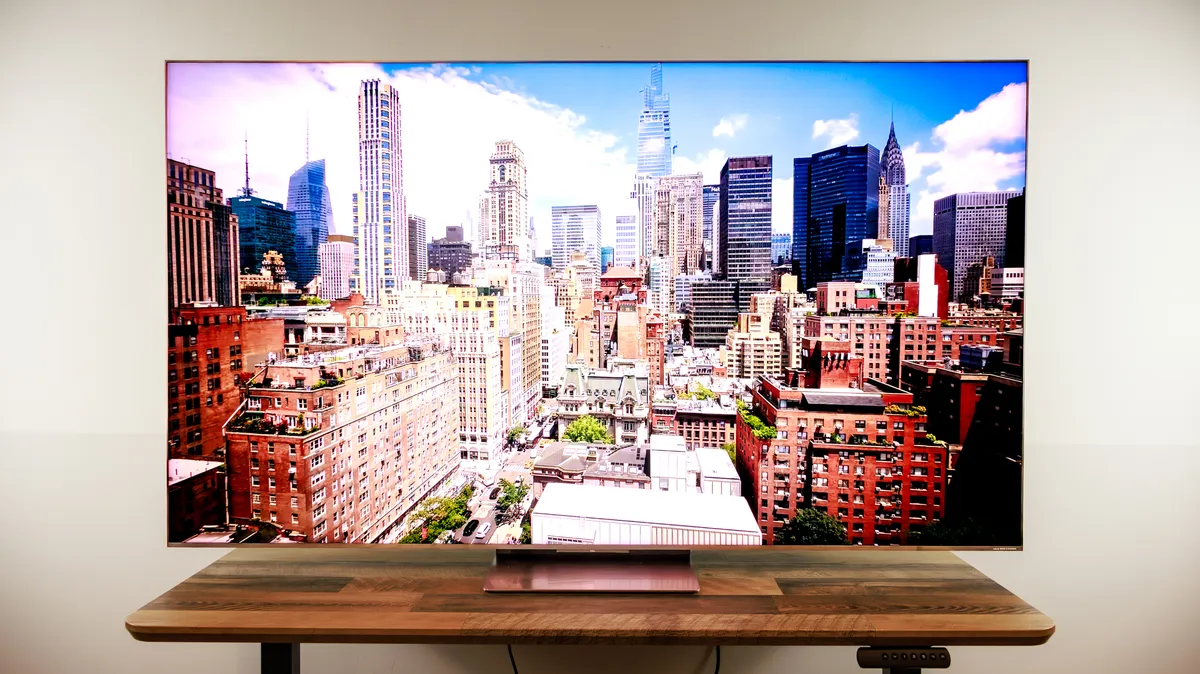
As you can see, the QM9K (seen above) is quite similar, despite the fact that it's not leveraging an SQD display Like the QM8L, it also makes use of a pedestal-style stand in the center of the screen.
Regardless of which TV you choose, you'll be getting a conveniently backlit remote control. It may sound ridiculous, but this is one of my favorite features on both models. You don't realize just how much you need a feature like this until you suddenly don't have it.
Given their near-identical designs, this category is too close to call. They're not ultra-thin like some of the slimmer OLED TVs we've seen in recent years, but both of sets are among the best-designed TCL TVs I've seen to date.
Winner: Draw
TCL QM8L vs QM9K: performance

Before we dig deeper into how these TVs look, let's compare their test results. (Both TVs were in their respective Filmmaker picture modes when these tests were taken.)
| Header Cell - Column 0 | TCL QM8L |
TCL QM9K |
|---|---|---|
SDR Brightness (10%, in nits) |
229 |
224 |
Delta-E (lower is better) |
3.7 |
1.8 |
HDR Brightness (10%, in nits) |
3,719 |
4,207 |
UHDA-P3 Gamut Coverage |
97.97% |
97.05% |
Rec.2020 Gamut Coverage |
90.34% |
80.29% |
Input latency (milliseconds) |
9.5 |
13 |
These are similar TVs, no doubt, but there are still some important points to consider about their performance.
According to our test results, the QM9K is slightly brighter than the QM8L during HDR content. However, this measurement involves highlight brightness (small areas rather than the entire picture), and I suspect that most viewers wouldn't be able to see much a difference outside of a side-by-side comparison.
The bigger difference here is color volume: Thanks in large part to its SQD-equipped panel, the QM8L comes in with richer, brighter color than the QM9K.
The QM8L comes in with richer, brighter color than the QM9K.
While it's true that the QM9K does a marginally better job dialing-in its color points in Filmmaker mode, the difference between a Delta-E of 3.7 and 1.8 isn't that significant, so you can expect a similar level of out-of-the-box accuracy across both TVs. A Delta-E of 3 is considered by many to be the threshold in which the human eye can perceive color error, and so 3.7 is a fine result.
The QM8L offers lower input latency, which dedicated gamers will surely appreciate. In fact, given the figures at play, I'd easily take the 9.5-millesecond measurement put forth by the QM8L over the QM9K's slightly better Delta-E measurement in Filmmaker mode. I'd likely notice the lower input lag before I clocked the added color error.
Taken as a whole, the QM8L's added color and lower input latency make for a better overall experience, but not by very much. These are bright, colorful TVs with terrific backlight control, decent upscaling and accurate presentations. The QM8L takes this category, but it's quite close.
Winner: TCL QM8L
TCL QM8L vs QM9K: smart platform and features

Both the TCL QM8L and the QM9K are built around the Google TV streaming platform. It's one of my preferred software suites available today, as it's quite snappy to navigate and its library of downloadable apps is massive.
The QM8L and QM9K both come with a similar set of out-of-the-box gaming features, too. Their toolkits include Variable Refresh Rate (VRR) and AMD FreeSync Premium Pro (for smooth, artifact-free gaming), as well as TCL's Game Bar, a quick-access menu that lets users access the most relevant gaming features with the press of a button.
Each set supports 4K gaming at 120Hz, the highest 4K spec among current-generation consoles. If you're inclined to link up a gaming PC to your next TV, both the QM8L and QM9K are capable of showcasing 4K games at 144Hz with VRR.
It's important to remember, though, that the QM9K is rolling with just two HDMI 2.1-compatible inputs. In order to access the features outlined above, you've got to plug your devices into one of those ports. The QM8L, on the other hand, is outfitted with four high-bandwidth, HDMI 2.1-compatible inputs, so it's far more flexible.
However, we've already come to terms with this limitation when comparing these TVs' respective specs. In almost every other way that matters, they offer a nearly identical set of features.
Winner: Draw
TCL QM8L vs QM9K: outlook

| Header Cell - Column 0 | TCL QM8L |
TCL QM9K |
|---|---|---|
Specs (25) |
23 |
21 |
Design (25) |
22 |
22 |
Performance (25) |
23 |
22 |
Features (25) |
23 |
23 |
Total Score (100) |
91 |
88 |
If you're shopping for a new TV and you've got your eyes on a TCL-branded model, the QM8L and the QM9K are among the best you can buy right now. Regardless of whichever you choose, you're going to walk away with a bright, color picture and a heaping helping of added features.
The QM8L's SQD-powered picture is more colorful than the standard quantum-dot presentation you'll get with the QM9K. However, when it comes to overall brightness, both sets are working with a similar amount of nits. This means they're both totally fine for bright-room viewing.
Gamers ought to take a closer look at the QM8L on account of its full slate of HDMI 2.1 inputs. Depending on how many devices you own, this detail could be worth the extra cost.
Let's talk about price. The QM8L just launched at $2,499 for a 65-inch version, but it didn't take long to go on sale. Right now, you can get the 65-inch TCL QM8L for $1,799 at Best Buy. The 75-inch QM8L is just $1,999 at Best Buy at the time of publishing.
Having been on the shelves since last year, the QM9K is significantly cheaper. Right now, the 65-inch QM9K is just $1,299 at Best Buy, which is a full $500 less than the QM8L.
If you're not concerned about its limited HDMI 2.1 flexibility and its slightly less-voluminous color, the TCL QM9K could very well be the better pick for you and your budget.

Follow Tom's Guide on Google News and add us as a preferred source to get our up-to-date news, analysis, and reviews in your feeds. Subscribe to Tom's Guide on YouTube and follow us on TikTok.
More from Tom's Guide