2026 had all the makings for a revolution in the TV world. At CES 2026, nearly every major player in the industry announced that it would be selling its own version of an RGB LED TV this year under different names — like Samsung Micro RGB, Hisense RGB Mini-LED TV and Sony True RGB.
These cutting-edge sets are all engineered for bolder, brighter color, and based on the RGB LED TVs we’ve tested, the tech does what it says on the tin. So why aren't RGB LED TVs outselling OLEDs?
Having seen most of the year’s best TVs (including nearly all of the available RGB LED models), I propose that the technology’s seemingly small splash comes down to three things: the limitations of RGB LED, its premium price and the inherent benefits of OLED.
RGB LED’s limitations

First, let’s talk about what the technology does well. Many of the RGB LED TVs we’ve evaluated have delivered some of the best color-related scores we’ve measured to date. The Hisense UR9 covers about 93% of the BT.2020 color gamut — an impressive feat for a flagship TV with nary a quantum dot. When I tested Samsung’s top Micro RGB TV, the R95H, it was similarly colorful, clocking in at around 92%
Many of the RGB LED TVs we’ve evaluated have delivered some of the best color-related scores we’ve measured to date.
Even the Bravia 7 II — Sony’s most affordable True RGB TV — covers about 87% of the BT.2020 color gamut. That’s not quite as vibrant as Hisense and Sony’s flagship RGB LED TVs, but it’s better than the 79% figure we measured on the previous, non-RGB iteration of the Sony Bravia 7.
Considering that the color-leaders in the OLED TV class (typically quantum-dot OLEDs) hover around the 89%-to-91% range, these numbers aren’t anything to scoff at. RGB LED displays have proven to be some of the most colorful you can buy, and when you consider that these sets are remarkably bright in addition to being rich in color, there’s a ton to appreciate.
But, as I'm sure you're aware, testing a TV and watching TV are different experiences.
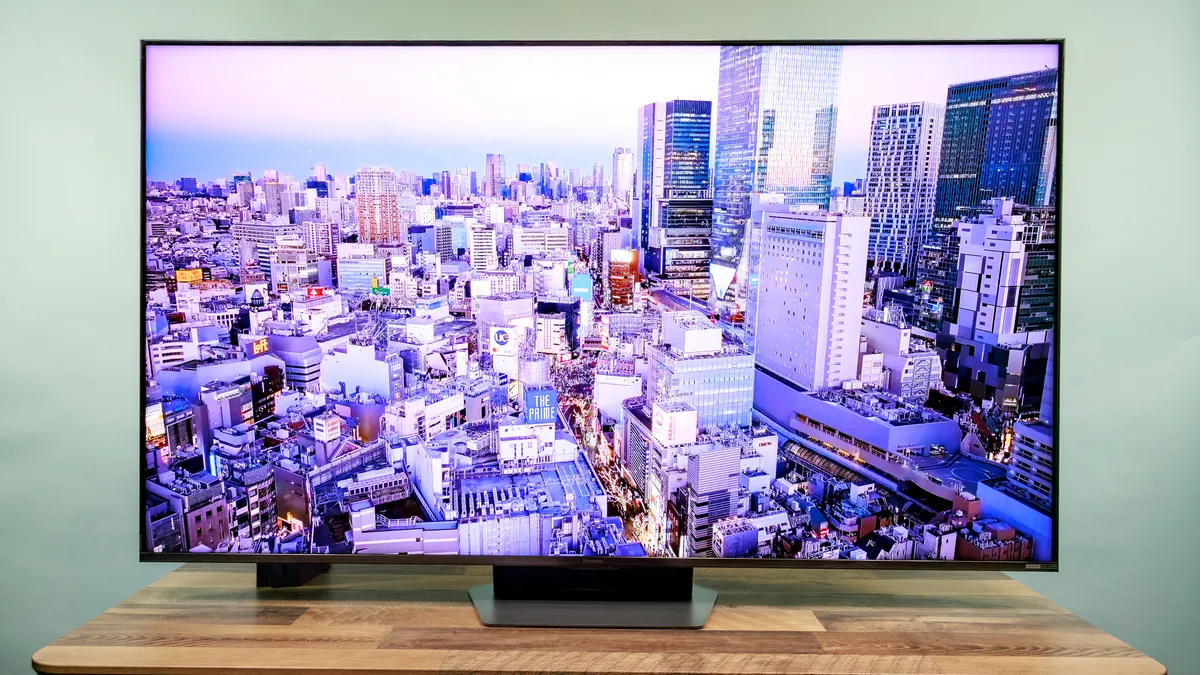
This was a major point of criticism in my colleague Dylan Haas’s Hisense UR9 review. Measuring colored rectangles will produce impressive color scores, but during actual content, Dylan reported that HDR movies and games looked muted and washed out.
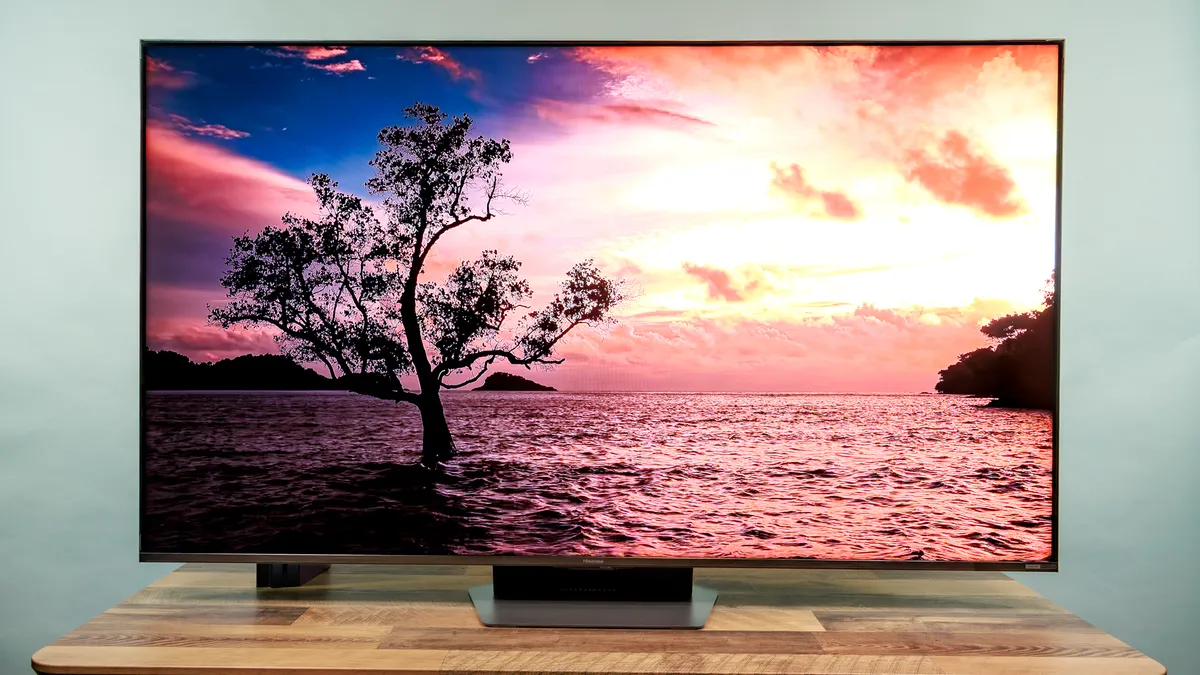
Read our full Hisense UR9 review.
Some of the gap between test results and real-world performance can be explained by taking a closer look at how the hardware works. Tiny, red-, green- and blue-colored LEDs are at their most effective when big swaths of the picture feature one or two colors. This explains why so many of the RGB LED tech demos we see playing on a loop at press events feature bright, candy-colored imagery.
The second most of these TVs start showcasing run-of-the-mill scenes — like, say, a person walking down a city street — the secret sauce of RGB LED technology can be much less impactful.
There’s also the matter of color crosstalk, a visual artifact in which objects receive a spillover of color from those around them. Imagine a white ball scrolling over a red-colored column, taking on a pinkish hue as it passes over the red portion of the picture.
As a technology, RGB LED’s quirks can be lessened with proper picture processing measures. Perhaps more so than most display technologies, the impact of RGB LEDs on color performance comes down to how effectively a brand engineers those RGB LEDs and the algorithms that drive them.
But color crosstalk is not something to be concerned about with OLED TVs, and for many shoppers willing to splash out on high-end performance, OLEDs are still the top-shelf technology to beat.
OLED is still the king of contrast

Despite their awesome brightness and terrific backlight control, the RGB LED TVs I’ve spent time with cannot compete with OLED when it comes to one metric in particular: contrast. Unfortunately for RGB LED, this is arguably the most important metric to consider when unpacking picture quality.
The RGB LED TVs I’ve spent time with cannot compete with OLED when it comes to one metric in particular: contrast.
Our eyes are really good at noticing contrast. And, while RGB LED TVs get super bright and control their backlights effectively, that they rely on a backlight at all is what puts them at a distinct disadvantage. Simply put, they can’t compete with the self-illuminating pixels of an OLED TV.
For all of its visual splendor, Samsung’s flagship Micro RGB TV can’t consistently create perfect black levels like the brand’s top OLED, the Samsung S95H. OLED TVs like the S95H can also drive a ton of brightness to teeny-tiny clusters of pixels, creating an unparalleled sense of depth (something I often refer to as “the OLED look”).
The S95H is a quantum-dot OLED, too, so its impressive, 89% coverage of the BT.2020 color space puts it just a hair below the 92% color volume I measured on the R95H Micro RGB TV. In a side-by-side comparison, I’m willing to bet that you wouldn’t notice much of a difference in these two TVs’ color, but I can guarantee you’d notice a difference in contrast.
RGB LED: price and outlook
Above all else, I suspect that the primary reason RGB LED TVs haven’t been as buzzy and popular as I thought they’d be has to do with their price relative to other mid-range and high-end TVs. In 2026, this is still brand-new hardware, and you can expect to be charged for the privilege.
The 65-inch Hisense UR9 is currently $2,199 at Best Buy, while the 65-inch Samsung R95H Micro RGB TV is $2,999. Sure, both of those TVs are still significantly cheaper than the $3,299, 65-inch S95H OLED, but if someone is tempted to throw a few thousand dollars at a high-end TV for a luxurious home theater setup, they’re likely to at least consider the flagship OLED and all of the benefits that come with it.
In other words, until RGB LED TVs get significantly better, come down in price or both, they’ll face fierce competition from both cheaper TVs and pricier sets that offer all-around better picture quality.
Until RGB LED TVs get significantly better, come down in price or both, they’ll face fierce competition.
However, one of the few RGB LED TVs I haven't seen yet could change my tune entirely: the Sony Bravia 9 II. It's Sony's top TV of 2026, and a contender for the RGB LED TV crown.
Remember when I said that the benefits of RGB LED come down to engineering? Well, Sony is widely considered the best in the business when it comes to picture processing, upscaling and the handling of finer details.
Unsurprisingly, the Bravia 9 II is one of the priciest TVs of the year. Even if it wows me, the cost of doing business with RGB LED in 2026 is high enough that I'll likely stay squarely in OLED's corner for the foreseeable future.

Follow Tom's Guide on Google News and add us as a preferred source to get our up-to-date news, analysis, and reviews in your feeds.
More from Tom's Guide