Choosing a TV means choosing a TV brand — the very brand you’ll be locked into a relationship with for the next several years. Specific screens may dazzle you in a store aisle, but it’s important to remember that the experience of living with a TV amounts to more than just picture quality.
With this in mind, we’re playing the role of administrator and doling out report cards to major TV brands this week. We’ve already given grades to LG, Sony and TCL, but today, we’re evaluating the Hisense TV experience in 2026.
This year, like most of the biggest names in the TV business, Hisense is making a case for RGB LED technology along with a series of quantum dot-equipped Mini-LED TVs ranging from budget-friendly to mid-range.

Pricing
In recent years, Hisense has occupied a similar position in the marketplace as TCL, in that both brands aim to deliver competitive performance at lower price points than brands like Sony, Samsung and LG.
In fact, Hisense is a big reason why Mini-LEDs went from being a high-end luxury just a few years ago to somewhat of a standardized feature among entry-level TVs in 2026.
Simply put, Hisense has been aggressive in its expansion of affordable Mini-LED TVs, which put pressure on companies like Samsung and TCL to do the same.
Hisense has been aggressive in its expansion of affordable Mini-LED TVs.
Hisense’s most-recent main lineup follows this familiar formula. Its entry-level model — the U6SF — is currently priced at just $499 for a 55-inch model. The U65F comes with Mini-LEDs and full-array local dimming. In order to get a similar deal from Samsung, you’ll have to settle for the M70H, a TV without local dimming.
Moving up through the lineup reveals even more competitively priced sets with premium hardware. The spec sheet of the Hisense U7SG Mini-LED TV is comparable to the brand’s previous flagship TV (the U8), but you can get a 65-inch U7SG for $649 — far lower than the price of a Samsung QN70H.
And, while the brand’s first-ever flagship RGB LED TV made its debut at a sky-high $3,499 for a 65-inch model, it has since assumed the much-lower MSRP of $2,199. Of all the flagship-level RGB LED TVs on shelves this year, the UR9 is currently the most affordable.
Almost without fail, the best aspect of any given Hisense TV is its price relative to the competition. This makes them an attractive option for deal-hunters who nevertheless want a little oomph when it comes to performance.
Grade: A-
Design
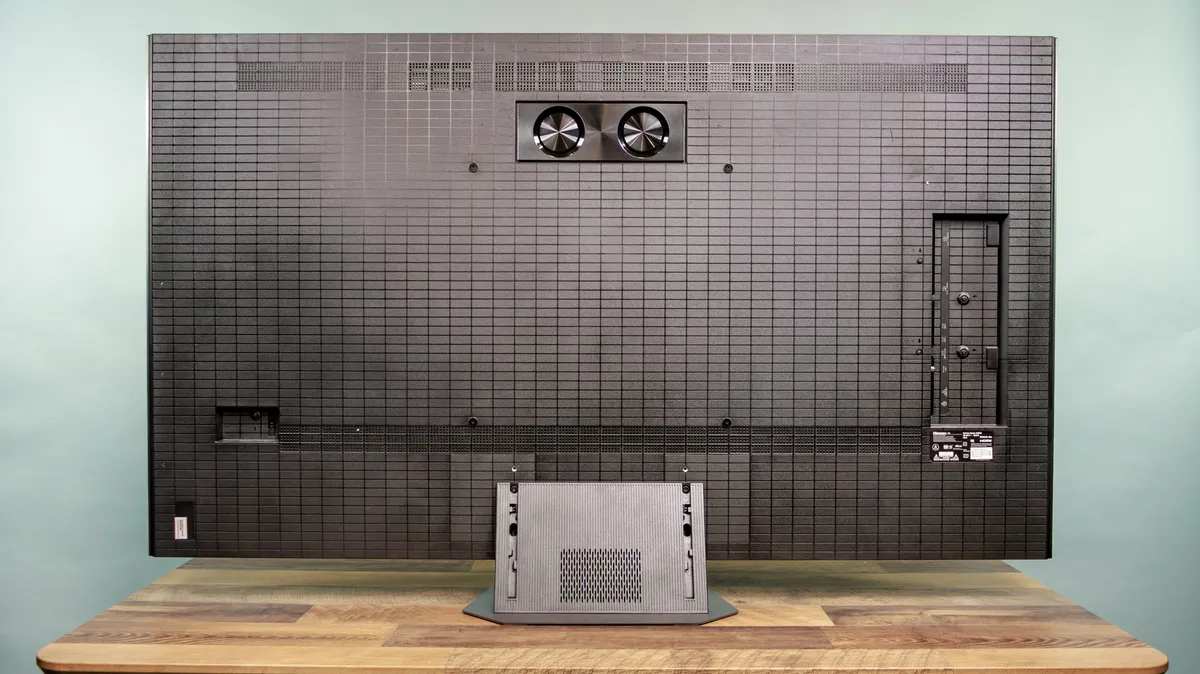
Hisense TVs are not as sleek and seamless as most Samsung TVs. They’re often heavier than their competitors, with big, beefy panels that bulge out with subwoofers and right-angled corners.
The overall vibe I get from the design of mainline Hisense TVs is one of carefully cut corners — as if most of the cost was seemingly put towards the underlying display hardware rather than the outer shell.
The heavy, industrial-adjacent look and feel of a Hisense TV might not be as soothing as the smooth, svelte appearance of an LG or Samsung TV.
The tradeoff isn’t a bad one. After all, I’d rather the bulk of my money go towards picture quality, especially when shopping in the entry-level or mid-range tier.
However, if you’re the sort of person who wants a big, pricey expense to assume the appearance of a luxury purchase, the heavy, industrial-adjacent look and feel of a Hisense TV might not be as soothing as the smooth, svelte appearance of an LG or Samsung TV.
Grade: B-
Features
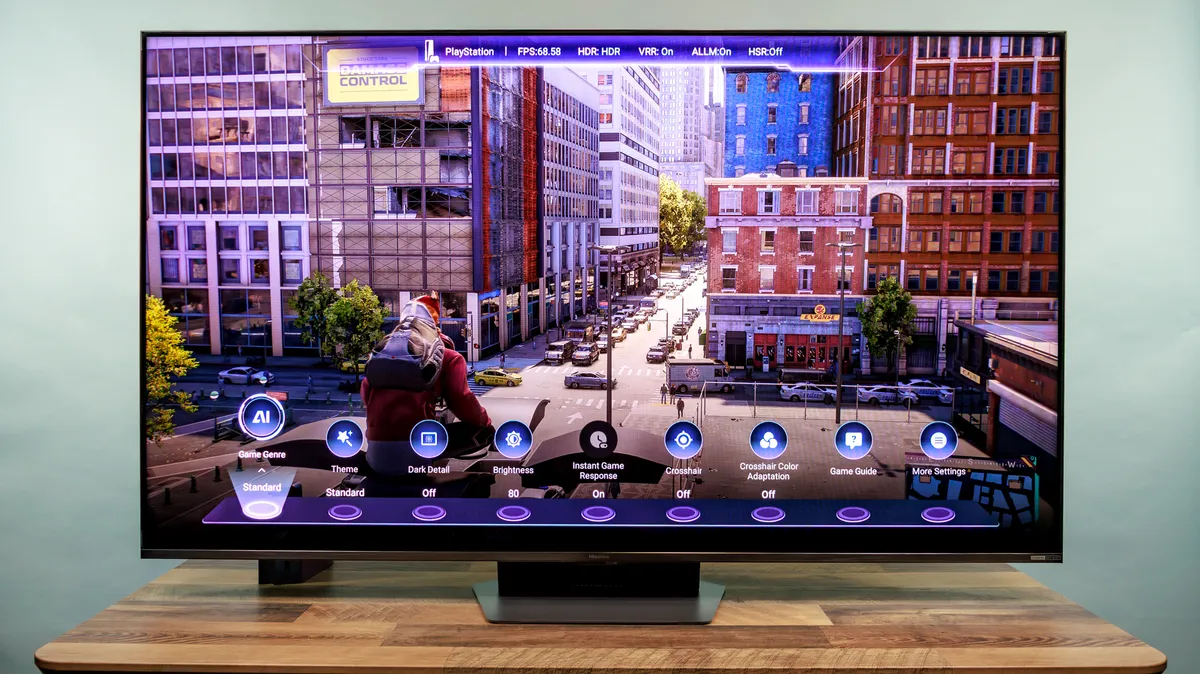
In addition to their regularly low prices relative to rival sets, one of the reasons I routinely recommend Hisense TVs is their reliably thorough list of features.
Mainline Hisense TVs almost always arrive with Dolby Vision and HDR10+. LG and Samsung offer only one or the other.
Just as Hisense put pressure on the competition to expand Mini-LED across a lower price range, the brand has also been aggressive in their inclusion of HDMI 2.1 compatibility on lower-end TVs. This means that if you want an affordable, entry-level TV in the Hisense U6SF, you don’t have to sacrifice the inclusion of HDMI 2.1.
One of the reasons I routinely recommend Hisense TVs is their reliably thorough list of features.
Unfortunately, over the last two years, Hisense has replaced one of the HDMI inputs on its flagship model (the U8QG and the UR9) with a USB-C DisplayPort. It’s an interesting move, but not one I’ve heard too much positive feedback about, even among home theater enthusiasts.
Grade: B
Performance
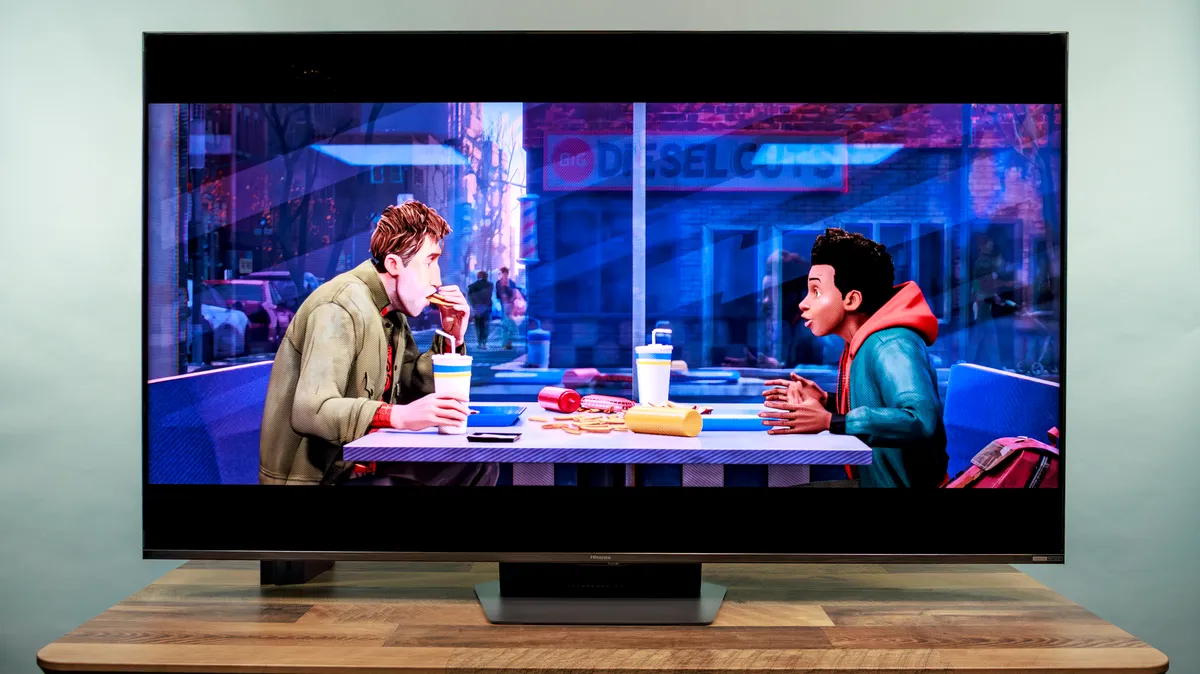
Hisense has perfected the art of capturing excellent on-paper test results from TV-reviewers like myself, as their TVs consistently demonstrate impressive benchmarks in areas of performance like brightness and color. In fact, Hisense TVs routinely pump out higher brightness numbers than what is listed in the marketing materials.
But these numbers don’t tell the whole story. Just as I’m regularly impressed by the high brightness levels and color gamut coverage of an aggressively priced Hisense TV, I’m regularly on the fence about that same TV’s overall presentation.
When it comes to the little things, Hisense TVs often lag behind comparable sets from LG, Samsung and Sony.
When it comes to the little things — upscaling, motion handling, color gradients, and HDR EOTF tracking — Hisense TVs often lag behind comparable sets from LG, Samsung and Sony. The result is a picture that sometimes looks a little fuzzy relative to rival sets.
To be clear, I do believe that Hisense has improved its picture processing in recent years and I hope that this trend continues. Additionally, there’s no denying the fact that TVs like the U6SF, the U7SG and the flagship-level UR9 are among the brightest in their respective classes, and that sort of horsepower goes a long way in a sunny viewing environment.
In 2026, buying a Hisense TV is like taking a savvy shortcut to pretty-great performance. You’ll still arrive at the desired destination of bright, colorful picture quality, but by skipping the scenic route, you’ll miss out on some of the finer things in life.
Grade: B-
Smart TV platform
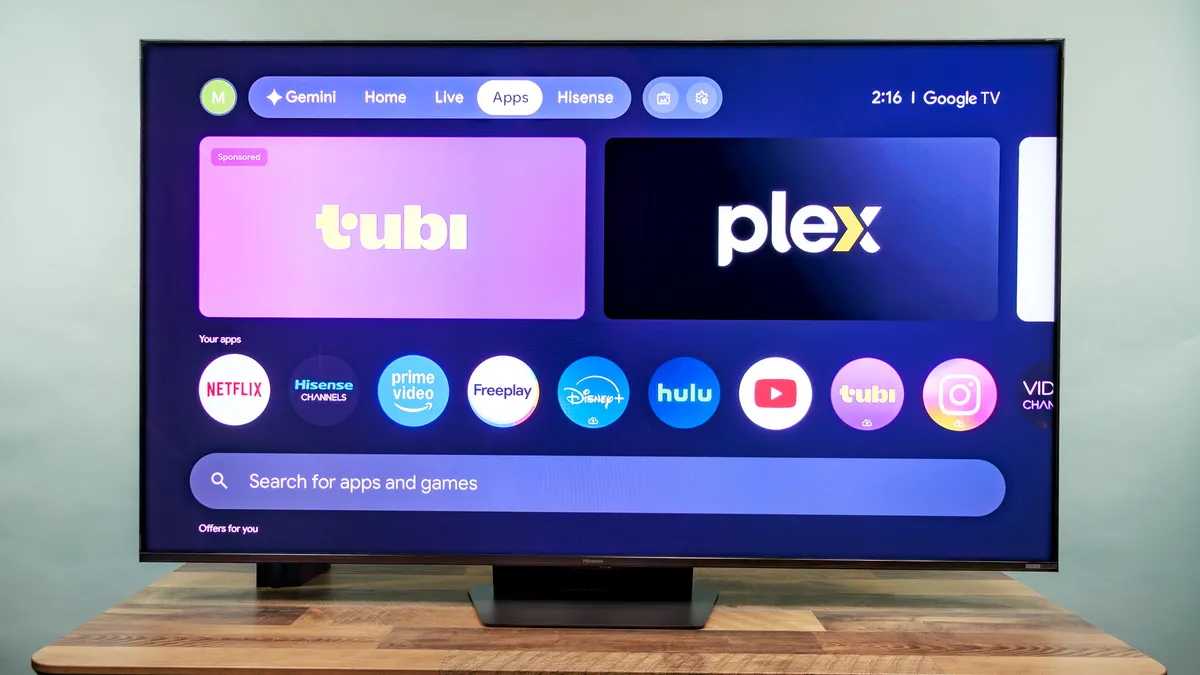
Nearly all of the mainline Hisense TVs in 2026 are built around the Google TV smart platform. A handful of lower-end models leverage Amazon’s Fire TV smart platform.
The Hisense U6SF and U6SF Pro arrive with Fire TV right out of the box. Amazon’s streaming platform has seen some improvements in 2026, but to be honest, I wouldn’t rely on Fire TV as a daily driver unless I was an avid Alexa user. Fortunately, the rest of Hisense’s main TV lineup is all about Google.
Google TV isn’t my first choice for streaming software (that honor goes to Roku), but I’d rather use Google TV than Samsung’s Smart Hub or LG’s webOS. It offers a much more straightforward navigational experience, and while it’s plastered with sponsored content, Google TV is much more user-friendly than the cluttered, AI-infused landscapes of Samsung and LG TVs.
Grade: B+
Overall grade: B
In 2026, Hisense TVs represent one of the best ways to maximize your dollar. Its entry-level sets are brighter than just about every other similarly priced option, and its higher-end TVs tend to deliver competitive performance specs for less than the cost of rival flagships.
The catch — if you feel comfortable calling it a catch — is that Hisense TVs often lack the finesse of pricier models from The Big Three (LG, Samsung and Sony). Its picture processing capabilities aren’t nearly as impressive, and the design of its TVs seems more about accommodating hardware rather than harmonizing with it.
For my money, the Hisense TV to buy in 2026 is the U7SG Mini-LED TV. We're still in the process of evaluating this model, but because it sits right in the middle of Hisense's lineup this year, the design- and performance-related shortcomings I've come to expect from Hisense TVs don't weigh as heavily on the experience.

Follow Tom's Guide on Google News and add us as a preferred source to get our up-to-date news, analysis, and reviews in your feeds.