When shopping for a TV, you’re not just choosing a set — you’re also choosing a brand. It’s the company whose software you’ll be using almost every day, and the one whose hardware will live in your home for years to come.
Here at Tom’s Guide, our goal is not only to help you choose a new TV, but to give you an idea of how it might feel to enter into a long-term relationship with the brand itself. This week, we’re handing out report cards to the biggest TV brands, grading them on everything from price to performance and usability.
We’re kicking things off with a company whose name is synonymous with OLED TVs: LG. It’s one of the most popular TV-makers in the world, and year after year, its OLED TVs are among our most-recommended models.
But if we take a step back, how does LG grade on its pricing? What does it feel like to use LG’s software on a daily basis? The semester is over — and we’ve got marks.

Pricing
LG manufactures both LCD TVs and OLED TVs, but over the last decade, the brand has completely taken over the OLED category, representing many of the most popular OLED TVs on the market.
As the worldwide leader in OLED TV sales, it’s not a stretch to say that LG sets the tone for OLED TV pricing. And, while LG OLEDs aren’t exactly cheap, they’re usually in line with competitive OLEDs from Samsung.
While LG OLEDs aren’t exactly cheap, they’re usually in line with competitive OLEDs from Samsung.
For many shoppers, buying an LG OLED isn't a sensible option until the entry-level, mid-range and top-shelf OLEDs begin dropping in price throughout the calendar year. To LG's credit, its OLED discounts are relatively consistent from one year to the next. After just a handful of months of shelf life, TVs like the C Series OLED usually fall to $1,500 to $1,800 for a 65-inch option. That's a pretty killer deal for a mid-range OLED TV.
Grade: B
Design

LG’s design approach is both thoughtful and refined, though not without a little wiggle room for improvement. Its B and C Series OLED TVs are known for their ultra-thin panels, while its flagship G Series OLED is one of the best-looking TVs when its uniform design is mounted on a wall.
That said, I routinely find myself reminding readers that LG’s slab-like stands — though elegant — keep the screen close to the surface of a media console or credenza. As a result, folks with taller soundbars risk obstructing their view.
LG’s design approach is both thoughtful and refined, though not without a little wiggle room for improvement.
LG’s Magic Remote has seen some redesigns in recent years, but its motion-activated controls are a feature that viewers either love or hate.
The brand gets some bonus points this year for offering a high-end lifestyle OLED in the LG W6 Wallpaper TV. As the name implies, its wildly thin design sits flush against the wall, and its wireless connectivity is almost magic.
Grade: B+
Features

When it comes to features, LG OLEDs are the gold standard. Although both LG and Samsung typically release at least three OLEDs a year with similar sets of features, LG’s models consistently edge their across-the-aisle rivals thanks to one feature in particular: Dolby Vision support.
When it comes to features, LG OLEDs are the gold standard.
Along with the most-popular HDR format, LG OLEDs come with a full slate of HDMI 2.1 inputs and support for 4K gaming up to (and frequently beyond) 120Hz. Even the brand’s entry-level OLEDs (like the LG B6) come with Variable Refresh Rate (VRR) and a variation of AMD FreeSync.
Grade: A
Performance
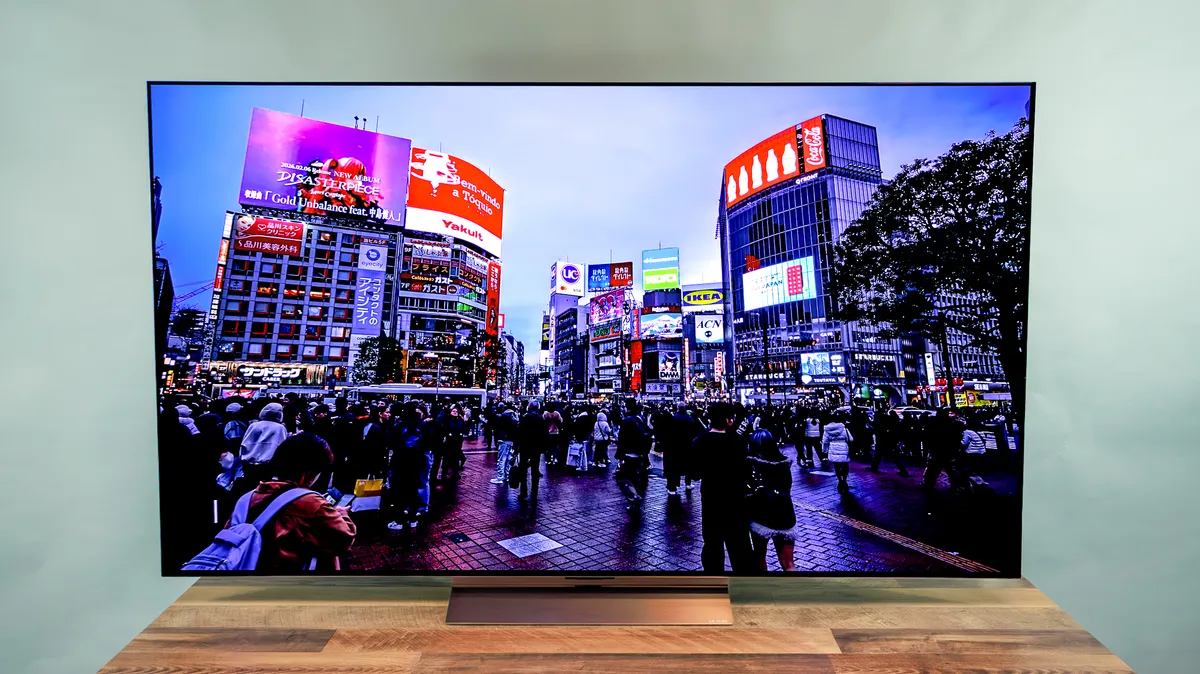
LG TVs — especially its OLEDS — have been reliable performers for as long as I’ve covered the industry. Its flagship models (like the LG G5 and G6 OLED) are perennial TV-of-the-year contenders, while mid-range models like the LG C5 and C6 OLED offer high-end picture quality at a reasonable price.
In recent years, LG has done an admirable job narrowing the gap between itself and Sony. Its engineers respond to viewer feedback, often fixing standout performance issues year over year.
In recent years, LG has done an admirable job narrowing the gap between itself and Sony.
That said, LG has sometimes found itself patching-in fixes to Dolby Vision and other HDR-related issues shortly after its TVs launch. And, while LG Display’s RGB Tandem OLED panels have proven to be tremendously successful in keeping up with the ever-increasing brightness levels that Samsung and Sony have been able to wring out of quantum dot-enhanced OLED displays, they still can’t quite match QD-OLED color volume.
Still, there aren’t too many $2,000, 65-inch TVs that look as good as the LG C6. The brand sells a ton of OLED TVs for a reason.
Grade: A-
Smart TV platform
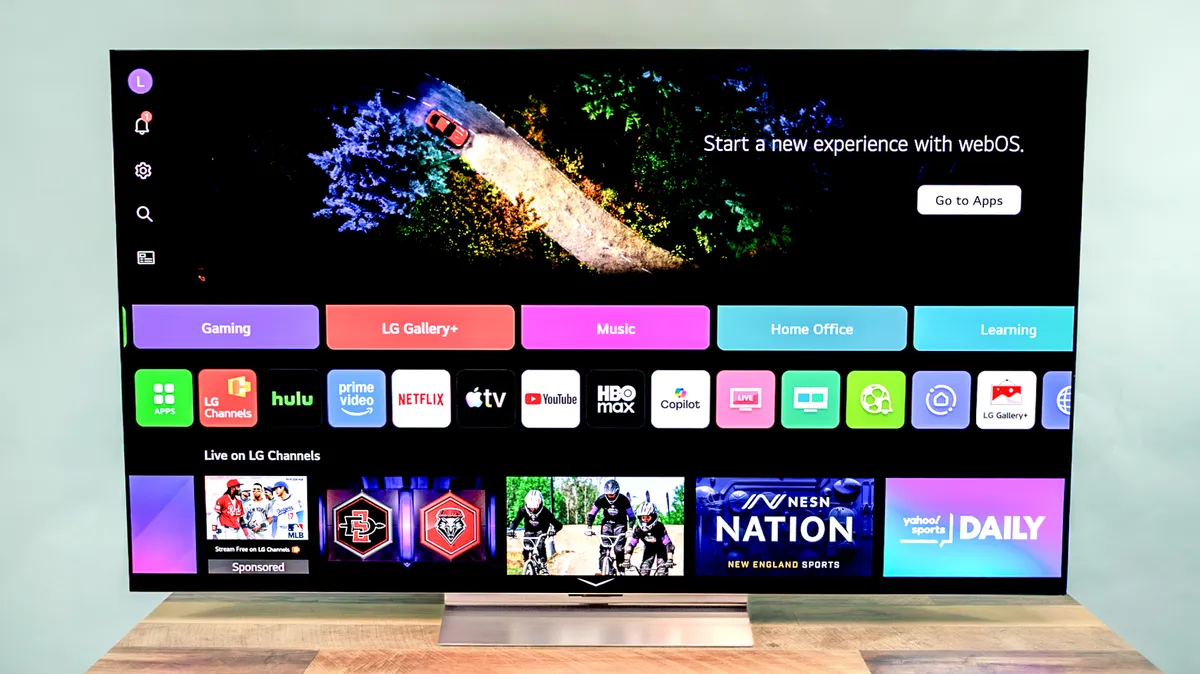
As an LG OLED enthusiast, it brings me no pleasure to dole out a not-so-great assessment of the brand’s smart TV platform, webOS.
If you absolutely, positively refuse to fuss with an external streaming device, webOS has enough app support and a straightforward-enough interface to get the job done. You’ll just need to grit your teeth and put up with an onslaught of sponsored and recommended content.
In the last few years, LG has taken to stuffing webOS with AI-based features.
In the last few years, LG has taken to stuffing webOS with AI-based features that, frankly, I can’t imagine anyone using with any sort of regularity. It’s just more stuff to navigate around while trying to jump from menu to menu.
Grade: C+
Overall grade: B+
In 2026, LG TVs are better than they've ever been. The structure of what has come to be its annual OLED lineup has been successful enough that Samsung has adopted a similar approach, and in all likelihood, TVs like the B6, C6 and G6 will be among the best-selling OLEDs of the year.
LG OLEDs may not be as colorful as Samsung's QD-OLED TVs, and when it comes to the little things like upscaling, LG often lags behind Sony's higher-end sets. However, it's not tough to make the argument that LG OLEDs are are the most versatile. They lead Samsung in included features thanks to Dolby Vision, and they represent some of the best gaming TVs money can buy.
This year, the best LG TV for most people is the C6 OLED. It comes with nearly every feature you'll find on the flagship-level G6, and while it's only a marginal upgrade over its predecessor, it's current sale price makes it one of the most value-packed, mid-range TVs on the market.

Follow Tom's Guide on Google News and add us as a preferred source to get our up-to-date news, analysis, and reviews in your feeds.