It’s officially new-TV season, and if you've waited until 2026 to upgrade to a new Hisense TV, your time may have come. The popular TV-maker is rolling out an array of all-new TVs, some of which are hitting shelves as we speak.
This is a massive year for Hisense. For one thing, it's finally selling RGB Mini-LED TVs at popular size points like 55 and 65 inches, and these cutting-edge displays will be going head-to-head against Micro RGB TVs from Samsung. Plus, Hisense is debuting several new Mini-LED TVs aimed squarely at value-conscious consumers looking for a deal. In recent years, mid-range Mini-LEDs have been Hisense’s bread and butter.
There's no way around it: The Hisense TV lineup looks different this year. To help make heads and tails of the tricky model names and the technology itself, I've put together a roadmap for shopping for a Hisense TV in 2026. The first stop is the brand's newest Mini-LED TVs.
2026 Hisense Mini-LED TVs

It would seem as though Hisense has replaced its top-shelf U8 Series with the newest U7 Series.
Hisense's popular mid-range QLEDs are back, but the lineup has seen a few changes. Like last year, there are three quantum dot-enhanced Mini-LEDs to choose from. However, they don't follow the same naming convention.
This year, the lineup consists of the U6SF, the U6SF Pro and the U7SG. Last year, the main lineup had the U65QF, the U75QG and the U8QG. So, what gives?
Well, it would seem as though Hisense has replaced its top-shelf U8 Series with the newest U7 Series. In the process, the TV maker split up its entry-level U6 Series into two categories.
The U6SF and U6SF Pro are both built around Amazon's Fire TV smart platform (hence the "F" in their model names). While Hisense hasn't yet confirmed key specifications, the U6SF Pro will likely have some performance-related benefits over the non-Pro version. According to Hisense, the standard U6SF will come in a wider selection of sizes, and together, these TVs will be available in models ranging from 55 to 100 inches.
The Hisense U7SG is built around the Google TV smart platform (which explains the "G" in its model name). Unlike the U6SF and the U6SF Pro, this set is actually available right now from Best Buy.
The all-new U7 Series will be available from 65 to 116 inches, with the 65-inch version coming in at $1,499. This is comparable to last year's U75QG price at launch.
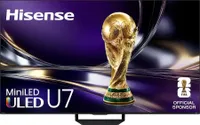
We don't know too much about the U7SG, but we know more about it than the U6SF and U6SF Pro. As a higher-end model, the U7SG will likely feature a higher amount of Mini-LED dimming zones and a brighter overall picture. Hisense claims that the U7SG reaches up to 3,000 nits, which probably puts it somewhere between last year's U75QG and U8QG.
It features a 165Hz panel, ATSC 3.0 support (which means it's ready to receive 4K broadcasts via antenna), and comes with four HDMI 2.1-compatible inputs. Needless to say, I'm excited to see it in action.
2026 Hisense RGB Mini-LED TVs
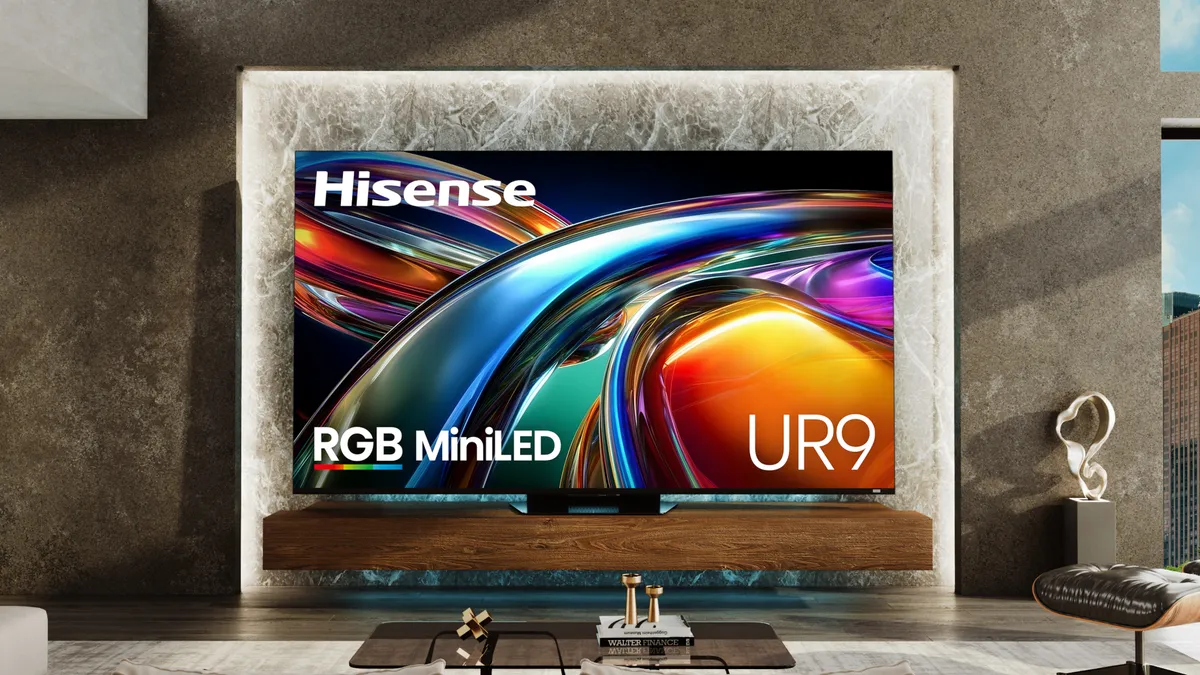
The UR9 and the UR8 feature Hisense's all-new RGB Mini-LED backlighting. They represent the brand's first attempt to take technology that was previously limited to a 116-inch display (in the Hisense 116UX) and scale it down to smaller-sized screens. Hisense says that these sets will be available in sizes ranging from 55 to 100 inches, including the ever-popular 65-inch screen size.
There's a ton of hype surrounding RGB LED TVs this year, with nearly every major TV brand (including Samsung and LG) getting in on the action. Similar to Mini-LEDs, RGB LED TVs leverage an array of ultra-small LEDs arranged in dimmable zones. Unlike Mini-LEDs, however, RGB LEDs are red, green and blue. This makes way for brighter, purer colors than what we’ve come to expect from even the best TVs available to date.
Despite the imminent nature of these cutting-edge TVs, there's a lot we still don't know about the UR9 and the UR8. The former will presumably offer better performance (and maybe even more features), but both will tap Hisense’s new Hi-View AI Engine RGB processor.
Which Hisense TV should you buy in 2026?

I'll feel more confident offering specific recommendations after we've tested and reviewed Hisense's newest TVs, but that doesn't mean I can't give you a head start when it comes to your shopping plans.
For most folks, the U6SF, the U6SF Pro and the U7SG will be the three Hisense TVs to choose from, due in large part to their entry-level and mid-range pricing. The U7SG is built around one of my preferred smart platforms in Google TV (making it a solid choice for habitual streamers), and because it's decked out with four HDMI 2.1 inputs, this will also be a popular pick amongst gamers.
Amazon is rolling out major Fire TV updates in 2026 that just might improve the overall experience of the U6SF and U6SF Pro.
The U6SF and U6SF Pro will be cheaper than the U7SG, so they'll have wider appeal for budget-conscious shoppers looking to spend a bit less. In past years, I may have warned people about the inclusion of Fire TV, but Amazon is rolling out major Fire TV updates in 2026 that just might improve the overall experience.
Of course, the brand's hotly anticipated RGB Mini-LED TVs could prove to be the biggest disruptor in 2026. Hisense is known for coming out of the gate swinging with competitively low prices relative to its competition, and while we don't yet know how much the UR9 and UR8 will cost, I'm willing to bet it'll be lower than most of the competition in the RGB LED space.
In any event, 2026 is one of the most ambitious years yet for Hisense TVs. The brand already made its mark in the Mini-LED marketplace — let's see if it can do the same for RGB LEDs.

Follow Tom's Guide on Google News and add us as a preferred source to get our up-to-date news, analysis, and reviews in your feeds.
More from Tom's Guide