Samsung has packed a bunch of upgrades into the new Galaxy Z Fold 8 Ultra, but the one noticeable absence is the lack of any sort of active cooling system. The Galaxy S26 Ultra has a built-in vapor chamber to prevent heat build-up, and similar features have existed in non-folding flagships for over a decade.
The question isn't why hasn't Samsung added a vapor chamber to its foldables yet, it's whether that actually matters. The Galaxy Z Fold 8 Ultra has the same super-powered Snapdragon 8 Elite Gen 5 for Galaxy chip as the S26 Ultra, and I was curious how much heat would actually build up in both phones — and more importantly, where it ends up.
So I grabbed my trusty thermal camera, the Flir One Pro, and set up the Galaxy Z Fold 8 Ultra alongside the Galaxy S26 Ultra, Galaxy Z Fold 7 and the iPhone 17 Pro Max side by side. Then, by running 3DMark's Solar Bay Extreme Stress Test, I recorded just how much heat all four phones produced.
Is it getting hot in here?
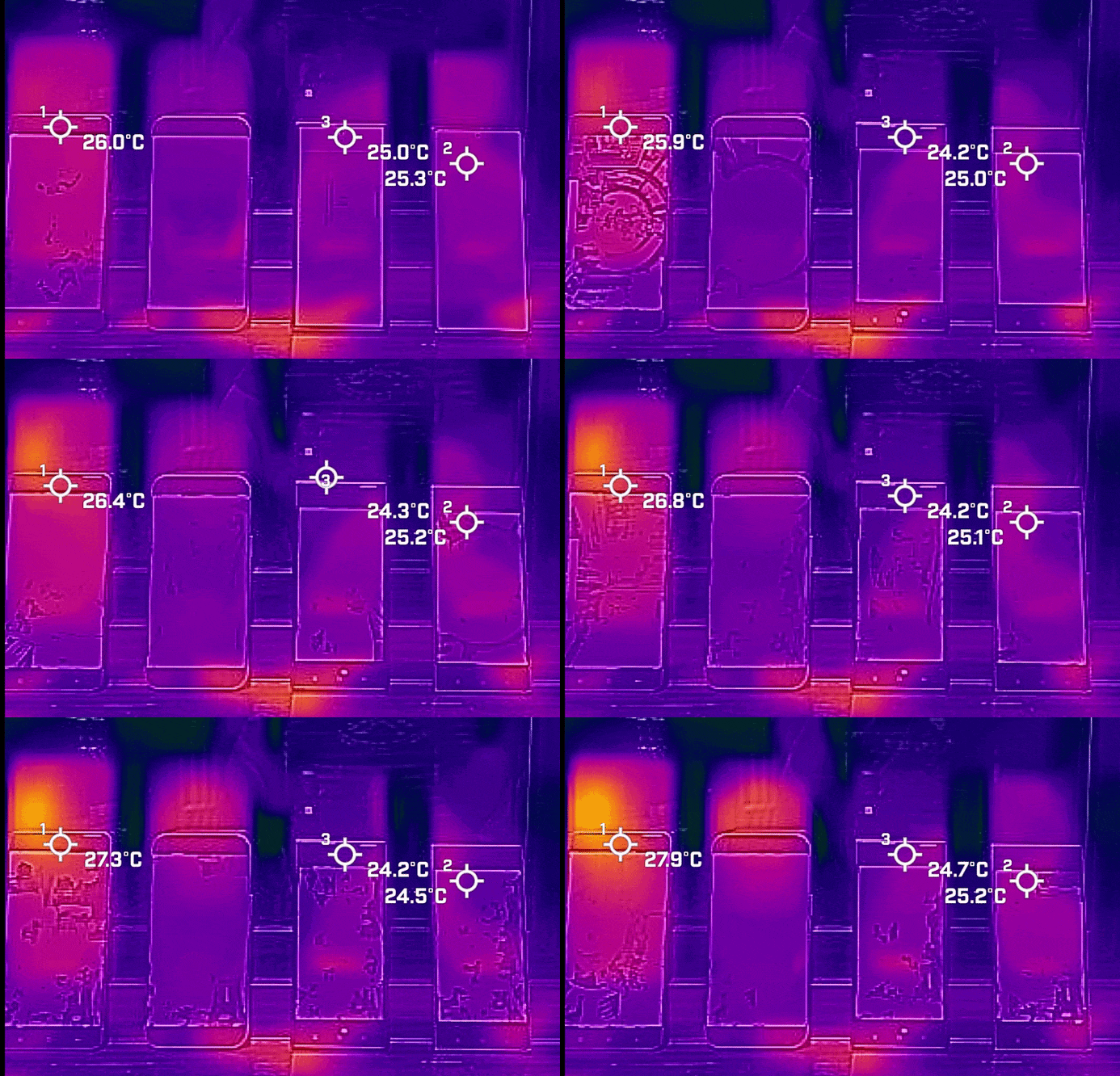
If you look at the video of all four phones, you can see that the Galaxy S26 Ultra starts heating up the fastest, hitting around 30C/86F in around a minute. The iPhone 17 Pro Max isn't that far behind, though the Z Fold 8 Ultra and Z Fold 7 both seem to be heating up a lot more slowly in their folded state.
The S26 Ultra seems to concentrate most of its heat in the top left corner, on the opposite side of the phone to the vertical camera bar. Meanwhile, the iPhone 17 Pro Max has a large section of heat across its top half, where the raised plateau camera bar is — which makes sense considering Apple designed the camera bar to help dissipate heat.


As the videos approach the 4-minute mark, the S26 Ultra starts to approach 40C/104F, while the two foldables only just hit 30C/86F. The iPhone isn't that far behind Samsung, and in the case of all four phones the heat seems to be mainly concentrated in the top half of each device.
By the time the 10-minute run is almost complete, parts of the S26 Ultra and iPhone have exceeded 40C/104F, while the foldables both seem to be hovering between 35C/95F and 37C/99F. At this stage the heat seems to have covered the entirety of the four phones, though only the iPhone and S26 Ultra have such high concentrations.
When I picked up the phones after closing 3DMark, I found that the S26 Ultra definitely felt the hottest, especially around the camera bar. Not quite enough to instantly burn yourself, but hot enough that you don't want prolonged exposure to it. The iPhone was similar, though didn't feel quite as hot, while the two foldables didn't feel that much different from normal.
Unfolding the heat
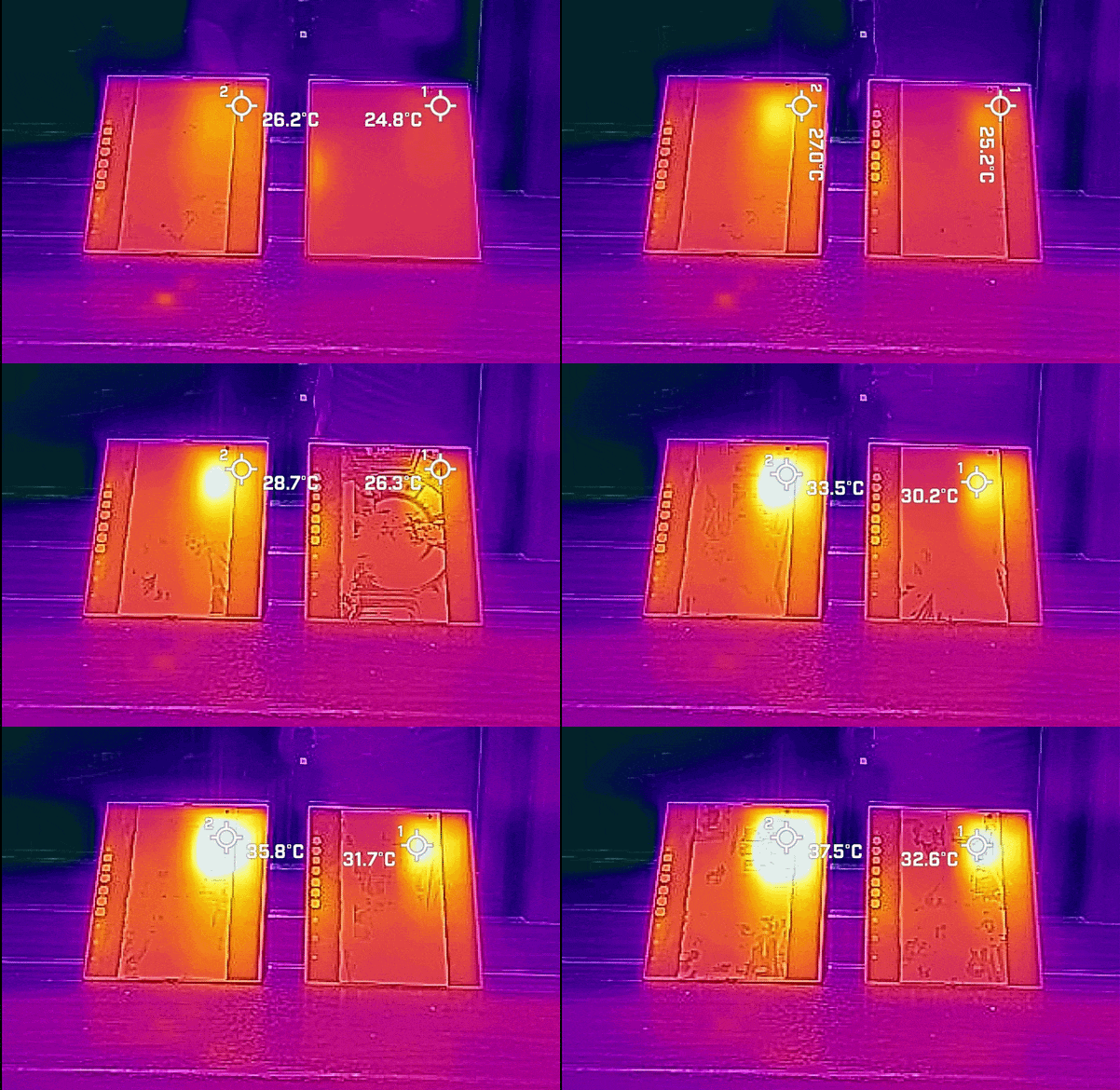
Of course these readings were taken from the front of the phone, while the two foldables were all closed up. How much of a difference would unfolding them make? As it turns out, quite a lot.
As soon as the benchmarking test started, heat bloomed out of both phones in the top right — right where the camera bar is. Unsurprisingly given its more powerful hardware, the temperature climbed much higher on the Z Fold 8 Ultra, though the Z Fold 7 wasn't that far behind.


Within 20 seconds the temperature had jumped past 30C/89F, and after a minute the Z Fold 8 Ultra had already climbed past 40C/104F. 20 seconds later the Z Fold 7 joined it, and in both cases the heat was concentrated in the top right corner before slowly spreading out over both halves of the phones.
The temperature plateaued pretty quickly, landing a few degrees higher than 40C and hovering around that level. The majority of the heat remained concentrated on the right side of the phone too, with minimal transference over to the left half.
This explains why the heat build-up seemed so slow in the previous test. The majority of the heat will have also been concentrated at the back of the device where the thermal camera couldn't pick it up as easily.
Verdict

The Galaxy Z Fold 8 Ultra can get pretty hot, but so does the Galaxy S26 Ultra and both phones seem to heat up to similar temperatures. Or, at least they did during identical Solar Bay Extreme Stress Tests — different processes will obviously have different effects.
The way the heat spread out was completely different, though. The Galaxy S26 Ultra recorded the highest temperatures in the top left side of the phone, on the opposite side of the phone to the cameras. Teardowns have revealed that this is where the vapor chamber cooling pushes the excess heat, so it's natural that this would see the most extreme temperatures. The same goes for the iPhone 17 Pro Max and its own raised camera bar.
The unfolded stress test showed that the Z Fold 8 Ultra (and Z Fold 7) don't have that advantage. While the heat appears in that top corner by the cameras, it quickly spreads across the entire right side of the phone. Apparently, the heat struggled to bypass the hinge, which is an interesting observation.
In the case of the Z Fold 8 Ultra the heat isn't being actively routed away from core internal components — like the battery or chipset. That means it has no choice but to spread out until it reaches the edge of the phone and radiates away. You can actually see that happening in the thermal video as the heat spreads out from the very top of the phone.
While concentrating the heat in one area seems like a bad thing, if it's a spot with few major components then letting the heat spread across the entire phone is even worse. Because it means the heat isn't actively being siphoned away from the components that are most affected by extreme temperatures. Over extended periods of time, that will lead to degradation and reduced performance and affect the phone's lifespan.
One thing I did notice when I accidentally closed 3DMark on the Z Fold 8 Ultra at the end of the test, is that the temperature started to drop pretty rapidly once the stress test stopped running. Which should mean that short periods of high-performance activity shouldn't pose a long-term problem. As long as you don't do it too often.
If you are doing anything performance heavy, make sure to take the appropriate measures to keep your phone as cool as possible. Our tips for helping your phone survive a heatwave will also apply here, which means avoiding direct sunlight, stop charging and so on. You can speed up the heat removal with things like fans or phone coolers, and you should absolutely avoid forcing your phone to cool down with appliances like the fridge — that's just going to cause even more issues.
Follow Tom's Guide on Google News and add us as a preferred source to get our up-to-date news, analysis, and reviews in your feeds.

More from Tom's Guide
- I’ve tested the Galaxy Z Fold 8 and it proves Apple really needs to solve this one thing
- I tried the new Galaxy AI video tracker on my Z Fold 8 — and it fixes my biggest problem with phone videos
- I asked Siri AI and Gemini a series of increasingly bizarre questions to see how they responded —here's what happened