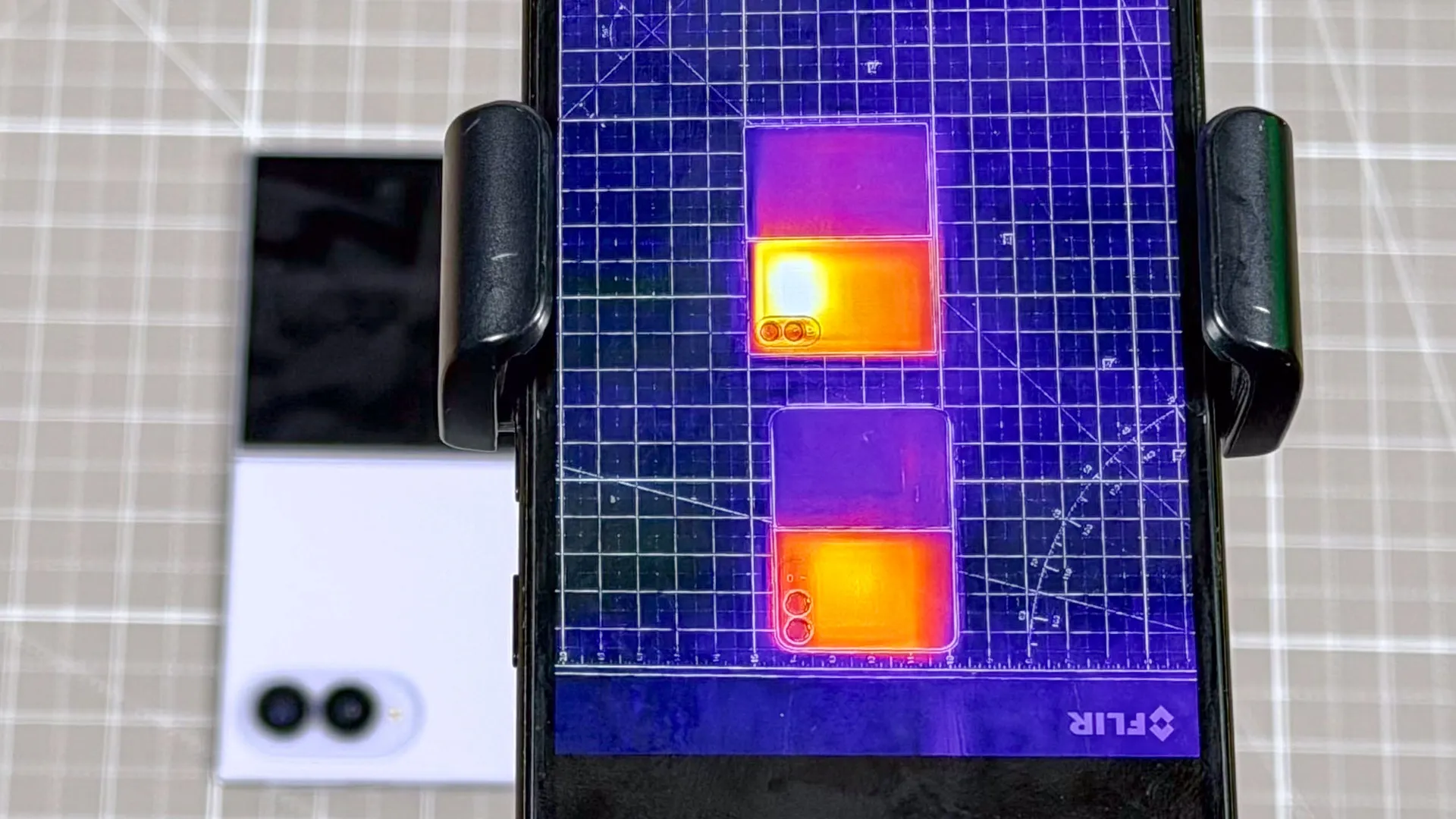
I spent two days with the iPhone Duo in our test labs running our long list of benchmarks, but before turning it over to my colleague for a full review, I wanted to know: How does the iPhone Duo handle heavy loads like gaming compared to the Z Fold 8 — and what does that mean for how hot the phones will get? Will there be thermal throttling on either phone?
To answer my question, I ran the 3DMark Wild Life Extreme Stress Test in a 20 minute loop on both phones. These benchmarks simulate a long gaming session, and the results were very different on each phone.
Apple’s phone came out hotter than Samsung’s at the end of my tests, yet it managed to deliver better performance. But does that actually make it a better foldable for gaming and sustained workloads? There’s only one way to find out. Here’s what I found out.
iPhone Duo vs. Galaxy Z Fold 8: The thermal camera analysis
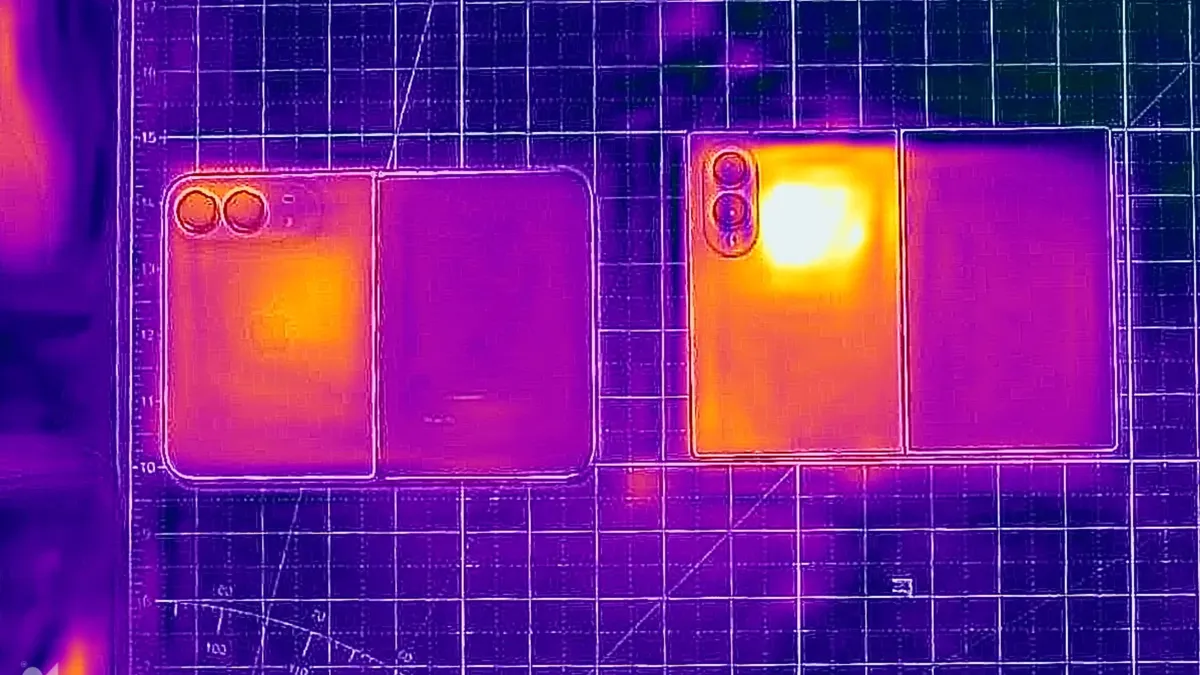
For my test, I set up the iPhone Duo as well as the Z Fold 8 in our Tom’s Guide studio under our normal studio lighting. Both phones were unfolded and set to their default refresh rates, cooled down naturally before placing them screen up on a plastic mat on our studio surface.
I then started the 3DMark Wild Life Extreme Benchmark on the interior displays and turned their screens down. Using a FLIR One thermal camera connected to a Pixel phone, it was used to record the rear of the phones during the 20 minute loop.
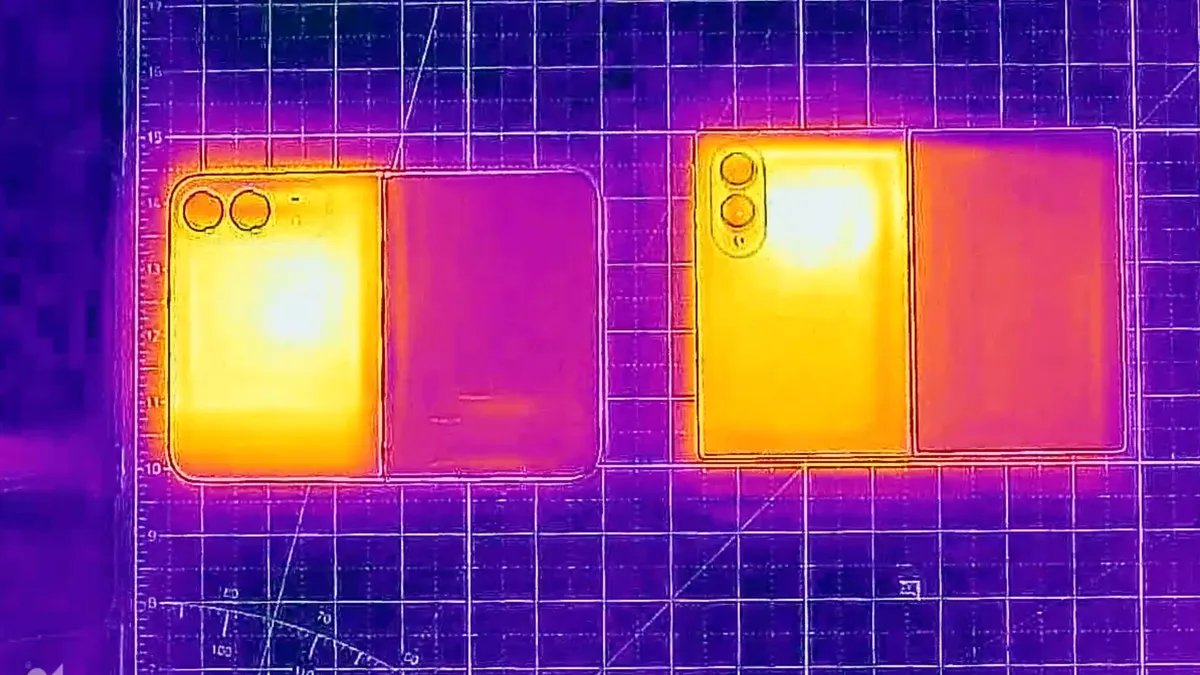
Results for this test can vary based on setup, but under the thermal imaging camera during sustained stress testing, the two devices showed some really unique heat signatures and thermal dissipation patterns.
On the right side, the Galaxy Z Fold 8 has a bright, intense heat point concentrated near the top section where the CPU is known to be located. Over time, this hotspot expanded outward across the back surface, and onto the right side screen, turning the surrounding area on both noticeably red under the thermal lens as heat saturated the chassis. The primary spot where the heat signature started from, though, was still bright and hot.
Meanwhile, the iPhone Duo produced a far more balanced, uniform heat map. The heat was distributed across a wider surface area rather than forming a single localized hotspot, keeping surface temperatures and the heat more evenly across the frame and display rather than at one top point.
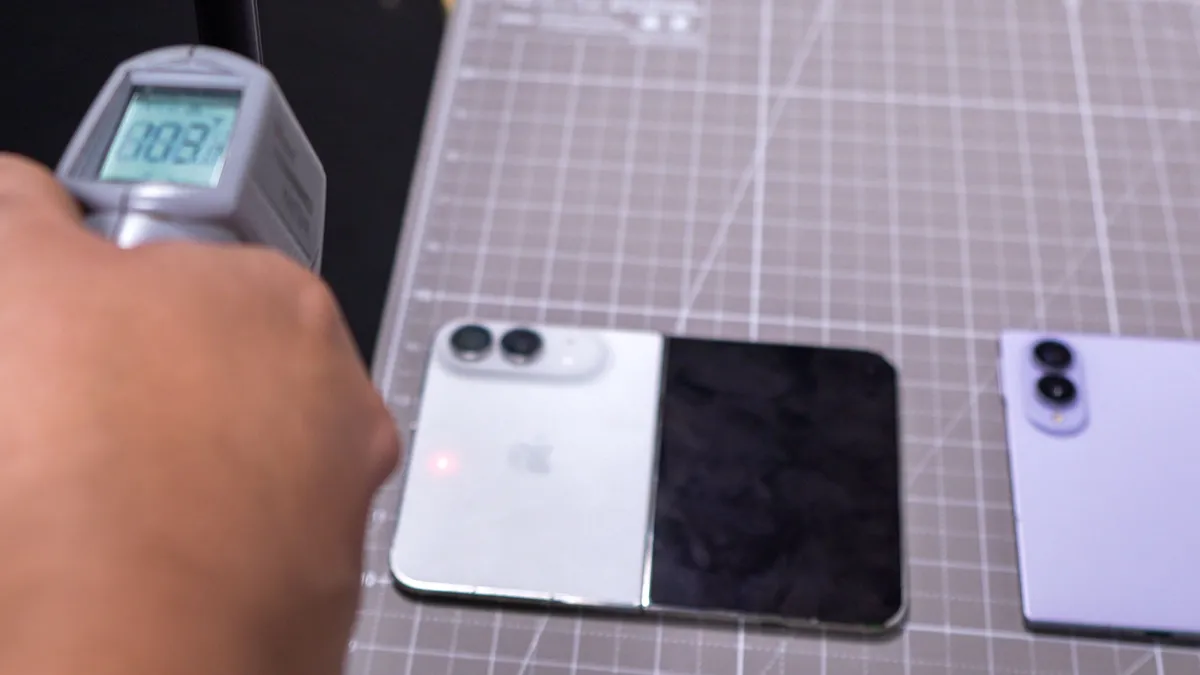
After checking the temperature on both phones in the same spot, the iPhone was warmer to the touch at 103 degrees. The Z Fold 8, meanwhile, stayed slightly cooler to the touch at around 96 degrees.
A cooler phone might sound better, but my benchmark results revealed a trade-off! The Galaxy Z Fold 8 retained less of its graphics performance during sustained testing, despite its lower exterior temperatures.
iPhone Duo vs. Galaxy Z Fold 8: Stress test results
When I recorded the results from the 3DMark Wild Life Extreme Stress Test, the iPhone Duo achieved a higher stability score of 67.9%, showing better sustained performance over the 20-loop stress test compared to the Galaxy Z Fold 8, which scored 51.4%.
The test’s best loop score hit 7,639 on the iPhone Duo, compared to 7,047 on the Galaxy Z Fold 8. This is when the phones are at their best performance. Meanwhile, after thermal constraints kick in, the lowest score drops to 5,184 for the iPhone Duo and 3,626 for the Galaxy Z Fold 8.
The numbers might sound confusing, but a higher stability score is better, and the loop score shows how the phone changed performance over time. In the end, the iPhone Duo wins in all three tests.
iPhone Duo vs. Galaxy Z Fold 8: Engineering difference
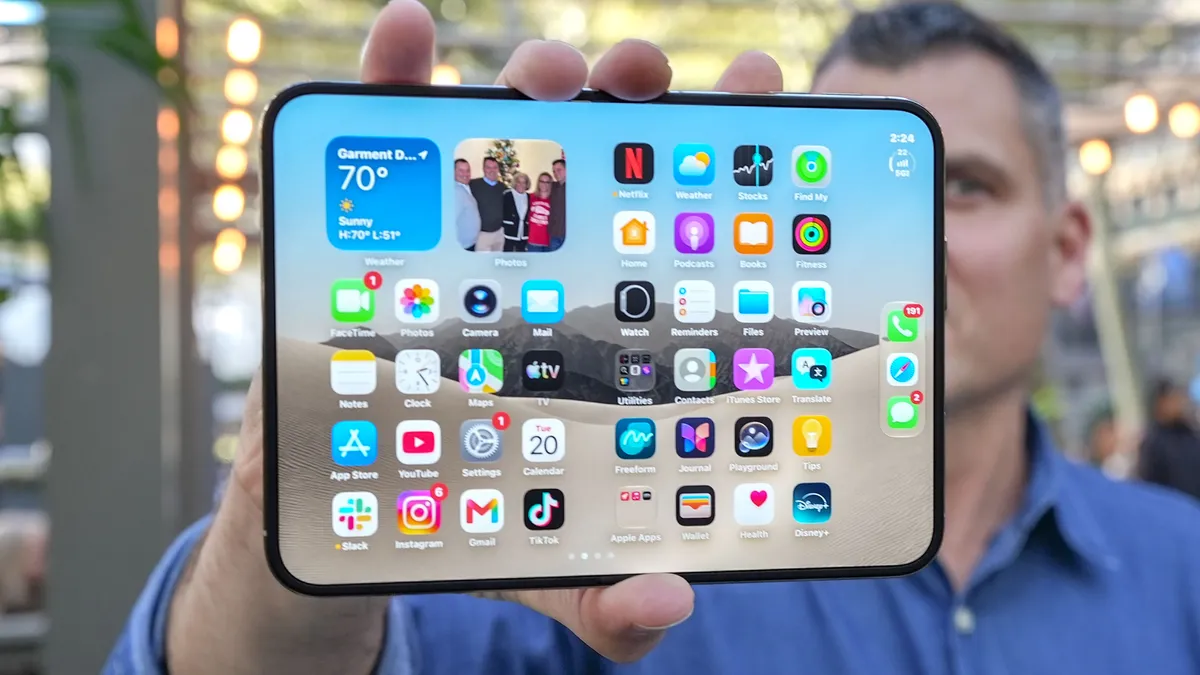
Why did things end up this way? The Z Fold 8 relies on relatively basic thermal management materials rather than the vapor chamber setup seen on the iPhone Duo. Because of this, heat generated by the processor appears to be trapped near the top of the phone on the Z Fold 8.
Despite remaining cooler on the outside, the Galaxy Z Fold 8 lost a greater proportion of its performance over the course of the stress test. This shows that the iPhone Duo is better at sustaining performance, although this is a synthetic benchmark, so results can vary based on what task is pushing the phones.
Still, the iPhone Duo pulls heat directly off the processor and pushes it outward across the body and display. Because of this, the device feels noticeably warmer across its exterior surface. However, by successfully dumping that heat away from the core, it keeps the internal processor dramatically cooler.
This also explains the internal sensor data captured by 3DMark during the stress test. The Samsung phone's core climbed from 95°F to a hot 113°F internally.
iPhone Duo vs. Galaxy Z Fold 8: Bottom line
The lesson is simple: think of the iPhone Duo like a NASCAR stock car with an advanced cooling system. When the engine is pushed hard, the cooling system moves heat away from the processor and spreads it across a larger area of the phone's body. That can make the exterior warmer to the touch, but it also helps the processor sustain high performance for longer without thermal throttling.
The Galaxy Z Fold 8 is different. Under sustained, demanding workloads, its cooling limitations can cause performance to drop as the processor reduces power to control temperatures. The phone may feel cooler in some situations, but a cooler exterior alone doesn't tell you how effectively heat is being managed internally.
What does this mean for you? If you're a mobile gamer, sustained performance matters more. During 20–30 minutes of demanding gameplay, a phone with better thermal management can maintain higher frame rates and deliver more consistent gameplay. On the other side of things, a phone that gets hot around the CPU, throttles more aggressively may experience lower frame rates or occasional stuttering.
At least from my tests, there’s no doubt about it. The iPhone Duo wins. Its cooling design gives it a promising advantage for gaming and sustained performance, compared to how it performs to the Galaxy Z Fold 8 in our same test conditions.

Follow Tom's Guide on Google News and add us as a preferred source to get our up-to-date news, analysis, and reviews in your feeds.
More from Tom's Guide