After putting the Galaxy Z Fold 8 and Z Fold 8 Ultra to the test, there’s no denying that Samsung continues to make some of the best foldable phones around. While the Ultra boasts better specs and performance, it’s the wider aspect ratio of the standard Z Fold 8 that continues to feel like the fresher of the two.
Yet, despite evolving the designs to be thinner and lighter — along with creating a much more subtle crease across their displays — there’s still one major problem that Samsung and Google have yet to solve properly: app scaling and dynamic layout adaptation.
Rumors are persistent that Apple will announce its highly anticipated iPhone Ultra foldable alongside or shortly after the iPhone 18 Pro lineup. While much of the industry's focus remains on engineering a nearly invisible display crease, Apple's upcoming foldable could ultimately beat its rivals in the area where Apple shines most: delivering a class-defining software experience.
If Apple wants to avoid the biggest trap in the foldable space, it must deliver a fluid, tablet-native UI transition system — and Samsung’s current lineup is proof of it.
Apple has already proven the importance of software over hardware
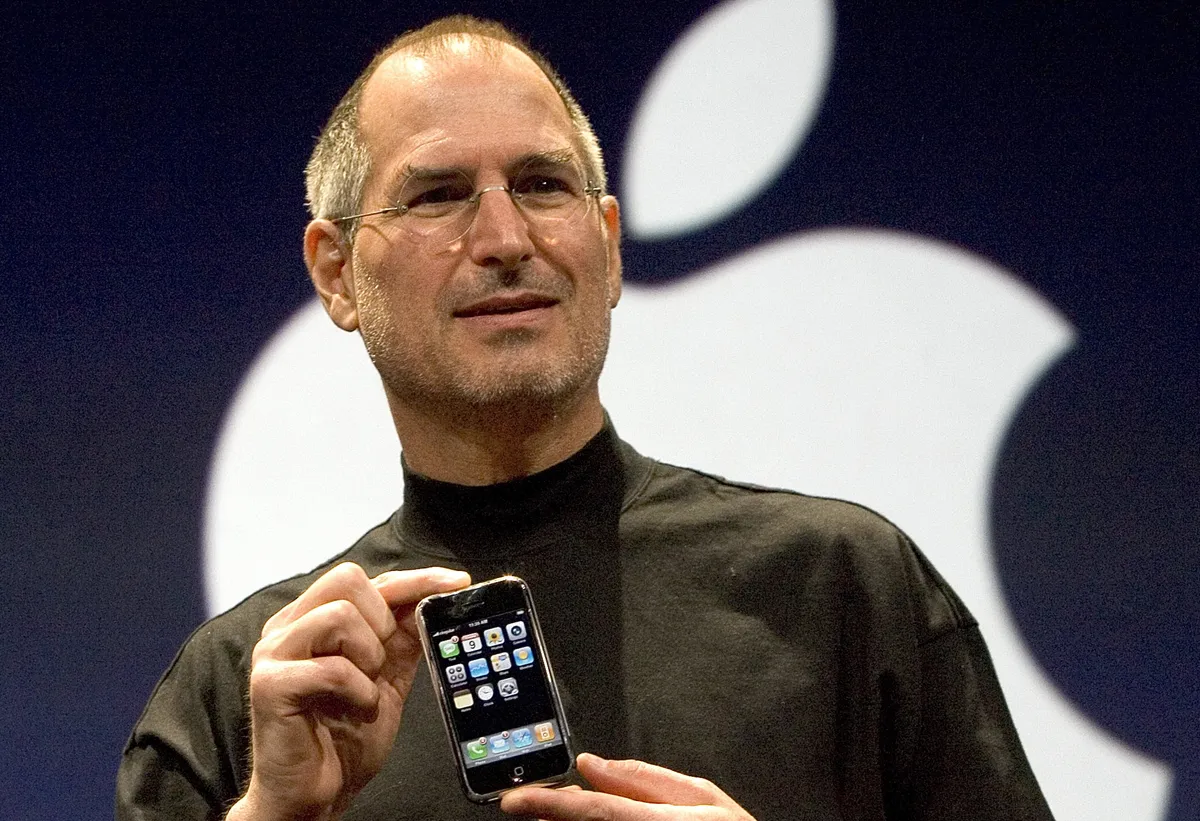
The idea that Apple products "work like magic" isn’t just a coincidence — it comes from how the company allows software to define the product. When Steve Jobs unveiled the original iPhone in 2007, the device lacked features that competing phones had offered for years: there was no 3G connectivity, no physical keyboard, and no stylus.
Yet, it instantly made those rival smartphones obsolete because Apple focused entirely on the user experience. Through fluid multi-touch gestures, smooth kinetic scrolling, and a desktop-class Safari browser, Apple demonstrated why its software was paramount. By prioritizing intuitive software, Apple didn't just compete with Nokia, Palm, and BlackBerry — it completely redefined what a smartphone could be.
And you know what? It could end up doing the exact same thing with the iPhone Ultra.
Galaxy Z Fold 8 is big on multi-tasking, but not so much with layouts

What appeals most to me about the Galaxy Z Fold 8 is how it’s a multitasking powerhouse, complete with the ability to run three apps simultaneously side-by-side. While the core value proposition of a book-style foldable is turning a compact cover screen into an expansive inner display, the Galaxy Z Fold 8 and other book-style foldables fall short of that promise when opening daily apps.
Too often, unfolding current Android foldables results in apps not scaling properly. TikTok is a perfect example: while it looks fine on the cover screen, black bars flank the app’s layout when unfolded on the main display. Another example is how some games I play, like Age of Origins, end up looking stretched out. Worse yet, to get them to scale correctly, I’m often forced to restart the app entirely.
If that’s not enough, there’s also the issue of apps failing to dynamically scale when switching from portrait to landscape. Sure, native Google apps like Gmail and YouTube reorganize themselves seamlessly regardless of orientation, but the vast majority of third-party apps simply don't — and this frustration is shared across virtually all Android foldables I’ve tested.
iPhone Ultra needs seamless scaling

This is where the iPhone Ultra has the opportunity to completely redefine the foldable landscape. Apple doesn't need perfection in a crease-less display, nor does it need to reinvent multitasking — it simply needs to make app scaling invisible.
Apps shouldn't just blow up to fill space when the iPhone Ultra is unfolded because they should adapt using multi-column, iPad-optimized layouts. The UI needs to dynamically transform into a clean, iPadOS-esque interface instantly. Switching between screens shouldn't force apps to restart or clear from memory just to adjust their layout.
If Apple can enforce this level of adaptive scaling across its app ecosystem the way it did with the iPad, the iPhone Ultra won't just be another foldable — it will be the first one that truly feels complete.
Follow Tom's Guide on Google News and add us as a preferred source to get our up-to-date news, analysis, and reviews in your feeds.

More from Tom's Guide