By all accounts Samsung should be nervous. After literally inventing the foldable phone 7 years ago and steadily evolving the category, it looks like Apple is going to try to swoop in and steal its thunder this fall with the launch of the iPhone Ultra (aka iPhone Fold).
But if you ask Samsung’s Jay Kim — the executive vice president overseeing the new Galaxy Z Fold 8 series launch — about this imminent threat, he exudes a quiet confidence.

“If our big market player is coming into the market… then it proves that what I have been thinking and envisioning — and how much effort that we put it in — is actually the right direction,” Kim said.
Samsung is so bullish that it’s broadening its portfolio to three foldable phones this year: the Galaxy Z Fold 8 Ultra, the Galaxy Z Flip 8 and the brand new Galaxy Z Fold 8, complete with a squat and wide design that looks a lot like what Apple is reportedly cooking up.

Ahead of Samsung Galaxy Unpacked I sat down with Kim alongside Lance Ulanoff at TechRadar for a wide-ranging interview on the new foldable lineup, the upcoming competition, and what it’s going to take for this category to “succeed.”
Galaxy Z Fold 8: Why Go Wide?
The regular Fold 8 is easily the most intriguing new Samsung device because it’s the first time the company has launched a wide form factor.
The Galaxy Z Fold 8 features a 5.5-inch cover display with a 10:16 aspect ratio and a 7.6-inch inner screen with a 4:3 ratio. And there’s a reason for going wide: it’s how people prefer to view content.

“When we looked at our consumer insights on how people react to the products, almost 50% are focused on media, whether on the outside or the inside main screen,” said Kim.

Typing on the external display of the Fold 8 is way more comfortable versus the narrower Z Fold 8 Ultra, and when watching videos on the main screen the black bars above and below the panel are much smaller than before.

The other factor for Kim and the rest of the team was pocketability. So they sought to create a Goldilocks phone that combines the multitasking chops of the previous Folds with the compact design of the Flip.

“The Flip is sleek, thin and light, and our customers want both sides of that world. So we said why not?” Kim said.
The result is a phone that’s the lightest Fold yet at just 201 grams and in a shape that’s nearly identical to a passport.

“We studied it a lot,” Kim shared. “We put together the form factor where media makes the most sense for the content native without compromising anything on the bar type [phone experience].”
Galaxy Z Fold 8 vs Z Fold 8 Ultra: Who should get what?
Despite its name, the Galaxy Z Fold 8 is not a direct successor to the Galaxy Z Fold 7. It’s a completely new model. The sequel is actually the Z Fold 8 Ultra, which compelled me to ask why Samsung settled on this naming scheme and whether it could confuse shoppers.
"Going with titanium was not just to make it thinner,” Kim said. “it actually helps you be durable and stable in the way you fold and unfold."
“The Ultra is the highest, most premium, most advanced product,” Kim said. “We see a lot of Ultra consumers coming over to the Fold, asking for similar performance and cameras, so we put a lot of effort to match that capability.”

So why not call the Z Fold 8 the Fold Wide as was rumored? For Kim, Samsung wasn’t trying to create something new, but the new baseline standard for the Fold experience. “I think this is more of the essence of the Fold,” Kim said while pointing to the Fold 8.
With its bigger 8-inch display, bigger battery and triple-camera setup, the Fold 8 Ultra is more for productivity while the regular Fold 8 (wider displays, dual cameras) is more for content consumption.

The Z Fold 8 Ultra also gets some pretty major upgrades, including a new 50MP wide camera, an even thinner design (4.1 mm) that’s easier to open and a display that has virtually no crease, thanks in large part to the addition of Flex Titanium technology.
“Going with titanium was not just to make it thinner,” Kim said. “it actually helps you be durable and stable in the way you fold and unfold, so it's a combination of a lot of things coming together.”
Is the S Pen coming back?
The last Samsung foldable to feature the S Pen was the Galaxy Z Fold 6, but the company removed the digitizer in order to achieve a thinner design. It’s not coming back for the Fold 8 either, but Samsung isn’t closing the door on this feature.

When asked if Samsung would consider bringing back the S Pen, even if it means going from 4.1mm thick to 4.2mm, Kim said “we’ll definitely consider your suggestion.”
“In order to focus on S Pen we have to make trade-offs. In order to put in (a digitizer) you have to sacrifice thinness or different aspects. But I think we wanted to address the most important feedback we got from the market.”
Since this interview we have heard from another Samsung executive that confirmed that the company is open to bringing back the S Pen.
The (cautious) jump to silicon carbon batteries

While Chinese phone makers have been pushing out devices with ultra-high capacity silicon carbon batteries for well over a year, Samsung has been sitting on the sidelines. And that’s understandable given the safety concerns around embracing any new battery technology.
With its new foldable lineup, however, the Galaxy Z Fold 8 Ultra and Galaxy Z Fold 8 make the jump to silicon carbon, delivering more capacity while keeping the designs super slim.
“We have been testing silicon batteries for quite some time. We’re looking at being very — I wouldn’t say conservative — but more taking it one step at a time.”
The Galaxy Z Fold 8 Ultra gets a 5,000 mAh silicon carbon battery (up from 4,400 on the Fold 7). And the Galaxy Z Fold 8 has a 4,800 mAh battery.
While silicon carbon does enable much higher capacity batteries, there have been some concerns around battery swelling and shorter overall lifecycles.

“We have been testing the silicon batteries for quite some time,” Kim admitted. “We’re looking at being very — I wouldn’t say conservative — but more taking it one step at a time.”
The reason why Samsung is embracing silicon battery tech for foldables first is because you can’t simply put in a larger Li-ion battery, as it would balloon the designs.
“We’re doing a lot of testing and experimentation into how you make the product thin and light, and yet not push too much into the experimental stage,” Kim said.” “We have to be very confident that it’s durable and stable, and it has to be scalable.”
The Apple foldable threat
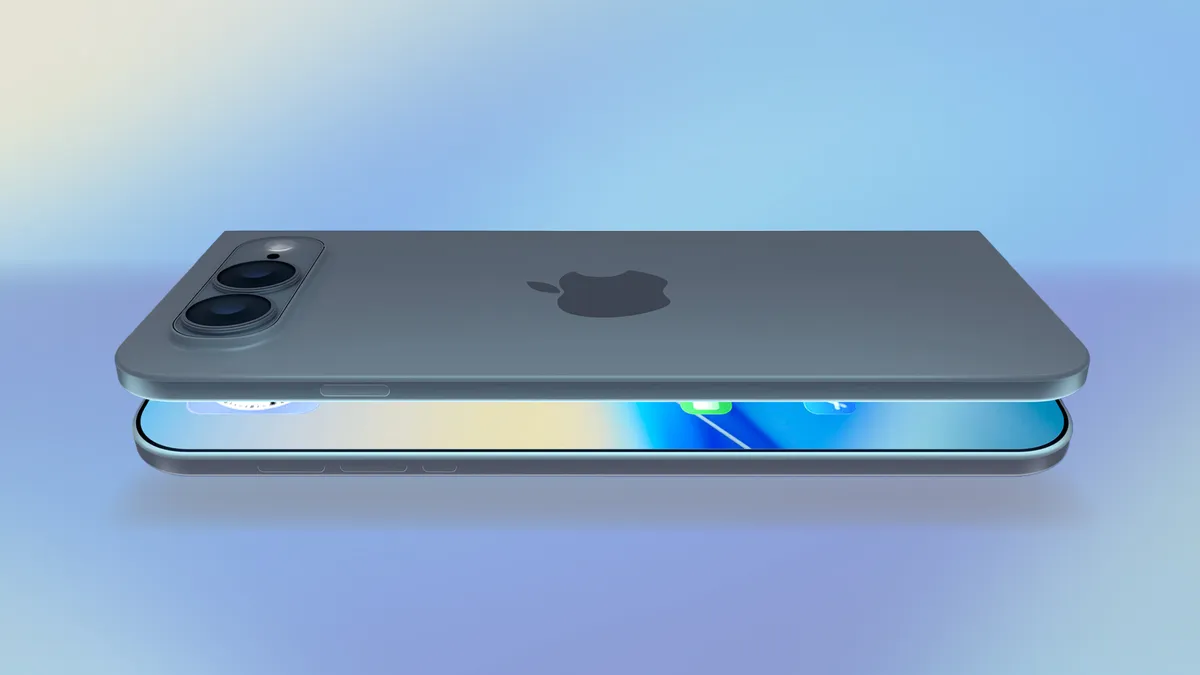
Apple is famously late to lots of categories, and it looks like we’ll be able to add foldable phones to that list later this year.
And even though this will be Apple’s very first stab at a foldable, they’ve had the luxury of studying the market for years and biding their time to introduce something they believe shoppers will want.
"It’s hard to comment because I don’t know what (Apple is) coming up with, but I’m very confident that our product will be one that consumers will appreciate."
Analysts seem pretty high on Apple’s chances, with IDC predicting 22% worldwide market share in the first year and Counterpoint research projecting a whopping 48% share in North America. So I asked Kim about these numbers and what he thinks about the arrival of the iPhone Fold/Ultra.
“It’s hard to comment because I don’t know what they’re coming up with,” Kim said, “but I’m very confident that our product will be one that consumers will appreciate.”

Of course, Samsung itself has been studying foldables for a long time, and they have a lot of market data. “Our consumers are already using the product every day in the market,” Kim emphasized.
Kim also noted that 30% of consumers are “coming back to foldables.” So it could be someone who owned a foldable, then went to an S Series device, and then has returned to a Fold or Flip because the devices keep getting better.

Kim was also keen to subtly point out that Apple will likely only have a single foldable phone this fall while Samsung offers more choice.
“The market is actually moving pretty fast, and there's a lot of different needs, and we're trying to adapt to that,” Kim said. “Consumers should not be adopting a single size. We should be providing options.”
When will foldables truly be ‘successful’?
As we wound down our conversation with Jay Kim, my colleague Lance asked a pretty poignant question: “When do you consider the foldable category a success?”

But instead of just launching into his answer, Kim turned the question on us. “Do we see [foldables] as a success?”
Lance said yes from an engineering standpoint but not from a marketing one because foldables are still a tiny slice of the overall market (about 4%).
I said I saw things as a dichotomy. People who have purchased devices like the Galaxy Z Fold 7 would call the category a success because they can enjoy the foldable experience without the usual penalties like a bulky design. But I also said success could look like 10% of the market, so 1 out of every 10 phones sold overall.
Kim told us that we could be “on the verge of foldables going mainstream” And it has a lot to do with Samsung making a bet on a totally new model in the Galaxy Z Fold 8.
“We’ve had these two form factors for a long time, Kim said. “Introducing another one is a bold move because it shows that we’re pretty confident in the category and how the market is going to react to it. I’m more excited about what’s to come.”