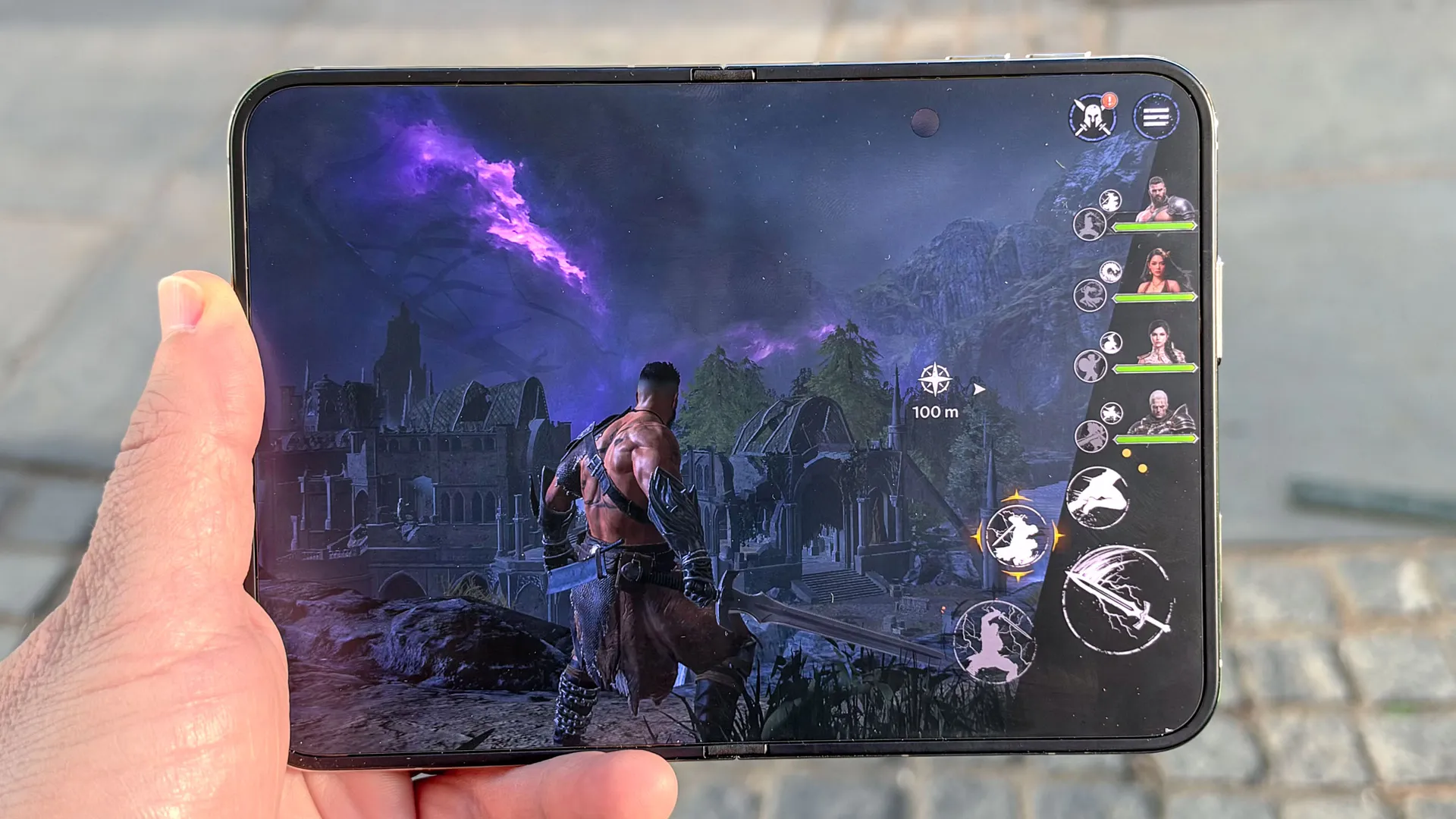
Apple has a lot to prove to critics — including myself — if it wants to show that the iPhone Duo is, without question, the best foldable phone on the market. That’s because book-style foldables demand far more system resources, especially when driving larger canvases than traditional slab phones.
One area where the iPhone Duo could solidify its position as the foldable to beat is performance. Armed with the A20 Pro chip, early signs suggest it is no slouch, especially given the outstanding performance we’ve seen from the iPhone 18 Pro and 18 Pro Max. But where does it land against key rivals, as well as its slab siblings?
After running various synthetic benchmark tests, I can tell you that the iPhone Duo is easily one of the most powerful phones around. Here’s why.
iPhone Duo CPU performance: Geekbench
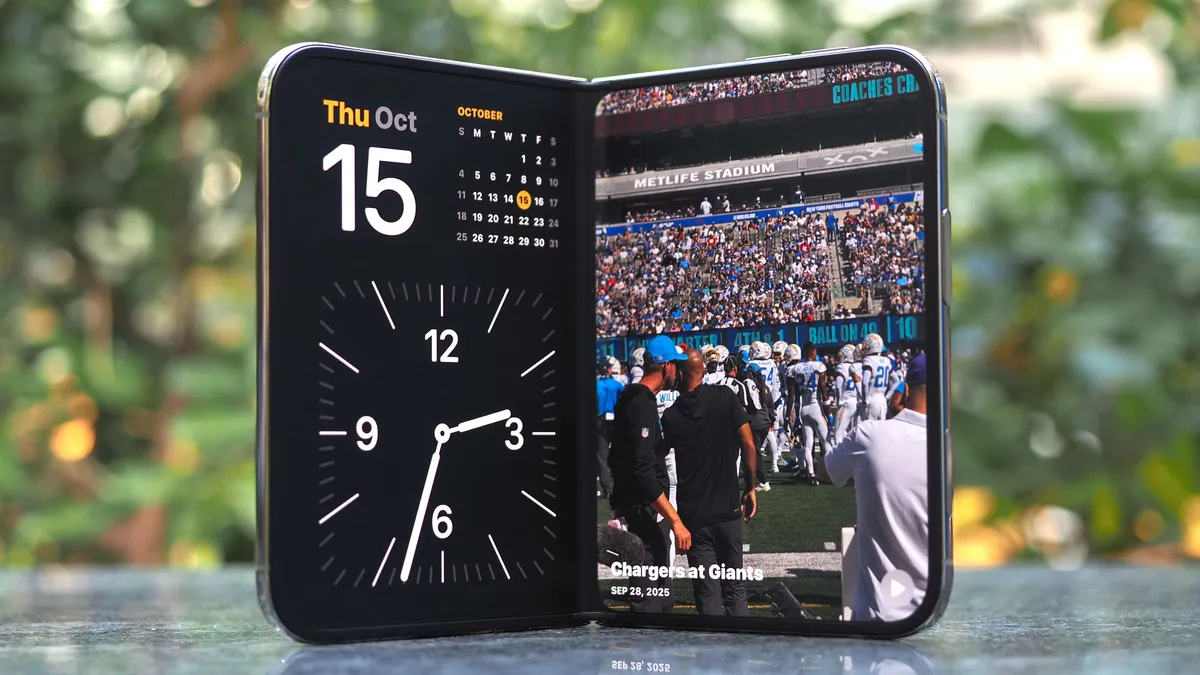
First off, I want to show how the iPhone Duo operates on a baseline level when its CPU is put to the test — which is where Geekbench scores come in. This synthetic benchmark tests a device’s single- and multi-core performance, and the A20 Pro proves once again that it is just as formidable inside the iPhone Duo.
Apple’s first foldable phone pulls in impressive Geekbench 6 single- and multi-core scores of 4,722 and 12,708, respectively. While those figures trail its Pro siblings slightly, the difference is practically negligible given that the single-core scores are separated by fewer than 20 points, and multi-core by less than 100.
| Row 0 - Cell 0 | Geekbench 6 |
Geekbench 7 |
iPhone Duo |
4,722 / 12,708 |
4,007 / 11,363 |
iPhone 18 Pro |
4,735 / 12,800 |
4,022 / 11,543 |
iPhone 18 Pro Max |
4,741 / 12,789 |
4,025 / 11,525 |
Galaxy Z Fold 8 Ultra |
3,733 / 11,457 |
3,110 / 10,578 |
Galaxy Z Fold 8 |
3,659 / 11,020 |
2,978 / 9,811 |
Motorola Razr Fold |
2,711 / 9,134 |
N/A |
Pixel 11 Pro Fold |
2,687 / 7,381 |
2,309 / 6,803 |
If you’re curious, the iPhone 18 Pro Max edges out the iPhone Duo across the board in Geekbench 6 and 7, but it holds less than a 1.5% performance advantage overall — effectively proving that the Duo is just as capable as Apple’s traditional flagship slabs.
Compared to foldable rivals like the Galaxy Z Fold 8, the iPhone Duo easily outmuscles the field. Neither the Galaxy Z Fold 8 Ultra nor the Motorola Razr Fold eclipses the 4,000-point mark in Geekbench 6 single-core, while the Pixel 11 Pro Fold sits far behind the pack with noticeably subpar scores.
iPhone Duo graphics performance: 3DMark
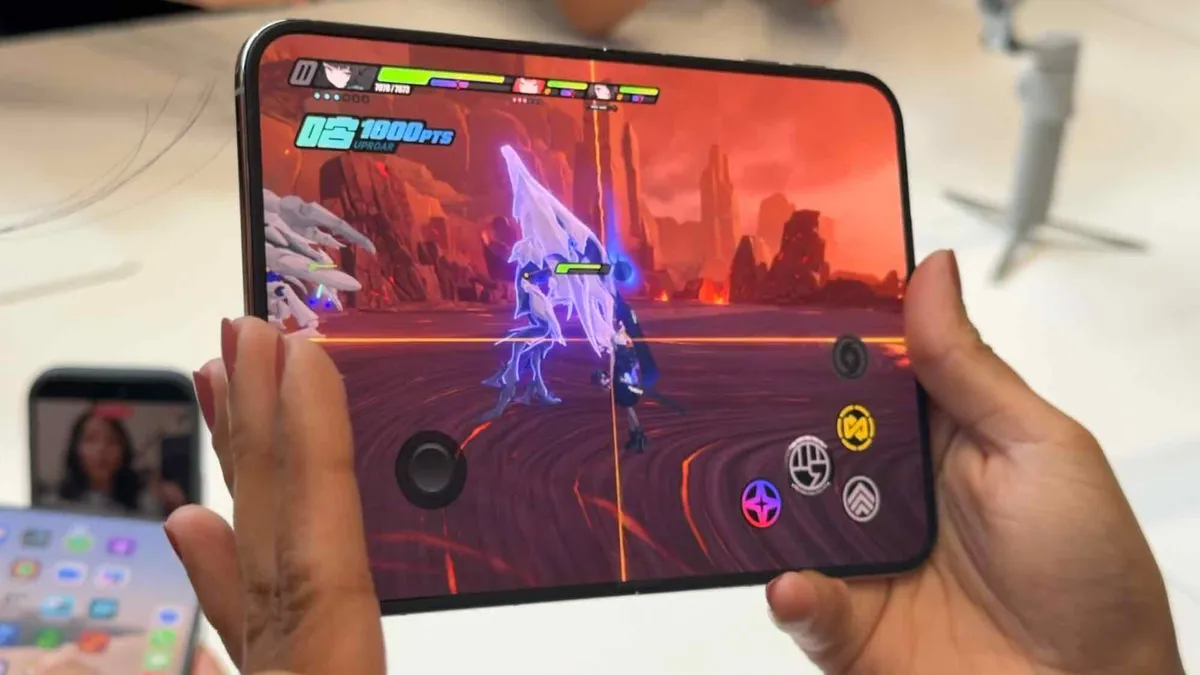
Nowadays, you could argue that most flagship phones feel perfectly responsive during basic tasks — like sending emails, browsing the web, or streaming the occasional video. Where I tend to notice the biggest differences, however, is how they handle the demanding load of running today’s graphically intensive games. While the iPhone 18 Pro and 18 Pro Max have already proven that Apple's silicon can outpace Qualcomm's (for now) the iPhone Duo simply cements that lead.
Running 3DMark’s Solar Bay Unlimited test, the iPhone Duo achieves the same fluid frame rates as its siblings. Averaging 62.3 fps, it slots directly between the two Pro flagships. And while it doesn't cross the 17,000 threshold like the iPhone 18 Pro Max, the iPhone Duo’s score of 16,496 is still remarkably strong.
| Row 0 - Cell 0 | 3DMark Solar Bay Unlimited |
iPhone Duo |
62.3 fps / 16,496 |
iPhone 18 Pro |
61.93 fps / 16,288 |
iPhone 18 Pro Max |
67.9 fps / 17,850 |
Galaxy Z Fold 8 Ultra |
49.24 fps / 12,950 |
Galaxy Z Fold 8 |
47.35 fps / 12,454 |
Motorola Razr Fold |
34.65 fps / 9,413 |
Pixel 11 Pro Fold |
N/A |
That advantage becomes even more pronounced when comparing its graphics processing scores against rival foldables. In fact, none of its key competitors come close to cracking the 50-fps mark. The Galaxy Z Fold 8 Ultra and Fold 8 hover just beneath it at 49.24 fps and 47.35 fps, respectively, but the iPhone Duo’s 62.3-fps average puts it in an entirely different league. That translates to a roughly 32% GPU performance advantage over the Z Fold 8 — a massive gap in mobile gaming.
All of this points to an obvious takeaway: the iPhone Duo is a legitimate gamer’s phone. Beyond its sprawling 7.8-inch main canvas that beautifully renders complex landscapes with realistic lighting effects, it delivers smooth, fluid gameplay without noticeable stutter or frame drops when on-screen action heats up.
iPhone Duo performance: GeekBench AI
| Row 0 - Cell 0 | Geekbench AI 1.7 |
iPhone Duo |
69,438 (Quantitized Core ML/Neural Engine) |
iPhone 18 Pro |
69,245 (Quantitized Core ML/Neural Engine) |
iPhone 18 Pro Max |
71,974 (Quantitized Core ML/Neural Engine) |
Galaxy Z Fold 8 Ultra |
71,715 (TensorFlow Lite QNN) |
Galaxy Z Fold 8 |
72,242 (TensorFlow Lite QNN) |
Motorola Razr Fold |
59,663 (TensorFlow Lite QNN) |
Pixel 11 Pro Fold |
9,92 (TensorFlow Lite NNAPI) |
With more and more people leaning on AI tools, it’s always telling to see how phones handle on-device tasks — because let’s face it, waiting for an AI assitant to come back with a request can quickly derail my productivity. Running Geekbench AI 1.7, the A20 Pro’s dual 16-core Neural Engine handles machine learning models with impressive speed.
Its average score of 69,438 in Geekbench AI 1.7 is strong enough to once again slot right between the iPhone 18 Pro and 18 Pro Max. However, the Galaxy Z Fold 8 Ultra and standard Z Fold 8 hold a narrow lead here with scores of 71,715 and 72,242, respectively. Even though Qualcomm's silicon notches a win over the A20 Pro in this specific test, the gap is so slim (roughly 3% to 4%) that it won't matter in day-to-day use.
iPhone Duo performance: Bottom line
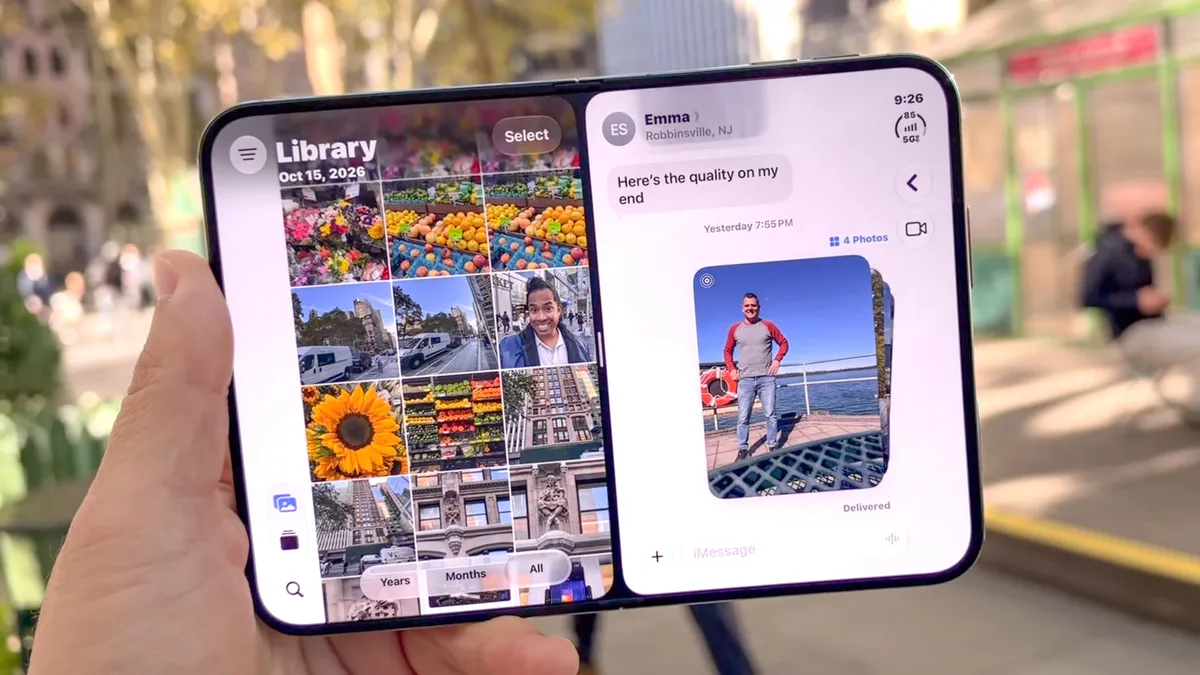
Apple’s switch to a 2-nanometer manufacturing process with the A20 Pro is clearly paying off in the iPhone Duo. While benchmark scores prove it is easily one of the most powerful iPhones to date, that strength translates directly into daily use, where it handles complex tasks with the same finesse as basic navigation. Considering its sprawling main display is designed specifically to run two apps side by side, these benchmark results show that the Duo can more than deliver on that multitasking promise.
At the same time, this serves as a wake-up call for Samsung, Google, and Motorola. With their next-generation foldables already deep in development, the iPhone Duo’s performance proves that rivals can no longer afford to compromise on raw power or thermal execution.

Follow Tom's Guide on Google News and add us as a preferred source to get our up-to-date news, analysis, and reviews in your feeds.
More from Tom's Guide