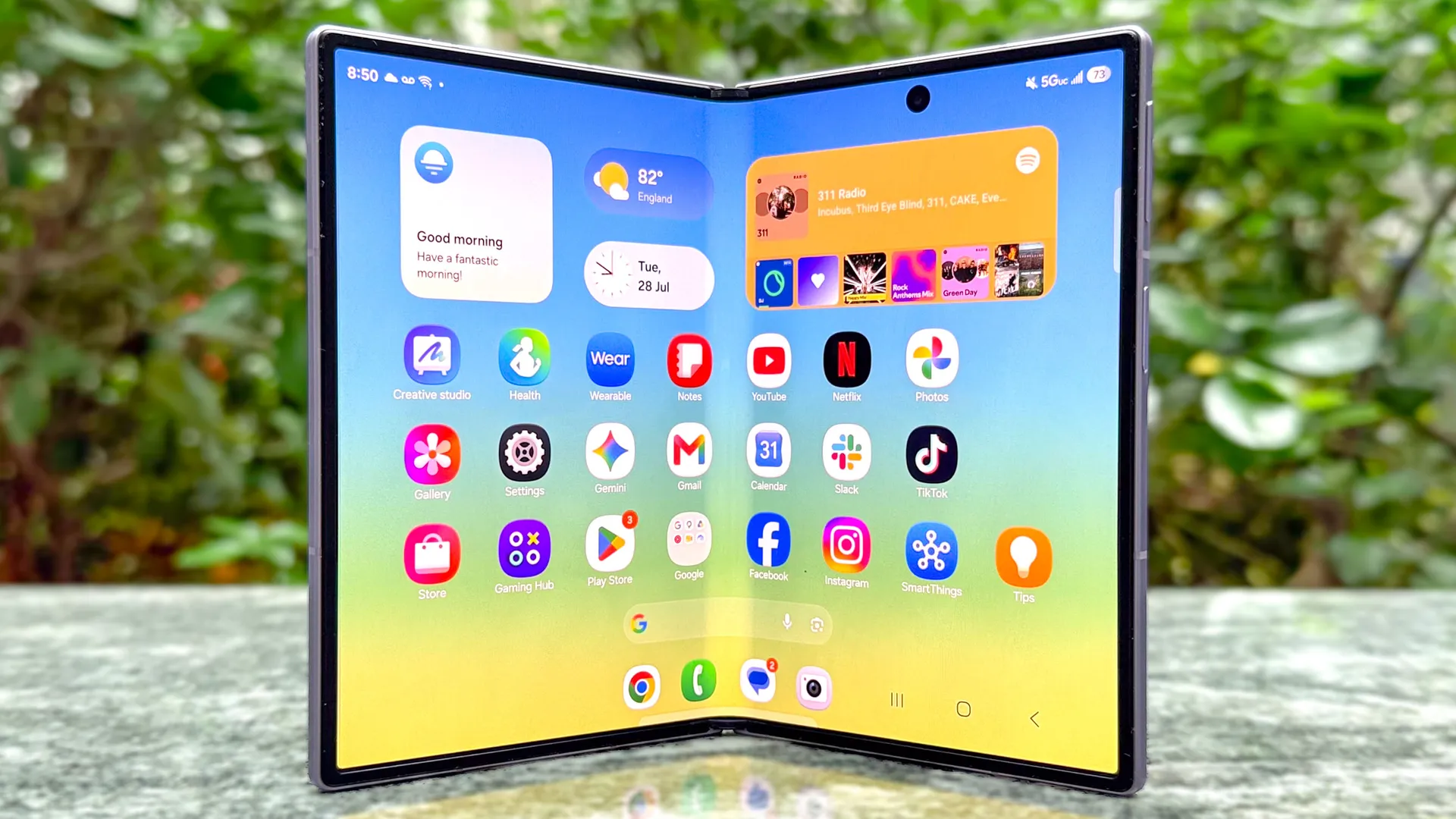
The iPhone Duo is proving very difficult to come by, and right now, on the official release day, Apple's own delivery estimates stretch into late January of next year. The Duo is, by our metrics, an excellent foldable phone, but it isn't the only option available to you right now. In fact, there are more of the best foldable phones to choose from, none of which have the same availability issues Apple's option is experiencing.
Obviously these phones have one key difference, in that they run Android rather than Apple's iOS. That is enough to turn off a lot of people, especially if they've been Apple users for a long time. That said, if you're more open to being platform-agnostic, and desperately want to pick up a foldable phone without waiting, you have some options available to you.
Here are the best iPhone Duo alternatives you can buy today
Best iPhone Duo alternatives
Samsung Galaxy Z Fold 8
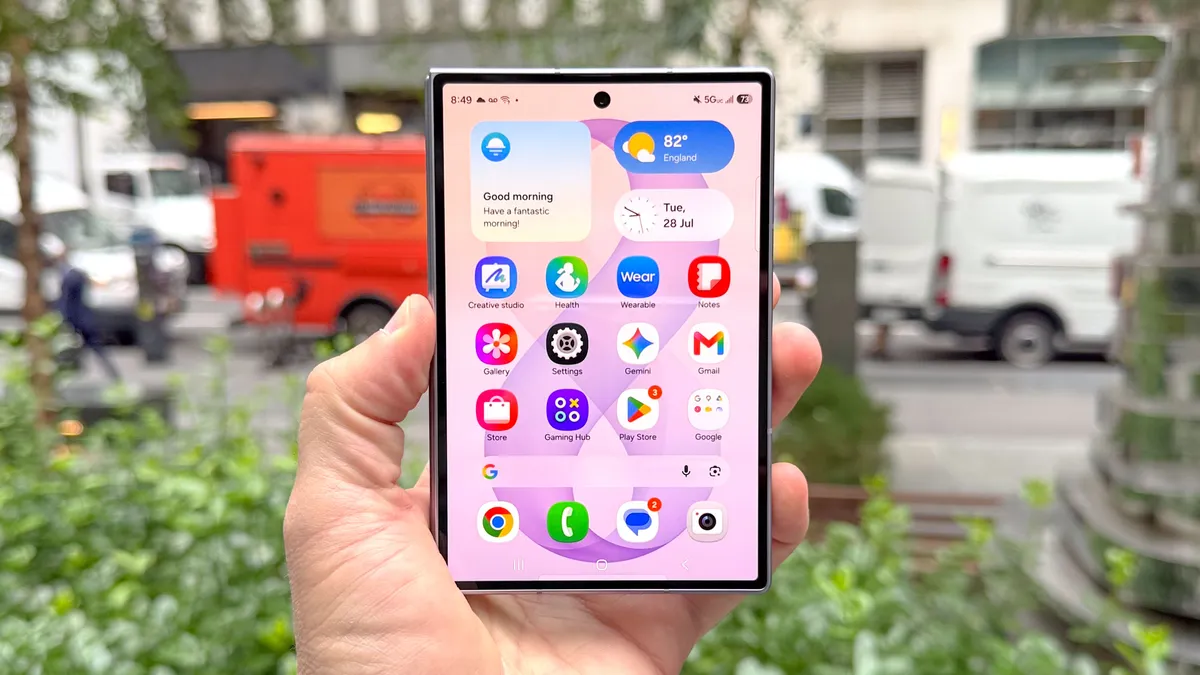
If you're looking for another passport-shaped foldable — with a shorter design when closed and widescreen when open — then the Galaxy Z Fold 8 is easily your best bet. The Z Fold 8 offers a 5.5-inch cover display and 7.6-inch foldable display, which is close in size to the Duo.
That larger screen packs Samsung's new Flex Titanium display technology which promises to improve durability and minimize the crease. There's also an anti-reflective coating to prevent glare and help you see what's on screen. The Fold 8 is thinner and lighter than the iPhone Duo, and it lets you three apps at once instead of just two.
Camera-wise you're looking at a pair of 50MP rear lenses, with main and ultrawide shooters. Like the Duo, there's no telephoto lens for zoomed in shots. Selfie cameras are 10MP each, and you'll find one in both screens — though there's no under-display camera in this one. It's also a lot thinner and lighter than the Duo, and features the performance power of the Snapdragon 8 Elite Gen 5 for Galaxy.
That's as good as you'll get on an Android phone. Oh, and you get some of the best AI features of any phone, with a price tag that's $100 less than the iPhone Duo.
Samsung Galaxy Z Fold 8 Ultra
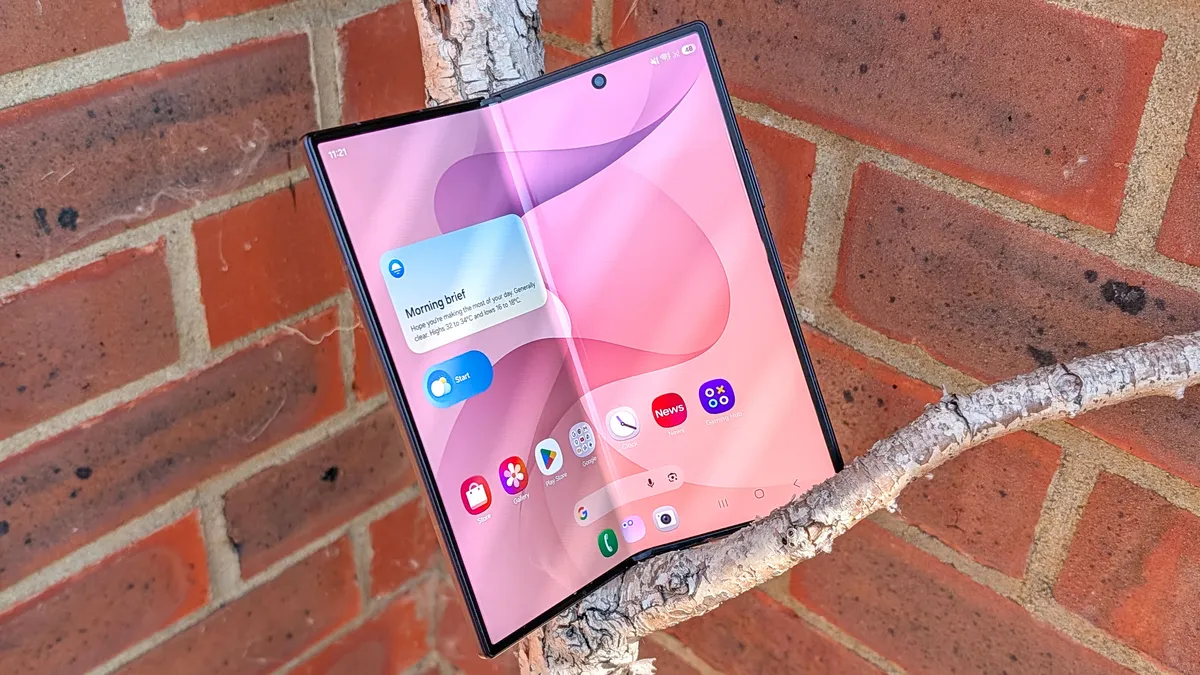
If you want a foldable that's a little larger than what the Duo has to offer, then Samsung's Z Fold 8 Ultra is worth considering. It offers all the same features and benefits as the Z Fold 8, albeit without the newly-popular wide design. Instead there's a skinnier 6.5-inch cover display and a 8-inch foldable display on the inside.
The Z Fold 8 Ultra benefits from better camera hardware, including a 200MP main camera lens and a 10MP telephoto shooter with 3x optical zooming capabilities. On top of that you get a larger battery with 14 hours and 30 minutes of battery life (an hour longer than the iPhone Duo.
You also get a lightweight and thin frame, and everything Galaxy AI and Google Gemini have to offer. The downside is that Galaxy foldables don't offer stylus support or dust resistance, and the 8 Ultra is $100 more expensive than the iPhone Duo.
Motorola Razr Fold
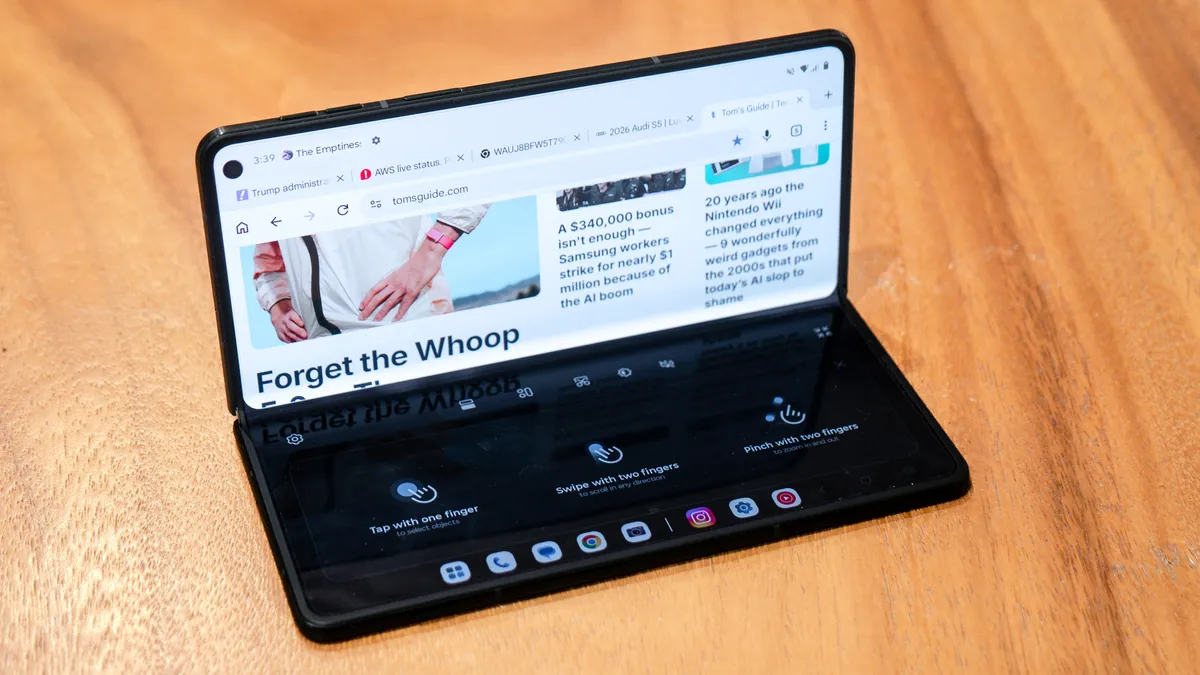
Here's another book-shaped foldable, coming in with the same $1,900 price tag as the iPhone Duo. The Motorola Razr Fold puts an emphasis on premium hardware at that base price, with a 6,000 mAh battery (with over 14 hours of life), 80W charging, 512GB of storage and 16GB of RAM that works in conjunction with the Snapdragon 8 Elite Gen 5 chipset.
Screens are a little bigger, measuring 6.6-inches for the cover display and 8.1-inches for the foldable inner screen. You also get a trio of 50MP cameras, which are complemented by a 32MP inner selfie camera and a 20MP cover screen camera. Optional stylus support, a slightly thinner design than the iPhone Duo, and a bunch of Motorola's AI features round out the perks.
Google Pixel 11 Pro Fold
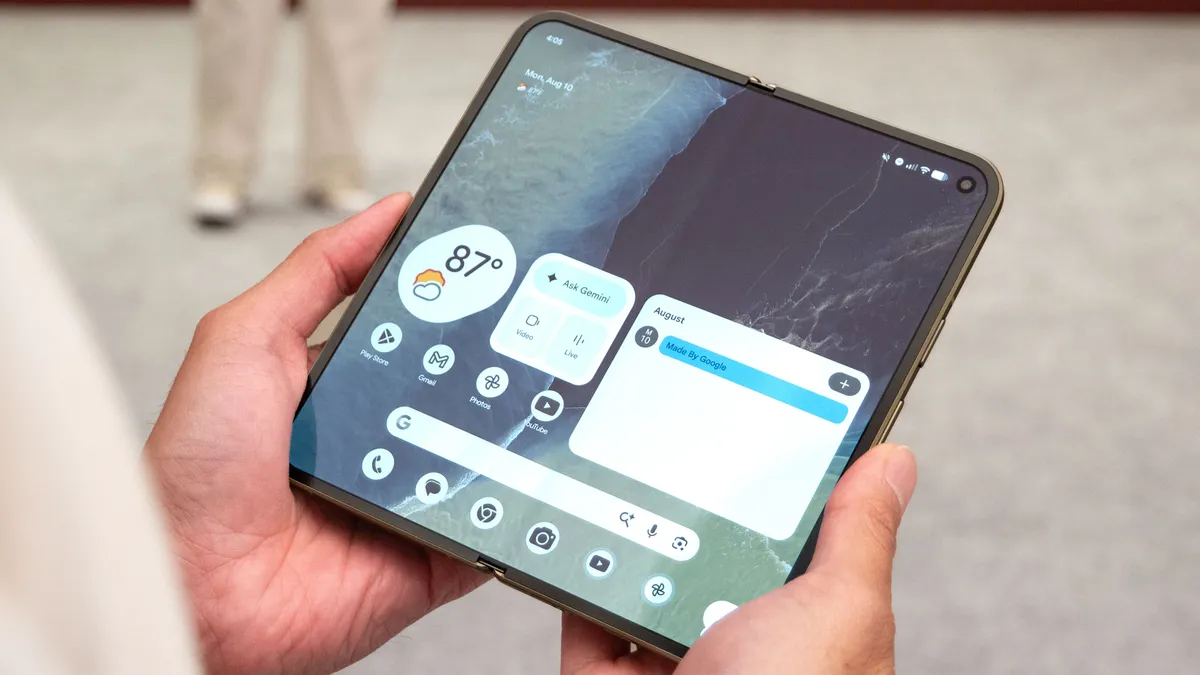
As a whole, the Pixel 11 Pro Fold is not that impressive compared to other foldables. Performance is weak; app scaling is a very real problem; and the battery life is not particularly impressive. But there are a lot of benefits to picking up a Google-made foldable instead of one of its rivals. Particularly the AI support, which is some of the best you'll find on any Android thanks to the fact Google is responsible for Pixel phones and Gemini AI.
The Pixel 11 Pro Fold also features the brightest screen of any foldable, with a 6.5-inch cover display and 8-inch main display, a 5x telephoto lens (with 30x Super Zoom), 16GB of RAM, 25W wireless charging, and the new Rambler dictation system.
On top of that, Google has added a new "app bubbles" system that lets you dock different apps at the bottom of your screen — with the ability to summon them as an extra layer on top of an ordinary split-view mode. There's no stylus support, though.
Other foldable options
The thing about foldable phones is that there are a lot more of them out there than you might realize. In fact, the foldable segment is particularly popular among Chinese brands and some of them actually go on sale outside of the country. Sadly, they can be much harder to find, especially if you live in the U.S.
That's less of an issue in places like the U.K., and any readers from across the Atlantic should be aware of a couple of extra options that are available to you. Plus, while these phones technically run on Android, the software looks very similar to iOS 27 — which means the shock of switching platforms won't be quite as severe.
Honor Magic V6
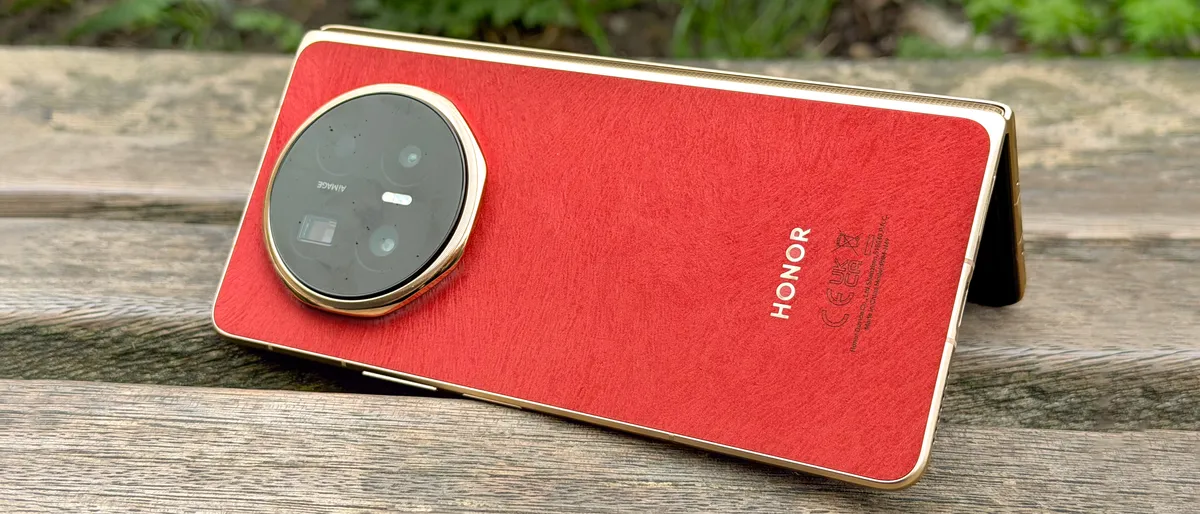
The Honor Magic V6 is a foldable that aims to be as premium as possible, particularly in the camera department. This thing packs in 50MP main and ultrawide lenses, alongside a 64MP telephoto camera with 3x optical zoom and a pair of 20MP selfie cameras — one on each screen.
The software is very reminiscent of iOS, and it features a bunch of stuff that you'd normally only get from an iPhone. That includes the ability to use the V6 as a secondary Mac screen, the inclusion of an Apple-like interface for AirPods and even Apple Watch notification support. Which is astounding for an Android
As for the screens, you get a 7.95-inch foldable display with anti-reflective coating and a 6.52-inch cover display with anti-scratch coating. Both screens are rated for a respective 5,000 and 6,000 nits. You get stylus support on both displays, and they come wrapped in a shiny gold casing. Add in the swift Snapdragon 8 Elite Gen 5 and up to 16GB of RAM and you have a powerful phone that's ready for AI.
Oppo Find N6
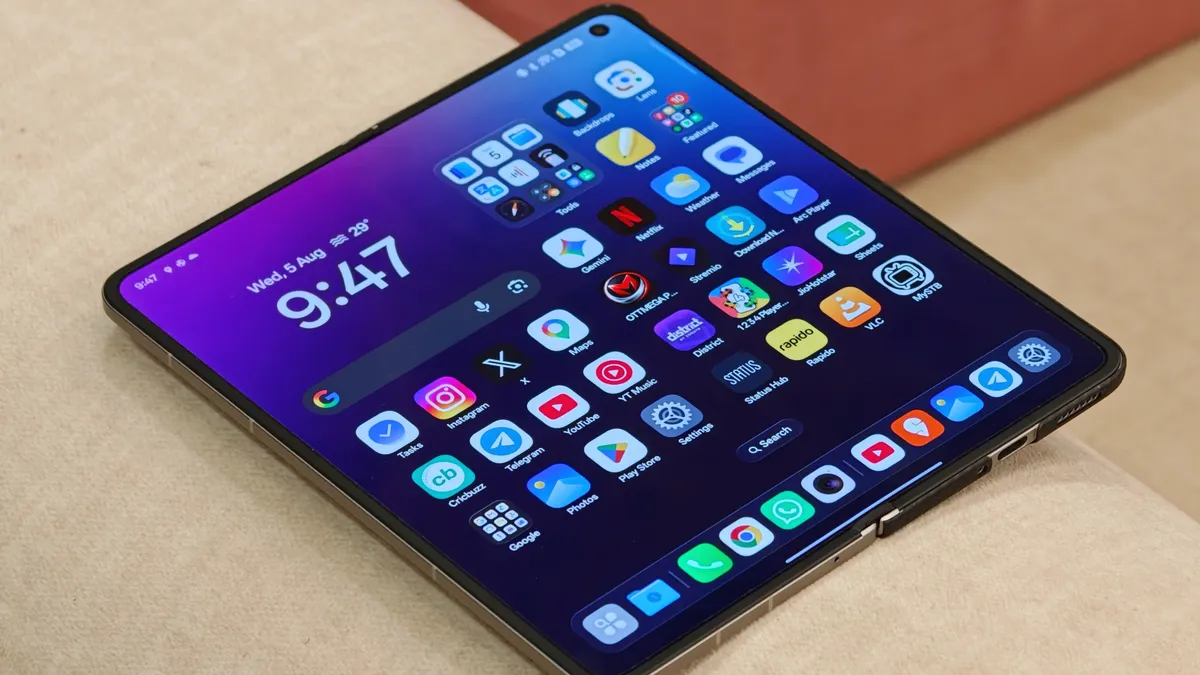
Oppo's Find N series has been the gold standard for crease elimination for the past couple of generations, and the Oppo Find N6 is the bar at which the iPhone Duo's lack of crease will be judged by. The 8.12-inch foldable screen also features a "self-healing memory glass" which is said to keep that crease away for good. Both it and the 6.62-inch cover display offer stylus support, as well as Dolby Vision and HDR10+.
As for cameras, you're looking at a 200MP main lens, a 50MP ultrawide and a 50MP telephoto lens with 3x optical zoom. Selfie cameras are both 20MP, using a hole-punch design on each screen. Performance is handled by the Snapdragon 8 Elite Gen 5, in conjunction with either 12 or 16GB of RAM. Meanwhile, there's a monster 6,000 mAh battery inside, complete with 80W wired charging speeds.,
Follow Tom's Guide on Google News and add us as a preferred source to get our up-to-date news, analysis, and reviews in your feeds.
More from Tom's Guide