




Update: With a 120Hz LTPO display tipped, the iPhone 14 Max could be the phone to get in 2022.
If you've decided to ignore this year's iPhone 13 update from Apple and hold out for the iPhone 14 release in 2022, I hope you're a fan of big-screen phones. Because if rumors about Apple's next phone are accurate, the smallest screen in Apple's future phone lineup will be bigger than 6 inches.
That marks a change from Apple's approach the last couple years. Sure, at least three different iPhone models rank among the best big phones you can buy. But Apple kept a place in its smartphone lineup for a more compact device. The iPhone 13 mini, like the iPhone 12 mini before it, offers a 5.4-inch display in an easy-to-hold, easier-to-pocket 5.2 x 2.5 x 0.3-inch frame.
But the iPhone 13 mini could be the last of its kind, according to multiple rumors about Apple's iPhone 14 plans. The company is still supposed to come out with four new iPhones in the fall of 2022, the rumors claim, but instead of an iPhone mini, you'll get an iPhone 14 Max. This would be a 6.7-inch version of the standard iPhone, without the iPhone 14 Pro Max's more premium features.

The writing's been on the wall for the iPhone mini for a while now. While Apple enjoyed record sales for the iPhone 12 models in the last year, the iPhone 12 mini seemed like the odd phone out. Reportedly, Apple's smallest iPhone didn't sell as well as its heftier siblings. That's consistent with industry trends for smartphone screens, where the market has decided that bigger is definitely better.
This hits home for me in particular: I happen to be a fan of small phones, having held on to an original iPhone SE — the original one with a 4-inch display — until a technician finally had to pry it from my tiny clutches. The phones I used before that were similarly small, though that was back in the era when phablets were the outlier, not the standard for screen sizes.
I like smaller phones because I'm not blessed with exceptionally large hands, so operating larger handsets with just one hand is not possible for me. I also like being able to pocket a phone and still have room for other things like keys and coins. That small phones tend to cost less than their big screen counterparts — all that glass doesn't come cheaply, friends — also appeals to my inner cheapskate.
But small phones are increasingly becoming untenable, and not just because they're harder to find than they were just a few years ago. Apps are getting more elaborate with controls, sliders and on-screen info designed to take advantage of extra screen real estate. Shrunken down for smaller devices, those screens can feel very claustrophobic. And let's face facts — several decades of screen time, and my eyes aren't as sharp as they once were. increasingly, larger screens are the only thing standing between me and having to permanently squint at my smartphone display.

So I've been trying to get used to larger screens for the inevitable day when I — a person who reviews phones for a living — needs to face the harsh new reality.. Lately, I've been bounding back and forth between a 6.1-inch iPhone 13, a 6.4-inch Pixel 6 and — shock of shocks! — a 6.5-inch iPhone 11 Pro Max just to get used to using a larger device. And you know what? Having to turn to a big phone is definitely not the nightmare scenario I used to imagine.
It helps that phone makers have trimmed down the bezels on their devices in recent years, so that you can squeeze those screens into a more compact frame than before. That makes the current generation of bigger-screen phones a little easier to hold and a lot less bulky in your pocket than the phablets of just a few years ago.
So bring on the iPhone 14 and its lack of a mini option. I can probably get comfortable using a 6.1-inch display, and if another iPhone 14 rumor pans out — the one where Apple gets rid of the notch — maybe I'll have even more screen real estate than I did before.
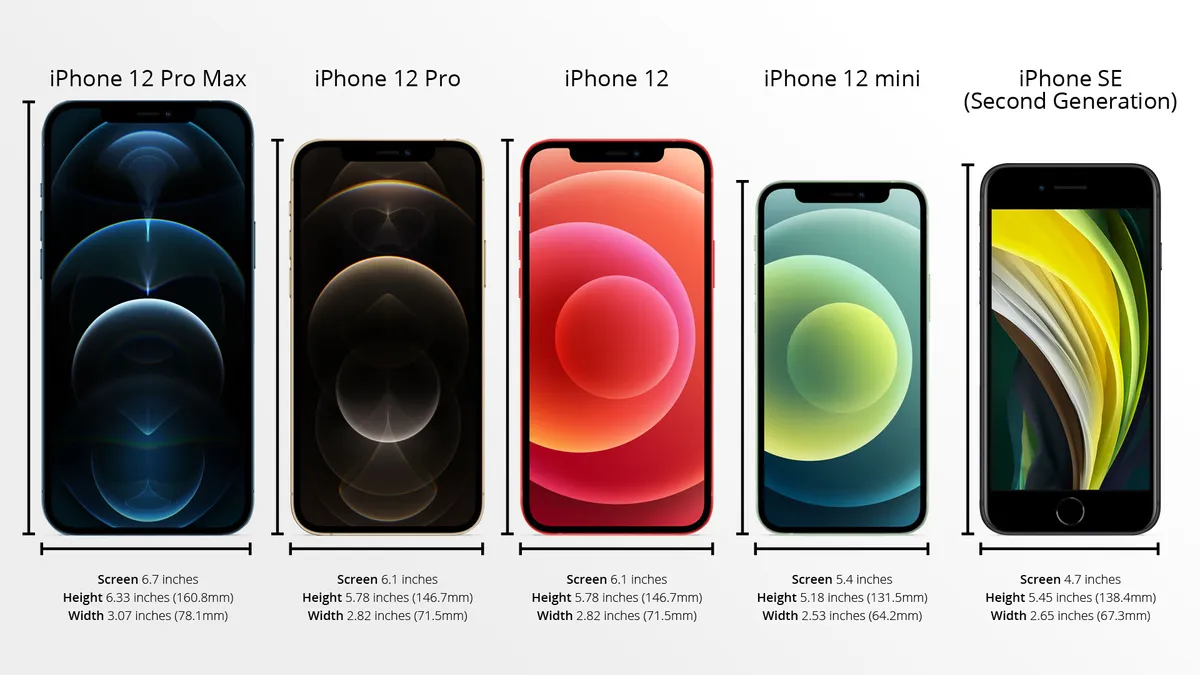
Of course, there may be an alternative for fans of small phones (or me, if I decide that a 6.1-inch display really isn't for me). A new iPhone SE 3 is set to come out in early 2022, and right now, that phone's rumored to retain the 2020 version's 4.7-inch screen size. While the iPhone SE's bezels means that phone's not as compact as you might think — the iPhone 12 mini and iPhone 13 mini were both smaller even with slightly larger displays — it's still a far cry from the big screens that are coming to dominate both Apple's offerings and the smartphone market as a whole.
And that, as much as anything, is a warning for fans of compact phones. Stock up on your small screens now because they're going to be much harder to find in the very near future.

