Welcome to Get Grillin' Week 2026 here at Tom's Guide. We're celebrating everything about the perfect backyard cookout. We want to help you choose the best grill (and the gear to go with it) as well as learn new tips and tricks when it comes to maintenance and best practices. Because now summer is here, it's time to get outside and get grillin'.
A great barbecue starts long before the food hits the grill. While most people focus on burners, fuel types or grilling accessories, experts say the location of your grill can have just as much impact on how successful your cookouts are this summer.
Of course, it’s worth investing in one of the best grills, but don’t fall down at the final hurdle because you put the grill in the wrong spot.
Whether you’re working with a small patio or a large backyard, here’s how experts recommend setting up your grill space for a smoother, safer and more enjoyable summer of cooking outdoors.
Why the right set up is important

This is about more than aesthetics and convenience. The right setup can help you maintain steadier temperatures, reduce flare-ups, improve airflow, and make outdoor cooking feel easier overall.
Poor placement, on the other hand, can lead to uneven cooking, endless trips across the yard carrying plates and utensils, and unpleasant smoke blowing back into the house..
“As a chef, I believe that good barbecue doesn’t begin when you light the fire,” says Isaac Bernal Carbajo, private chef and executive chef of the Representation of Spain to the United Nations. “It starts much earlier, with safety, placement, and control of the environment.”
1. Give your grill some breathing room

One of the simplest ways to improve both safety and comfort is to create enough space around the grill. The National Fire Protection Association recommends keeping grills well away from siding, railings, fences, furniture – in short, anything combustible. That distance matters not just for obvious flames, but for lingering heat too.
According to Brian Dunagan, managing consultant and chief investigator at IFO Group, an incident management firm, “the first thing that causes damage is usually from radiated heat and not flames.”
That’s especially important during summer, when dry landscaping, cushions, and wooden surfaces heat up more quickly and are more prone to catching alight. Charcoal grills in particular need even more clearance, both because of the risk of drifting embers and the higher residual heat after cooking.
You also want enough room to move comfortably while cooking. A cramped grilling setup tends to get stressful fast — especially once you’re juggling trays, tools, and hungry guests. By giving yourself some extra space, you can minimize the chance of any accidental run-ins.
2. Find a stable heat-resistant surface

The surface underneath your grill also has a bigger impact than many people realize, with Carbajo noting that a “flat, stable surface is essential for cooking safely and controlling temperature correctly.”
In terms of surface material, concrete, pavers, and stone are usually the best choices because they remain stable in high heat and provide the grill with a secure base. That stability matters more than it might seem, especially when you’re moving heavy trays of food around or repeatedly opening and closing the lid during cooking.
Grass and gravel can be trickier. Lawns may become soft or uneven after rain, while loose gravel can shift underneath heavier grills. Decking is still a popular option, but it needs a little more care, particularly with charcoal grills that throw off more heat and occasional embers.
If you do choose to grill on a wooden deck, adding a heat-resistant grill mat underneath can help protect the boards from grease stains, scorch marks, and heat damage over time.
3. Don’t hide your grill at the far end of the yard

We’ve just warned you of the dangers of keeping your grill too close, so it might seem sensible to push your grill as far from the house as possible. But this would be a mistake. Experts say that this can make grilling less enjoyable, meaning you’re less likely to bother altogether — and it can sometimes be less safe too.
If the grill is too isolated, you’re more likely to spend the entire evening walking back and forth carrying ingredients, platters, and utensils. And if something does go wrong, being too far away from the action can slow down your response time.
Small grease fires can turn into full backyard fires in less than two minutes when no one is around to respond immediately.
Brian Dunagan, IFO Group
Dunagan warns that “small grease fires can turn into full backyard fires in less than two minutes when no one is around to respond immediately.”
At the same time, placing the grill directly beside the back door usually means that smoke drifts indoors whenever someone opens it. The sweet spot is somewhere convenient but slightly removed from the house — close enough that cooking feels easy, but not so close that heat and smoke become a constant annoyance. Essentially, the Goldilocks of grilling spots.
4. Think about wind before you pick a permanent spot
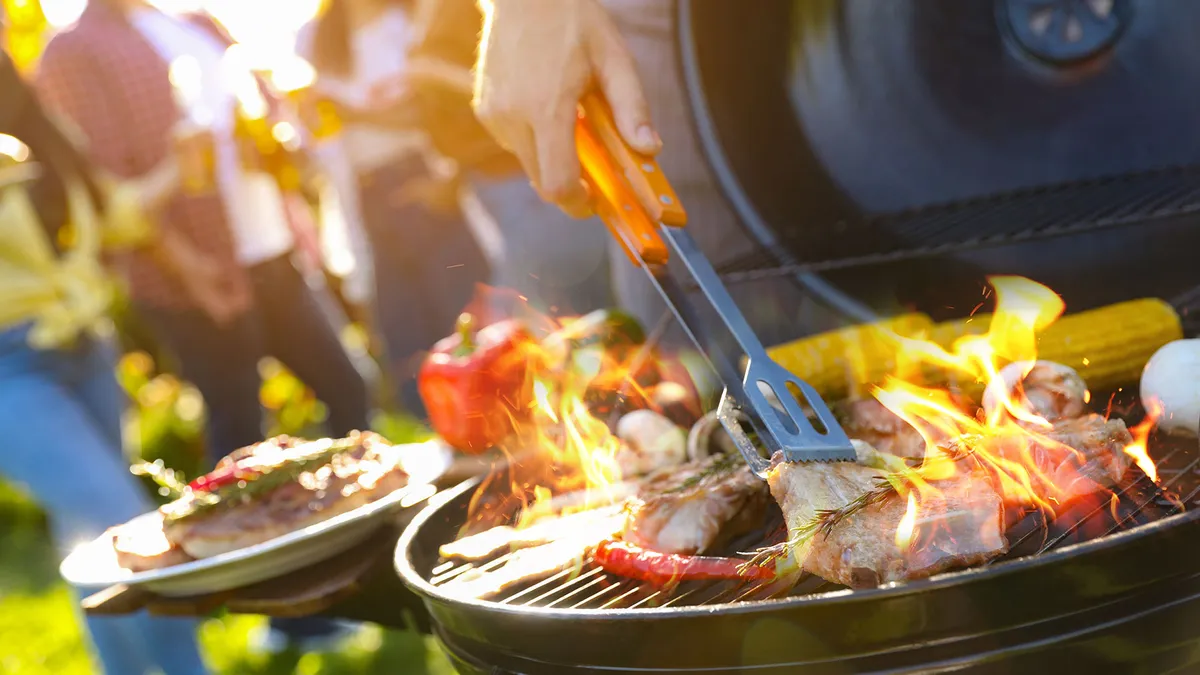
Most people will avoid grilling in the rain, but that’s not the only weather to keep in mind when planning your grilling setup. Wind can make a surprisingly big difference to grilling performance.
Strong gusts can affect temperature control, encourage flare-ups, and send smoke directly toward seating areas or open windows. Even lighter breezes can make it harder to maintain consistent heat during longer cooking sessions, leading to uneven cooking and a more frustrating experience.
Rather than placing a grill in a completely exposed corner of the yard, Carbajo suggests choosing “a space that’s ventilated but partially protected from strong breezes.”
Look for areas with natural protection; that could mean grilling a few feet from fencing, walls, or landscaping that softens the wind without completely trapping smoke. Avoid fully enclosed corners, as these tend to get smoky and uncomfortable quickly, especially in warmer weather.
5. Don’t forget to look up!

Not all grilling hazards are beside the grill; some are above it. Low branches, pergolas, awnings, porch roofs, hanging baskets, and decorative lighting can all become problems if they’re exposed to prolonged heat or sudden flare-ups. Smoke and grease can also leave stains on overhead structures surprisingly quickly, ruining the appearance of your favorite garden decor.
This is particularly important with charcoal grills, which produce more sparks and lingering heat than most gas models. If you’re grilling beneath a covered patio, good ventilation and generous overhead clearance are essential to minimize the risk of fires or damage.
6. Does your grill type change the best location?

The general setup advice stays mostly the same, but charcoal and gas grills do behave differently.
“Gas grills are easier to control, while charcoal grills produce a higher radiative heat,” says Dunagan.
In practical terms, that means charcoal grills usually benefit from a little extra space around decking, fences, and overhangs. Gas grills are easier to shut down quickly if flare-ups happen, although grease buildup can still create problems over time.
Pellet grills sit somewhere in the middle, combining more controlled heat with a lighter, smokier output that still needs good airflow around them. If in doubt, take more precautions than you think you might need.
So what does the ideal grill setup look like?
According to the experts, the best grilling setup usually includes:
• 10 feet of clearance from buildings and combustible materials
• A flat surface such as stone, concrete, or pavers
• Some shelter from strong wind, without blocking all ventilation
• Plenty of overhead clearance from roofs and tree branches
• Easy access to the kitchen without trapping smoke beside the house
And remember, it’s worth taking a little extra time to get the location right at the start of the summer season. Not only will it make grilling safer, but the right spot can also make cooking more consistent, cleanup easier, and summer cookouts much more enjoyable overall.
Grill essentials we love

Follow Tom's Guide on Google News and add us as a preferred source to get our up-to-date news, analysis, and reviews in your feeds. Subscribe to Tom's Guide on YouTube and follow us on TikTok. Finally, you can visit our dedicated Tom's Guide Savings Squad hub for expert help on getting the best products for less.
More from Tom's Guide