Apple, Amazon, Microsoft, Alphabet (Google). The US boasts some of the biggest and most popular tech companies in the world, and their apps and devices are an intrinsic part of everyday life.
But a survey by Proton found that 73% of Europeans think they are too reliant on US tech, with many preferring the option of an alternative.
This was only a snapshot, but plenty of Europeans – as well as Americans, Canadians, Aussies, and more – will be looking to break free from the grips of US tech. So, I've put together a list of some of my favorite privacy-focused alternatives.
From the best VPNs to the best password managers, antivirus to browsers, and even full-blown privacy suites, I'll detail some great non-US privacy apps you can download today. But I'll also explain why where you're based doesn't always correlate with your privacy practices.
VPNs
When it comes to privacy-orientated tech, VPNs are the place to start. It's quite rare to find a VPN based in the US, with many setting up in countries like Panama, the British Virgin Islands, or Switzerland – where data laws have a greater focus on personal privacy.
Four of the five VPNs that feature in our best VPN list are based outside of the US, along with others I'd recommend:
- NordVPN – Panama
- Surfshark – the Netherlands
- ExpressVPN – the British Virgin Islands
- Proton VPN – Switzerland
- Windscribe – Canada
- Mullvad – Sweden
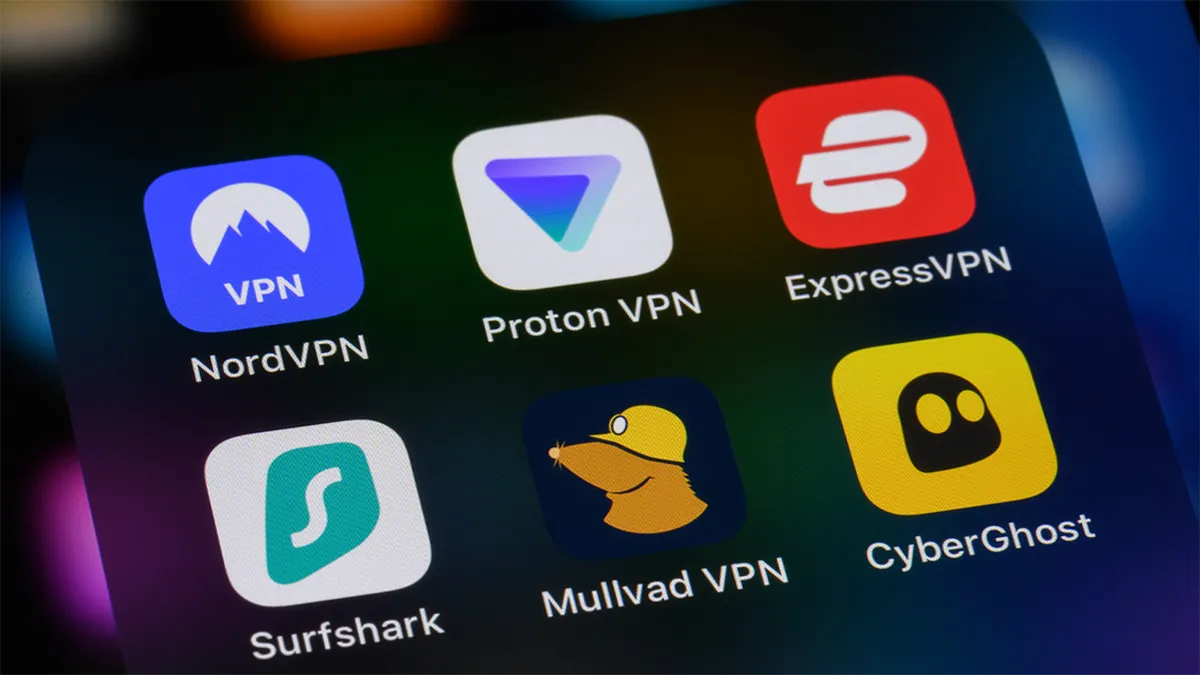
VPNs protect your privacy by encrypting your internet traffic. It can't be seen by your internet service provider or any spying third-party. You can change the location of your IP address to appear as if you're browsing from practically anywhere in the world.
All the VPNs Tom's Guide recommends have strict no-logs policies. This means data such as your browsing information and IP address aren't collected, stored, or shared.
Top VPNs undergo independent third-party audits to prove this and often publish transparency reports, detailing the data requests they receive and what data they hand over – zero.

There are a handful of VPNs we recommend that are based in the US – Norton VPN, IPVanish, and Private Internet Access (PIA). Despite their location, all three operate strict no-logs policies. So, even if the US government demanded data, the VPNs would have nothing to hand over.
Privacy purists would argue a US base still poses a potential risk to your privacy. I asked Norton VPN about this in December 2025.
Norton VPN is owned by GenDigital, a company co-headquartered in the US and Czech Republic. The VPN team said a US-base is only a risk "if you have data to give," and they don't see it "as a cause for concern."
Norton VPN believes you should look at the data being collected by a VPN company, with Norton VPN only collecting data "that is absolutely critical and essential." It has significantly reduced its data collection and publishes quarterly transparency reports.
How important location is in deciding between VPNs is up to you. But if it's a non-US VPN you're after, there's plenty to choose from.
Antivirus
Finding an antivirus (AV) company not based in the US is tricky. All five products featured in our best antivirus software guide are headquartered, or co-headquartered, in the US. These are Norton, Bitdefender, McAfee, Avast, and Malwarebytes. All are exceptional AVs products but all have ties to the US.
Tom's Guide recommends ESET as "the best of the rest." It's a slightly more basic package but is headquartered in Slovakia. G Data (Germany) and F-Secure (Finland) are also two solid, non-US antivirus options.
A handful of VPNs bundle antivirus into their plans. While they might not be the best antivirus products out there, the fact they're part of a VPN plan can be reassuring for your privacy.
However, these AVs are often powered by third-party companies. For example, Surfshark's AV is backed by Avira. Avira is German but now owned by US-based GenDigital. PrivadoVPN has AV as a paid add-on, but it's not clear who powers it.
Secure Browser
We're back on slightly firmer ground with secure browsers. If you want privacy-focused, non-US alternatives to Google, Edge, or Safari, there are a couple to choose from.
Vivaldi is my browser of choice. It's run by the employee-owned Norwegian company Vivaldi Technologies. There's ad and tracker blocking, tons of customization, end-to-end encryption, and even Proton VPN Free built-in. Plus, it's completely free to download and features no AI functionality.

Surfshark offers a secure search function, free from ads and tracking. It's included in Surfshark One and Surfshark One+ plans.
Mullvad VPN has the Mullvad Browser. It was developed in conjunction with the Tor Project and protects against ads, trackers, and fingerprinting. It's also open-source and completely free.
Speaking of Tor, the Tor Browser is an option which leans more into anonymity than privacy. It's run by a decentralized network of node operators, stationed all over the world. Your traffic is routed through a number of "hops," and no one node can see the full history of your traffic's journey. Tor is free and open-source.
Password managers & privacy suites
One of the most common extra features bundled into VPN plans is a password manager. Password managers allow you to generate, and securely store, complex passwords.
NordVPN's NordPass, ExpressVPN's Keys, and Proton's Proton Pass, are all VPN password managers with no ties to the US.
In fact, we're seeing VPNs becoming full-blown privacy suites. ExpressVPN plans now include up to five apps in one subscription and Proton VPN is included in the excellent Proton Unlimited.
I use Proton Unlimited every day and it's the perfect anti-Google ecosystem. There's VPN, Drive, Mail, Calendar, Pass, and Wallet. All are end-to-end encrypted and sync effortlessly across all my devices.

A growing anti-US tech sentiment
Proton's research sought the views of people in the UK, France, and Germany. 80% of French respondents believed Europe is dependent on US tech, alongside 65% of Germans and 74% of the UK.

In the UK, 74% also expressed concern over this dependence, as did 85% of French respondents and 90% of Germans.

A majority of respondents from all three countries would choose European alternatives if they were available. As well as this, a majority of respondents from all three countries said protecting their privacy and security was "extremely important."
It's clear there is a growing opposition to US tech and the role it plays in our lives. We can't be rid of it entirely, but there are secure, privacy-focused alternatives out there to start fighting back.
We test and review VPN services in the context of legal recreational uses. For example: 1. Accessing a service from another country (subject to the terms and conditions of that service). 2. Protecting your online security and strengthening your online privacy when abroad. We do not support or condone the illegal or malicious use of VPN services. Consuming pirated content that is paid-for is neither endorsed nor approved by Future Publishing.