I’ve noticed something about anxiety: it’s rarely about the thing itself. It’s about not knowing what might happen. In other words, thinking about something is often worse than the actual situation.
Whether it's driving somewhere new, walking into a job interview or anticipating a doctor's appointment, when my brain starts filling in the blanks with worst-case scenarios, I start to spiral. So instead of asking ChatGPT for reassurance, I tried something different.
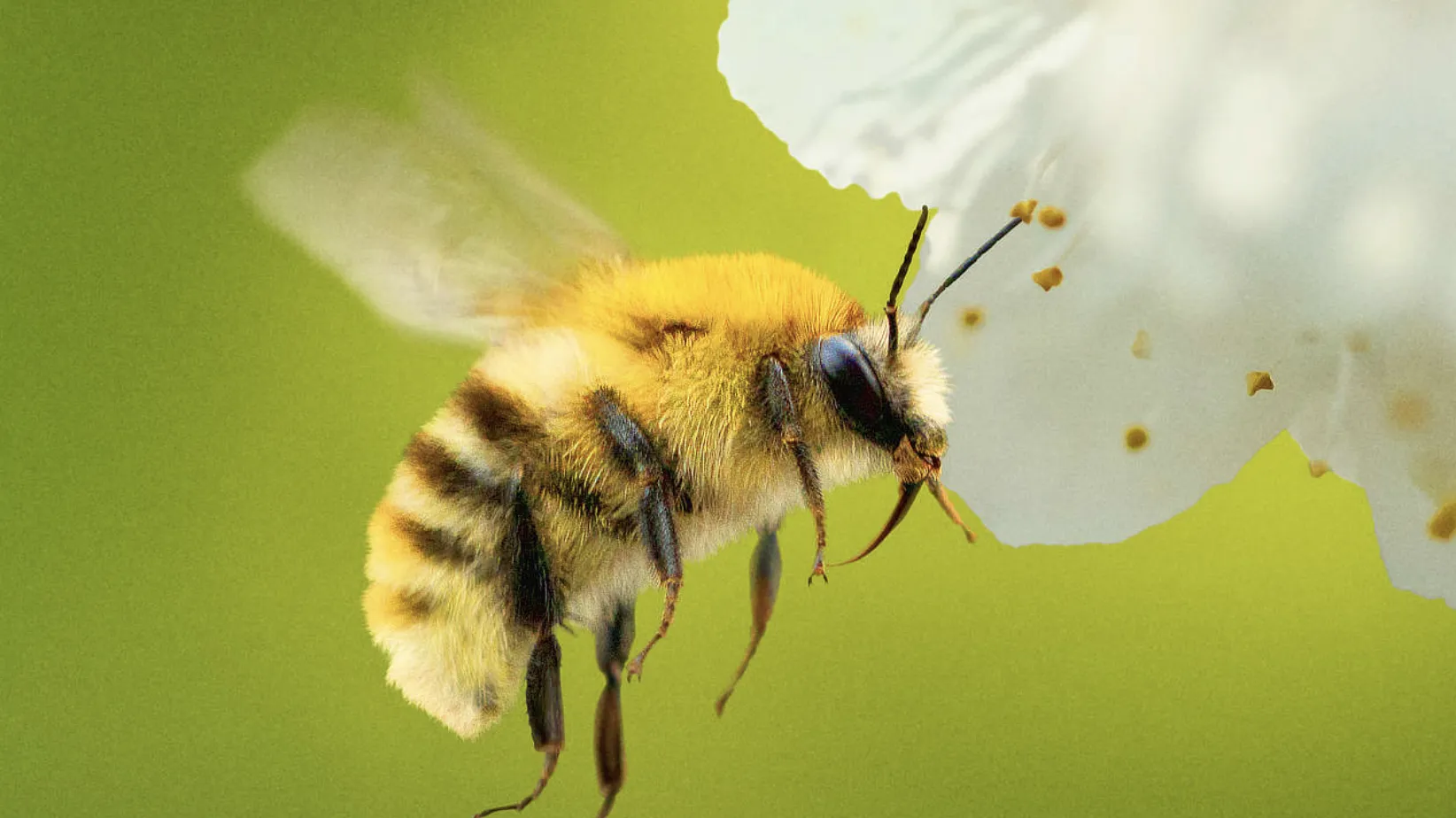
I asked it to tell me what to expect. I call it the “Bee Sting” prompt, after I was trying to describe a bee sting to my youngest child. He was really nervous at a friend's outdoor party because there was a bee flying around. Rather than enjoy the party, he was over-thinking what it would be like to get stung by the bee.
The surprising effect of this prompt is that it doesn't just help me with anxiety, but it helps me feel prepared. Here's how it works.
What is the 'Bee Sting' prompt?
Here's the prompt I use for any situation giving me anxiety: “I’m about to [insert situation]. Can you walk me through what will likely happen step by step, including small details, what it might feel like and anything I should be prepared for?”
ChatGPT cannot predict the future, but it can help make the unknown feel familiar. For example, I used it recently when I had to make a live appearance on the news. I've been on the news before to discuss AI, but it's often pre-recorded, this time it was live. I couldn't stop thinking about what could happen if my internet went out or I had to sneeze or worse, went completely blank on Live TV.
Without this prompt, I would do whatever I could to prepare and hope for the best, but ChatGPT walked me through it.
Using the 'Bee Sting' prompt in real life scenarios
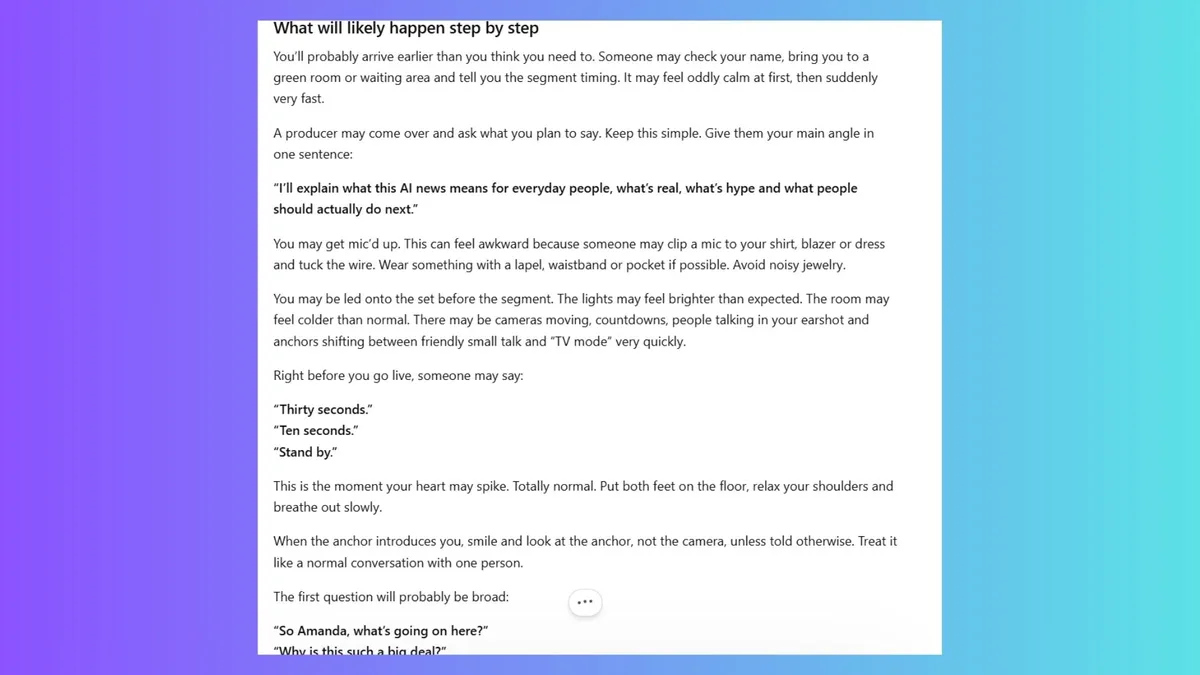
After the fact, I can tell you that ChatGPT's rundown of what to expect was actually quite accurate. Although the segment was shorter than I thought it would be, it helped me by offering what would happen "behind the scenes" before the broadcast and afterwards.
Other times the 'Bee Sting' prompt has been helpful:
- Getting four new tires for my car after hitting a curb (it was a doozy)
- Remodeling our kitchen down to the studs
- Going to a school district meeting to advocate for my daughter
- Knowing what to expect for the first time at the dermotologist
- Driving to a completely different city alone (Google Maps is great, but ChatGPT in CarPlay "held my hand" throughout the drive).
Why this works (and why it surprised me)

At first, I thought a prompt like this would make me more anxious, but it did the opposite. Since anxiety thrives on vagueness and the "what ifs" of a situation, it creates a spiral.
But the moment I asked ChatGPT, it helped me visualize the experience, drive or situation. My brain stopped treating each unknown like a threat and more like it was completing a task that I had experienced. ChatGPT is really good at: turning uncertainty into something structured and manageable.
I've found the 'Bee Sting' prompt works best for first-time situations and high-pressure moments. I use it with anything that involves a lot of unknowns. It is also helpful to describe unknowns. For example, I have had my fair share of bee stings in my lifetime, but explaining it wasn't easy, but ChatGPT described it as "a hot pinprick" and "a sharp pinch that catches you off guard."
The takeaway
Using the 'bee sting' prompt is not about expecting disaster. It's about removing the surprise. And while most people use AI to get answers after something happens, this prompt specifically helps you think ahead and be prepared.
Since trying the prompt, I noticed that ChatGPT isn't always entirely right. It missed the follow-up appointment with the dermatologist and a few extra steps at the school district meeting, but it has been helpful to offer suggestions. Overall, it responds with just enough input to take the edge off of almost any scenario.
Give it a try and let me know what you think in the comments.

Follow Tom's Guide on Google News and add us as a preferred source to get our up-to-date news, analysis, and reviews in your feeds. Subscribe to Tom's Guide on YouTube and follow us on TikTok.
More from Tom’s Guide