As someone who lives online, I’ve learned a hard truth: there is a massive gulf between an idea that looks brilliant in my Notes app and one that actually makes people stop scrolling.
With the rise of AI Overviews, the digital landscape is tightening. Google is shrinking stories and collapsing headlines to give users everything at once. In this environment, your content isn’t just competing with other creators; it’s competing with the interface itself.
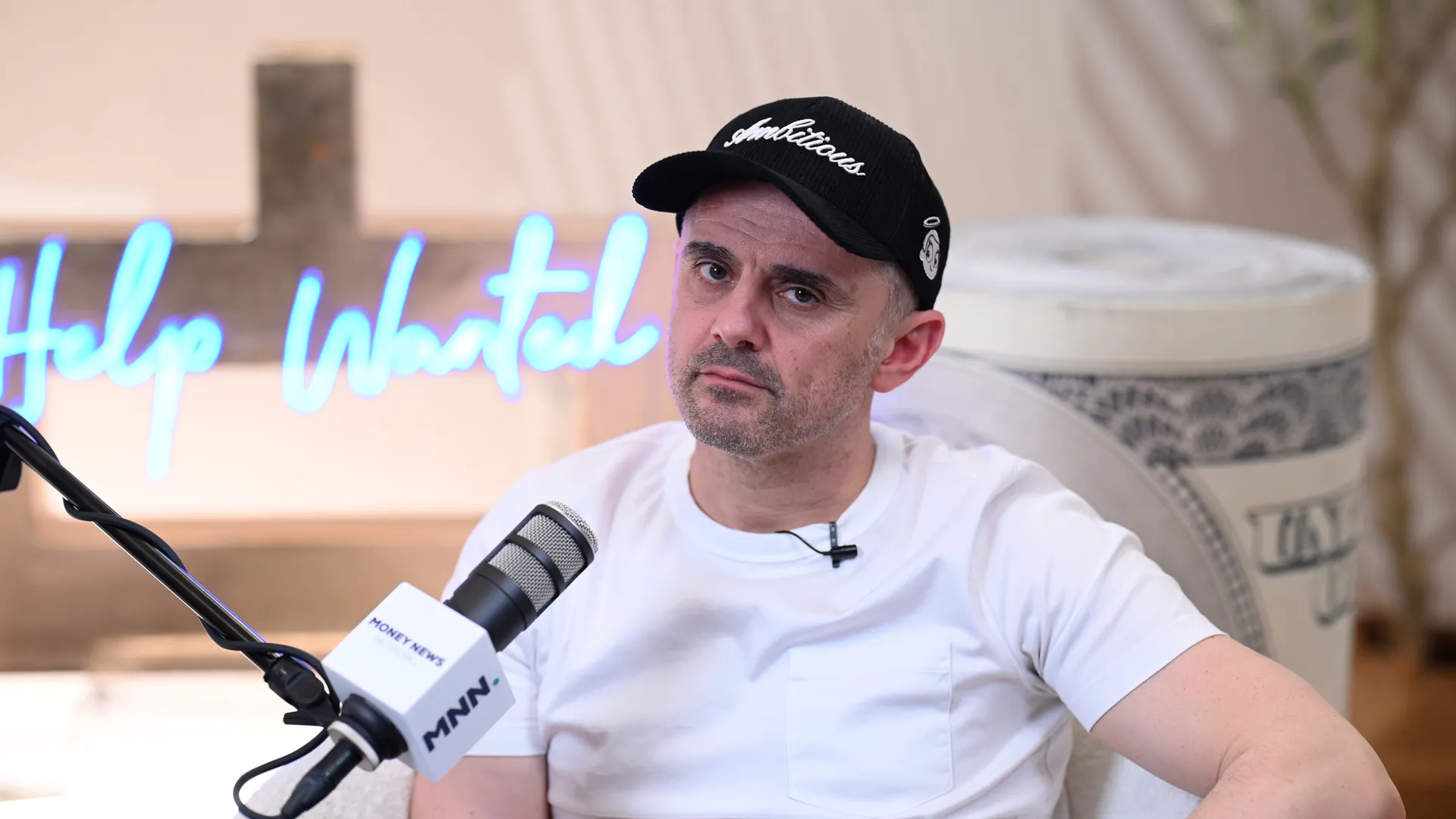
Lately, I’ve been obsessed with Gary Vaynerchuk’s core philosophy: Attention is currency. More often known as, "GaryVee," the CEO of VaynerMedia has built an empire on the idea that the most valuable resource in the modern world isn't money or even talent, it’s the ability to capture and hold focus. In a world of notification fatigue and "trend-drift," if an idea doesn't earn its keep in the first three seconds, it effectively doesn't exist.
I decided to put this mindset to the test using AI.
The 'attention is currency' prompt I used

I asked ChatGPT to apply Gary Vee’s “attention is currency” mindset to my work, and it helped me rethink which ideas are actually worth pursuing. The answer completely changed how I think about brainstorming.
Here’s the prompt I gave ChatGPT: “Act like Gary Vaynerchuk analyzing my work through the lens of ‘attention is currency.’ Look at my ideas and tell me which ones are most likely to earn attention, why people would care, what emotional trigger each idea taps into and how I should reframe weak ideas so they feel more urgent, useful or shareable. Be honest and direct.”
Then, I fed the AI a raw list of my current projects, essentially a mix of business ventures, content pillars and potential Substack stories. As the internet becomes saturated with AI-generated noise, this specific "stress test" is becoming essential for entrepreneurs and creators trying to maintain a signal.
The feedback from ChatGPT was a fundamental shift in how I view my work and potential projects now. The AI pushed me to abandon the vague pursuit of quality and replaced it with a single, aggressive question:
"Why would someone stop for this?"
That changed my mindset for the better. It forced me to stop looking at my ideas from the inside out and start looking at them through the eyes of a person with thirty seconds to spare and a thousand other options.
ChatGPT gave me a 'so what?' filter

By using Gary Vee's mindset with ChatGPT, I was able to better understand that the breakthrough happens when you pivot from a general topic to a specific transformation or frustration. When an idea is framed around a clear "before-and-after," it creates an immediate curiosity gap. People don’t just see the topic; they see themselves.
To be clear, this isn’t about resorting to clickbait or being dishonest. It’s about emotional specificity. Instead of judging my ideas by the subject matter, the AI helped me identify the "emotional hook," a visceral reason a human being would actually click.
By auditing my list, we found that the strongest ideas always tapped into one of four core drivers:
- Anxiety: "Am I already falling behind?"
- Frustration: "Why am I working this hard for such mediocre results?"
- Aspiration: "How do the top 1% think differently about this?"
- Relief: "Can this simplify my life without adding more tech-clutter?"
I understood this to be the layer that separates "good" ideas from "stop-the-scroll" ideas. Attention is rarely driven by information alone; nobody pays attention just because a fact exists. But people do pay attention because a piece of content feels personally relevant in that exact moment. It either solves a nagging problem, confirms a deep-seated suspicion, reduces an uncertainty, or closes a curiosity gap they didn't know they had.
From self-doubt to strategy

One of the most surprising parts of this experiment was how often AI could "rescue" an idea I was ready to scrap. The core topic remained the same, but the framing shifted from informational to personal. By uncovering the inherent tension, the idea transformed from a dry observation into something timely and revealing. AI wasn't just generating more ideas, it was uncovering the version people would actually connect with.
When an idea doesn't take off or fails, it's easy to internalize the "loss." We tell ourselves:
“Maybe I’m just not creative enough.”
“Maybe I’ve missed the window.”
“Maybe I’ve run out of good ideas.”
This AI-driven process turned brainstorming from a personal judgment into an analytical audit. Instead of questioning my worth, I began questioning the structure of the idea. As someone who takes failure personally, this framework is infinitely more useful than staring at a blank page and waiting for a lightning bolt of "inspiration."
The takeaway
Overall, this process helped me internalize the true meaning of Gary Vaynerchuk’s “attention is currency” philosophy. There is a vital distinction between attention and noise.
In a crowded internet, the goal isn’t to be louder or more outrageous. It’s to respect the reality of how people consume information. The challenge is making the value so immediately relevant and emotionally clear that paying attention feels like a fair trade. ChatGPT helped me understand this and apply it to my personal and professional ventures.

Follow Tom's Guide on Google News and add us as a preferred source to get our up-to-date news, analysis, and reviews in your feeds. Subscribe to Tom's Guide on YouTube and follow us on TikTok.
More from Tom’s Guide
- I tried the ‘Goldfish Prompt’ with ChatGPT — and it instantly stopped my overthinking
- I asked ChatGPT to apply Lewis Howes’ ‘Greatness’ mindset to my life — and it completely changed how I approach work
- I gave ChatGPT permission to disagree with me with this prompt — and its responses became dramatically better