

Google has spent the past year making Gemini smarter, more capable and better connected to the apps and services people use every day. But one of its most useful features might also be one of its most personal: memory.
As Gemini has evolved, it's gotten better at remembering details from previous conversations, picking up where you left off and helping with ongoing projects. That's convenient, especially if you use the chatbot regularly, but it also raises an important question: How much does Gemini actually remember about you?
Until now, managing Gemini's memory hasn't always been straightforward. Google has offered controls for reviewing and deleting chat activity, but understanding what the chatbot has learned about you is another matter.
That's where Gemini's new Memory summary comes in. The feature gives users a clearer look at the information Gemini remembers about them, along with the ability to make changes.
Here's how to find your Memory summary, see what Gemini remembers and take control of the information it uses to personalize your conversations.
Now you can see what Gemini remembers about you and actually edit it
Google has begun rolling out its new “Memory summary” feature in Gemini for users who work with the chatbot through its desktop and mobile browser versions (it doesn’t seem to be working with the mobile Gemini app at the moment, however). And with this update comes the ability for users to take a look at what Gemini remembers about them and edit it to add more details about themselves or delete it as a whole.
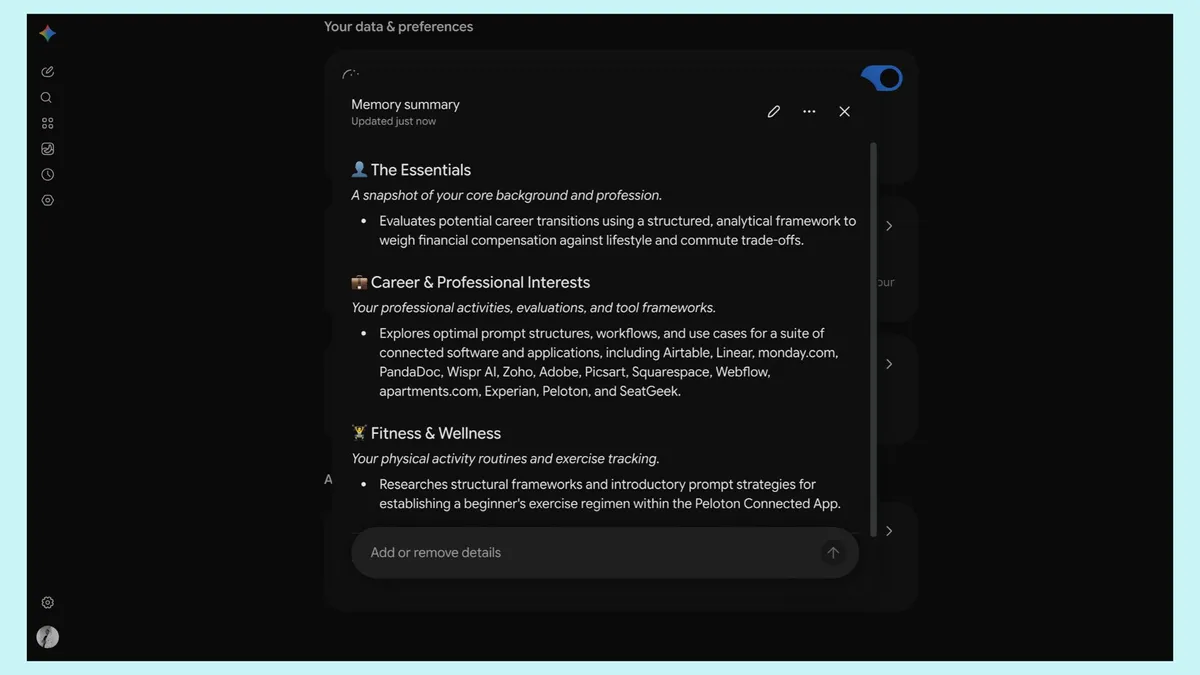
The Memory summary doesn’t just feature a massive info dump that’s all about you—it actually summarizes everything it remembers about you via bullet points that detail your background, relationships, work, interests and preferences. After observing everything Gemini has learned about you and retained as the data it has gained from your previous conversations.
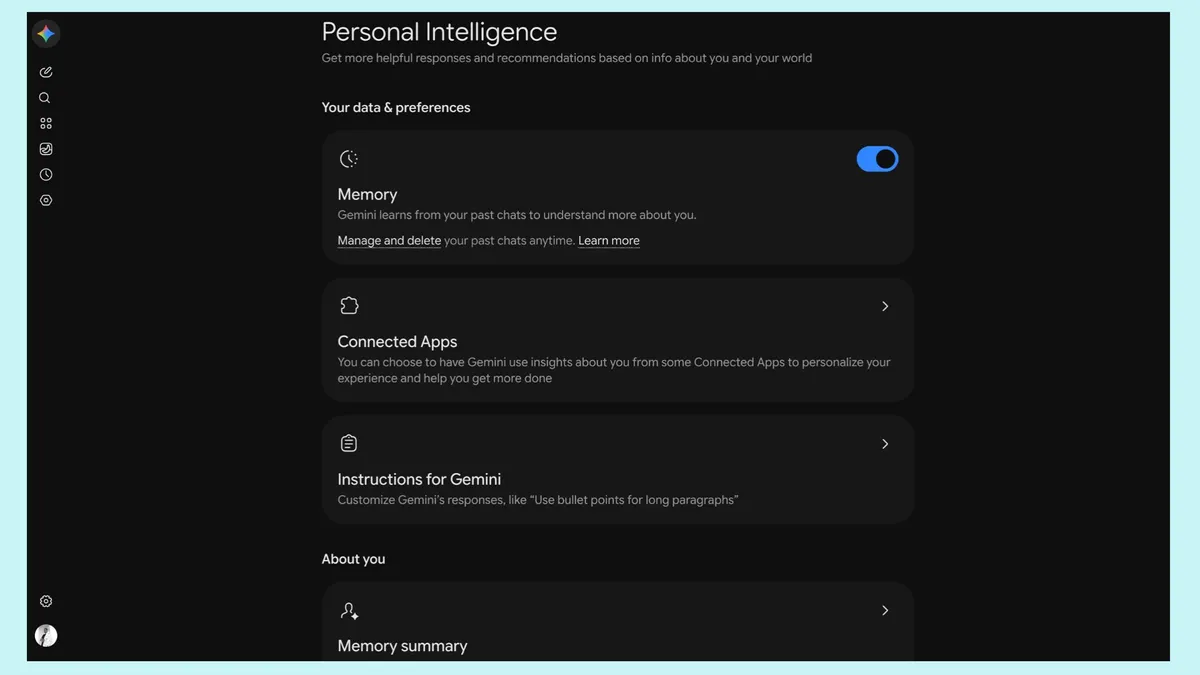
I actually used my personal Gemini account to see how this new feature works. Accessing it on desktop and through your mobile browser is as simple as going to your “Settings” and clicking on “Personal Intelligence” to be led to the “Memory” and “Memory summary” tabs. You can toggle the Memory tab to let Gemini keep retaining information about you or stop it from performing that action. I clicked on the Memory summary tab and this is the summarized information it has collected about me so far (I’ll be sure to add more information about my profession at some point):
Google has stated that the Memory feature is only available to Gemini users in the US who are over the age of 18 and have an active Google AI plan. Also, those users must have the “Keep activity” and “Memory” options enabled. But in my case, I got to play around with the Memory feature through my free Gemini subscription plan.
Bottom line
AI users have already gotten hip to the fact that most chatbots can bring up past details from their past conversations and use that information to generate more personalized answers to their questions & prompts. It’s nice to see Google allow Gemini users to not only get a full picture of what its chatbot has learned and remembered about them, but also give those same users the opportunity to add, change or delete those details.

Follow Tom's Guide on Google News and add us as a preferred source to get our up-to-date news, analysis, and reviews in your feeds. Subscribe to Tom's Guide on YouTube and follow us on TikTok.
More from Tom’s Guide
- Claude just got 3 powerful new tools — and they could replace some of your favorite apps
- Anthropic just launched its most powerful Claude ahead of its IPO — here's why it's telling users to stick with Opus
- I had ChatGPT explain the 7 main arguments AI doomers make and asked it to challenge them — here’s how it responded to every possible doomsday setup