Tom's Guide Verdict
The Garmin Forerunner 170 is a small but clear upgrade on the Garmin Forerunner 165, with a new user interface that brings in a lot of new software features, including more detailed training analysis for runners. If you don’t need its smart features, however, the Garmin Forerunner 70 and Coros Pace 4 offer better value.
Pros
- +
Lightweight, attractive design
- +
Accurate sports tracking
- +
Improved training analysis
- +
Handy smart features
Cons
- -
Short battery life
- -
No dual-band GPS
- -
No triathlon mode
Why you can trust Tom's Guide Our writers and editors spend hours analyzing and reviewing products, services, and apps to help find what's best for you. Find out more about how we test, analyze, and rate.
While the most expensive Garmin models like the Fenix 8 Pro draw a lot of attention, it’s the entry-level watches that I see most often on the wrists of my fellow runners, so the launch of two new affordable Forerunners is a big deal.
The Garmin Forerunner 170 is the more expensive of the pair, offering more sensors and smart features than the Garmin Forerunner 70, but both are excellent options for runners in particular, thanks to their lightweight designs, accurate tracking, and relatively low price tags.
I’ve been testing the Garmin Forerunner 170 Music model for the past two weeks, and during that time I’ve compared it to the Forerunner 70 and the Coros Pace 4, another affordable option I count among the best running watches available.
In my full Garmin Forerunner 170 review, I’ll cover how it performed during my runs and other workouts and how it compares to other watches, including its predecessor, the Garmin Forerunner 165.
Garmin Forerunner 170 Review: Price and availability
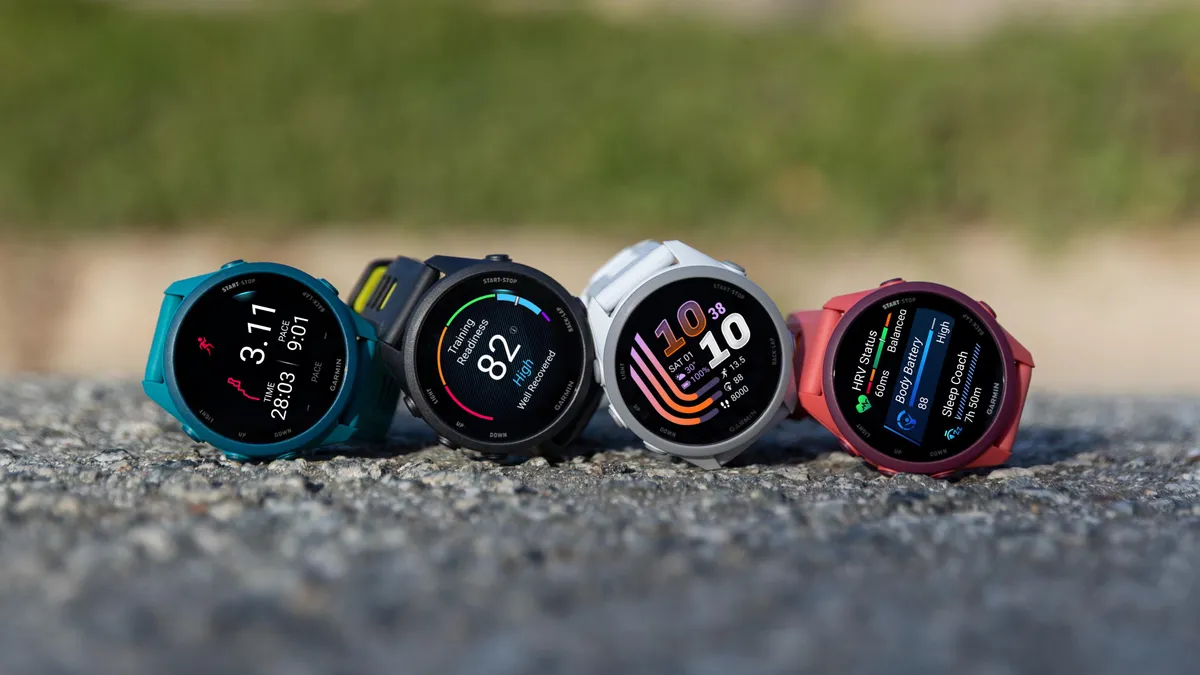
The Garmin Forerunner 170 launched in May 2026, and it costs $299/£259 for the standard model and $349/£299 for the Music model, which is a $50 price rise on the Forerunner 165.
At the same time, the Garmin Forerunner 70 launched as a cheaper alternative. The Forerunner 70 is $249/£219 and lacks some sensors and smart features that are on the Forerunner 170.
The main rivals from other brands are the Coros Pace 4 and Suunto Run, which both cost $249 and are similarly small, lightweight AMOLED sports watches.
Garmin Forerunner 170 Review: Specs compared
| Row 0 - Cell 0 | Garmin Forerunner 165 |
Garmin Forerunner 170 |
Coros Pace 4 |
Price |
$249.99/£249.99; $299.99/£289.99 (Music) |
$299.99/£259.99; $349.99/£299.99 (Music) |
$249.99/£229.99; $279.99/£249.99 (Music) |
Size |
43 x 11.6mm |
42.6 x 11.9mm |
43.4 x 11.8mm |
Display |
1.2in 390 x 390 AMOLED |
1.2in 390 x 390 AMOLED |
1.2in 390 x 390 AMOLED |
Bezel |
Plastic |
Plastic |
1.2in 390 x 390 AMOLED |
Screen |
Glass |
Glass |
Glass |
Weight |
39g |
41g |
40-41g |
Water resistance |
5ATM |
5ATM |
5ATM |
Battery life (watch mode) |
Up to 11 days |
Up to 10 days |
Up to 19 days |
Battery life (GPS) |
19 hours (all-systems GPS, always-on) |
20 hours (all-systems GPS, always-on) |
24 hours (multi-band GPS, always-on) |
Storage |
4GB |
4GB |
4GB |
Garmin Forerunner 170 Review: Design and display

The Forerunner 170 is a very light and slim watch that sits comfortably on the wrist. I barely noticed it was there at times, and it doesn’t catch on jackets or dig in uncomfortably when you’re sleeping.
It has Garmin’s classic five-button design, which is easier to use to navigate the menus than the touchscreen at times, though the touchscreen is also nice and snappy.
The 1.2in AMOLED display is smaller than on pricier Garmin watches, but I still found it easy to read in all conditions, even with five stats on display during my runs.
Garmin opted not to put its latest optical heart rate sensor on the watch, so it doesn’t offer the ECG and skin temperature readings you get on models with the Elevate Gen 5 sensors, and in the past, I’ve found the Gen 4 sensor the Forerunner 170 uses to be a little less accurate than the Gen 5.

You do get an array of other sensors on the Forerunner 170, including a barometer, altimeter and gyroscope, which you don’t get on the cheaper Forerunner 70.
This has made a difference to the quality of its elevation tracking during activities in my testing, with the Forerunner 170 showing smoother, more accurate elevation plots.
The Forerunner 170 can also pair with external sensors, including chest straps and cycling power meters via Bluetooth and ANT+ — you can’t pair cycling sensors with the Forerunner 70.
You get 4GB of storage on board, and the Forerunner 170 has a water resistance rating of 5 ATM, making it suitable for pool and open-water swimming.
Garmin Forerunner 170 Review: Sports tracking and training analysis

Compared to the Forerunner 165, the Forerunner 170 has new sports features in the shape of more extensive training analysis and many new sports modes, including a lot of winter, team and racket sports.
The extra training analysis is a notable addition because it gets things like Training Status, Training Readiness and more Training Load analysis that Garmin has previously reserved for more expensive models.
It doesn’t have all the metrics you get on top Forerunners, missing Running Tolerance, for example, a stat I like a lot on the Garmin Forerunner 970, but there’s more than enough on the Forerunner 170 to satisfy keen runners.

As a marathoner, I have everything I need to keep an eye on my training load to ensure I’m building sensibly, and the Training Readiness stat is handy for a quick rating of the current state of your body based on things like recent sleep, stress and training sessions.
Another new addition to the watch is a Quick Workout feature for runners that can give you a guided session based on how hard you want to work and how long you have to run.

I tried it out, and it’s simple to use and gives a variety of sessions you can use to balance your training without needing to follow a structured plan, from easy runs to sprint intervals. It gave me quite tough sessions, though, so I found I did need to scale them back a bit to run at the right intensity.
Garmin Forerunner 170 Review: GPS & HR accuracy

Garmin didn’t upgrade with the heart rate sensor or GPS chipset on the Forerunner 170, which doesn’t offer multi-band GPS; its most accurate mode is all-systems GPS.
Multi-band GPS isn’t essential, but the multi-band tracking you get from Garmin’s pricier watches is the most accurate on the market, and other affordable watches offer multi-band, including the Coros Pace 4 and Suunto Run.
During my testing of the Forerunner 170, it has been as accurate as multi-band watches I’ve compared it to, including the Pace 4 and Garmin Forerunner 970, and although I do use multi-band when available, I don’t think there’s a huge difference in practice.
The exception would be if you regularly run in city centers under tall buildings, when a multi-band can help you get a reliable GPS signal, but even on city runs, the Forerunner 170 has been fine for me.

I was disappointed that the Forerunner 170 didn’t get Garmin’s latest Elevate Gen 5 heart rate sensor, though, because in my long-term testing of the brand’s watches, I have found that more accurate than the Gen 4 sensor on the Forerunner 170.
So far in testing the Forerunner 170’s heart rate has been pretty accurate, only really lagging behind a chest strap’s readings during an interval session, though I’ve been running in warm weather when optical sensors tend to be more reliable.
Ultimately, the GPS and HR accuracy on the watch has been good for me so far, and I expect that will continue, but it’s still a little disappointing not to get Garmin’s best sensor and GPS option on the watch.
Garmin Forerunner 170 Review: Smart features

One area where the Forerunner 170 separates itself from other affordable sports watches is its smart features. Both models have NFC payments through Garmin Pay, and the Music can link up with streaming services (Spotify, Deezer and Amazon Music) and store audio files for offline playback.
It’s still not a true smartwatch, with the Connect IQ app store having far fewer useful apps than the Apple App Store or Google Play, but rivals like the Coros Pace 4 don’t have NFC payments and can only store MP3 files, rather than offering support for streaming services.
These smart features are the main reason to upgrade from the Forerunner 70, or indeed from the Forerunner 170, to the Forerunner 170 Music, so deciding whether you need them is important for picking between the new watches.
The Forerunner 170 doesn’t have offline maps, but it does offer breadcrumb navigation with turn-by-turn directions, which is usually enough to keep you on track unless you’re heading into the wilderness.
You can also customize your watch face and widgets extensively, and the new user interface on the watch, which is the same as the one on the Forerunner 570 and Forerunner 970, brings handy widgets like Sports Scores and a Battery Life tracker, which you don’t get on the Forerunner 165.
Garmin Forerunner 170 Review: Battery life

As a small watch with a bright AMOLED display, it’s not unexpected that the Forerunner 170 doesn’t offer especially long battery life, but it’s actually less long-lasting on this front than the Forerunner 70 and Coros Pace 4.
You get up to 10 days of use with the screen set to raise-to-wake and four days with it always-on, and 20 hours of all-systems GPS tracking.
In my testing, I had the screen set to always-on, medium brightness, and ran every day with the watch, and it lasted around three and a half days on average.
Should you buy the Garmin Forerunner 170?

The Garmin Forerunner 170 is an excellent little watch that I enjoyed using, and the upgrade in training analysis means it’s a great option for new and experienced runners alike.
Garmin didn’t throw the kitchen sink at it with the upgrades they could have put on the watch, but did improve upon the Forerunner 165 in several important areas.
That said, the Forerunner 165 remains a strong alternative that will generally cost you $100 less in sales if you’re not worried about the extra training analysis and upgraded user interface.
Another older Garmin to consider is the Forerunner 265, which is a full triathlon watch with multi-band GPS and a larger AMOLED display, and it’s usually in sales for the same price as the Forerunner 170.
The Forerunner 265 has the old user interface and won’t be getting new features going forward, but it’s a very capable watch already, and comes in two sizes, so you can still get a small watch if you want.
If you're not bothered about the smart features on the watch, or very accurate elevation tracking in particular, then the Forerunner 70 is a better buy too, since it’s very similar to the Forerunner 170 otherwise.
Outside of Garmin, the Coros Pace 4 is a strong alternative if you don’t need the Garmin smart features. It has multi-band GPS and is a full triathlon watch, and it proved very accurate for me over six months of testing while training for the London Marathon.
It’s a crowded market, as you can see from the above. The Forerunner 170 more than holds its own, but I think you might find better value in an older Garmin or the Coros Pace 4.