Presented by

Over 65? Doctors say spending less time in bed could increase how much deep sleep you get — here's how and why it's vital for ageing well

Deep sleep is important for muscle repair, pain relief, memory and even immune function but as you age, you naturally get less of it. In fact, older adults may spend as little of 10–15% of the night in deep sleep, down from the 15–25% younger adults typically get.
So what can you do about it? We asked experts and they explained that while it's hard to target deep sleep improvements specifically, simple habits can boost your overall sleep cycle.
"Sleep in older age may look lighter and more fragmented but it can still be restorative," explains Dr. Chris Allen, Sleep Science Advisor at Aeroflow Sleep.
“Deep sleep cannot be forced," adds Neurologist Dr. Lynette Gogol, "but it improves when daily rhythms are stable."
If waking up after a full night's sleep used to feel like a fresh start, but no longer does, you might need more deep sleep. Here's how to get it — and why spending less time in bed might be the solution .

What is deep sleep?
Deep sleep, or slow-wave sleep, is a vital stage in the nightly sleep cycle.
During deep sleep the body undergoes essential restoration processes. Both Dr. Allen and Dr. Gogol note that deep sleep is important for physical restoration, immune function and metabolic health.
It's also the sleep stage that is hardest to be woken from. A 2019 review found that you're more likely to experience sleep inertia — fatigue and grogginess after waking — if you're disturbed during deep sleep compared to light sleep or REM sleep.
How do seniors benefit from deep sleep?
“Deep sleep remains important throughout life, even though it declines with age," explains Dr. Gogol. "It plays a key role in memory processing, immune regulation, and physical restoration."
While deep sleep isn't solely responsible for these functions — as Dr. Allen points out, sleep works as a "system" — it still has the strong benefits for seniors.
Muscle restoration
During deep sleep the body starts repairing itself following the stressors of the day.

"Deep sleep is where we make growth hormone, which is critical for tissue repair," explains Dr. Jacob Teitelbaum, pain expert and author. This is why you need more sleep as an infant — it's when your body is literally growing.
For older adults, this sleep stage has a different impact: pain relief.
Deep sleep is where we make growth hormone, which is critical for tissue repair
Dr. Jacob Teitelbaum
“It is important for people to know that sleep quality is critical for pain relief, and poor sleep has been shown to significantly cause pain as well," says Dr. Teitelbaum. "Why? Deep sleep is where we make growth hormone, which is critical for tissue repair."
When you're lacking deep sleep, as Dr. Teitelbaum explains, it can be difficult for your body to make pain go away.
"Low growth hormone also causes premature aging as well as weight gain,” he adds.
Memory consolidation
Research suggests REM sleep is closely linked to memory and learning, but deep sleep is also crucial for memory consolidation.
In particular, research shows a link between deep sleep and declarative memory consolidation. Declarative memory, "consists of memory for events (episodic memory) and facts (semantic memory)," according to researchers.

"Deep sleep is also the stage during which the brain’s glymphatic system is most active, helping clear metabolic waste such as beta-amyloid,” says Dr. Gogol.
Beta-amyloids are a protein that can accumulate when the brain's 'cleaning' system isn't working correctly or at full capacity. A lack of sleep, including deep sleep, can cause a build-up of beta-amyloids and potentially contribute to the development of Alzheimer's.
Immune system support
Good sleep strengthens the immune system, with research showing links between deep sleep and increased immune function.
When speaking to us about the importance of deep sleep, Dreem Health Medical Director Dr. William Lu explained that during this stage the body produces immune cells and regulates the release of cytokines, a protein that prevents inflammation.

However, the immune system begins to naturally decline, with this deterioration starting around your sixth decade of life. This is a process known as immunosenescence.
While increasing the amount of deep sleep you get won't prevent immunosenescence, improving sleep efficiency can give your immune system the extra support it needs as you get older.
What happens to deep sleep as we age?
Research has shown that the area of the brain responsible for slow-wave sleep begins to deteriorate with age, resulting in lower levels of deep sleep among seniors.
“It’s normal for deep sleep to decline with age," says Dr. Allen. "While younger adults may spend 15–25% of the night in deep sleep, older adults often spend closer to 10–15%, and sometimes even less. That reduction is a normal part of aging.”
With aging, sleep efficiency declines and nighttime awakenings increase
Dr. Lynette Gogol
Dr. Gogol explains that this is largely due to reduced sleep efficiency (which is the percentage of time you spend asleep while in bed).
“With aging, sleep efficiency declines and nighttime awakenings increase," she notes. "As a result, someone sleeping at 80 percent efficiency may need slightly more time in bed to obtain seven hours of sleep than someone sleeping at 90 percent efficiency.”

However, she warns that chasing more sleep isn't necessarily the way to go about it:
“The goal is not to restore youthful levels, but to protect overall sleep quality and prevent conditions that further erode deep sleep, such as untreated sleep apnea or chronic insomnia,” she says.
Can spending more time in bed help you get more deep sleep?
If you're experiencing reduced sleep efficiency as you age, surely the solution is to spend more time in bed and try to increase the amount of sleep you're getting?
Staying in bed longer does not restore age-related reductions in deep sleep
Dr. Lynette Gogol
However, the experts explain that spending more time in bed can actually have a negative impact on your overall sleep quality.
"Simply staying in bed longer does not restore age-related reductions in deep sleep and can actually increase nighttime wakefulness,” warns Dr. Gogol, while Dr. Allen adds that it can "fragment sleep further."
Dr. Gogol explains that due to the broken nature of sleep among seniors, lying in bed often means lying awake.
This teaches your brain bad habits. "Lying awake for long stretches can weaken the brain’s association between bed and sleep, lowering sleep efficiency,” she says.
How can you get more deep sleep as a senior?
“Deep sleep is shaped by circadian rhythm, time awake before bed, overall metabolic health, and stable breathing during sleep," says Dr. Gogol. "As we age, these systems become more vulnerable to disruption."
However, supporting those systems can improve your overall sleep quality, and with it, the amount of deep sleep you get.
Be mindful with the time spent in bed
Rather than spending more time tucked up, the answer might be to restrict the time you spend in bed.
“Research in behavioral sleep medicine consistently shows that aligning time in bed with actual sleep ability improves sleep efficiency and overall sleep quality,” says Dr. Gogol. Sleep ability, per the Cleveland Clinic, is how much you actually sleep.
That means going to bed only when you feel tired, particularly as deep sleep primarily takes place earlier during the night.
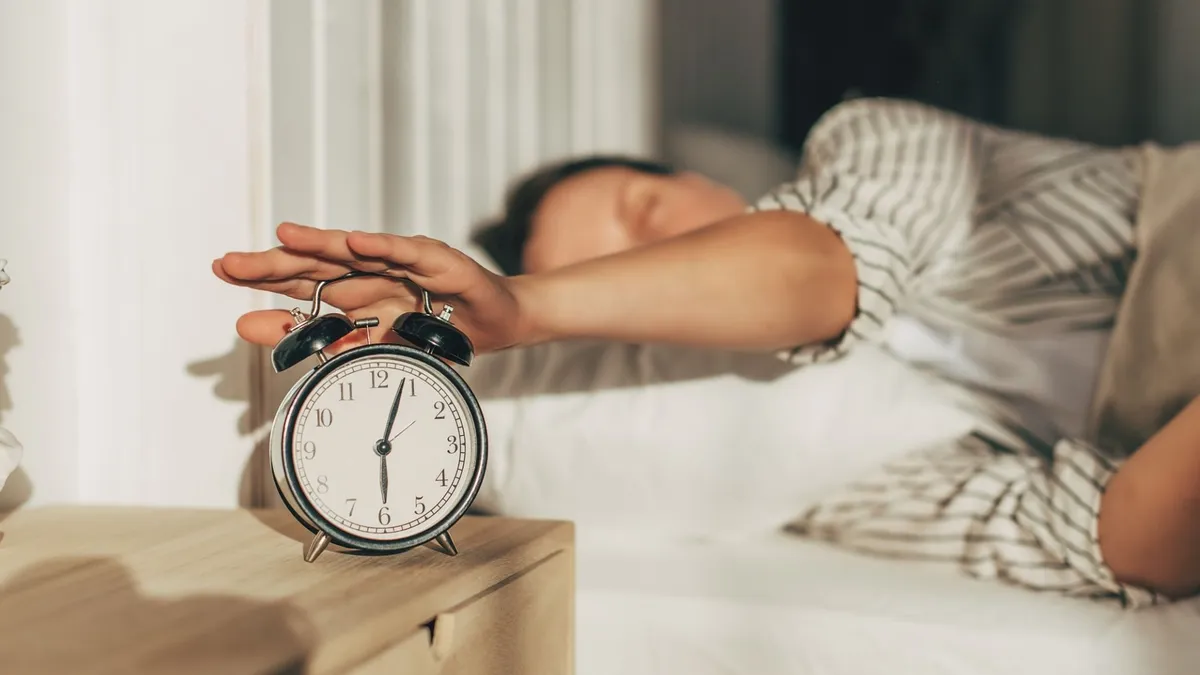
“Deep sleep tends to occur more in the first third of the night, so improving sleep onset and minimizing early awakenings is often more impactful than extending total time in bed," explains Dr. Allen.
In addition, rather than lingering under the covers in the morning, hoping to drift off again for a few more hours of sleep, get out of bed when you wake up.
“One of the most powerful strategies is maintaining a consistent wake time, even on weekends,” says Dr. Gogol. So yes, even when you’ve had a disrupted night, keep your hands off the snooze button.
Strengthen sleep routines
Dr. Allen notes that even brief awakenings can disrupt slow-wave sleep, advising improved sleep continuity (which refers to the ability to fall and stay asleep) over elongated sleep length.
While that can seem like a daunting task, a few simple habit switches can support the circadian rhythms, increasing the likelihood that you'll sleep through the night.
One of Dr. Allen's strongest recommendations is getting daytime light exposure, especially in the morning. This could be as simple as a stroll outside or enjoying your coffee in the garden.

“Morning and midday light exposure help anchor the body clock," explains Dr. Gogol, as light suppresses sleep-inducing hormone melatonin.
Both also advice regular physical exercise to improve sleep, with Dr. Gogol noting that regular aerobic and resistance exercise "modestly increases slow-wave sleep in older adults."
She also recommends avoiding alcohol in the evening, as alcohol has been linked to fragmented sleep. This reduces and disrupts your overall sleep architecture, meaning you're less likely to experience consistent deep sleep.
Focus on wellness, not numbers
Deep sleep is a key metric of all the best sleep trackers but as it's a a stage many seniors struggle to consistently achieve, you might find it sends your sleep score crashing.
However, the experts suggest that focusing too much on one sleep stage is less important then optimizing sleep as a whole.

“In older adults, maintaining a healthy balance across all stages is more important than maximizing one specific stage," says Dr. Allen. "The priority should be waking up feeling restored, cognitively sharp, and physically functional — not chasing specific stage percentages.”
You don't have to have a sleep tracker to experience 'orthosomnia', a term used to describe the anxiety that comes with obsessively chasing better sleep.
“Deep sleep matters, but chasing numbers on a tracker matters less than protecting healthy, consolidated sleep,” says Dr. Gogol.
Assess for other sleep problems
While deep sleep does naturally decline with age, other health issues can impact your sleep quality and, if left untreated, might mean you miss out on even more sleep.
"Screening for and treating obstructive sleep apnea is particularly important," says Dr. Gogol. "Untreated apnea significantly reduces slow-wave sleep and increases fragmentation."

She also recommends discussing Cognitive Behavioral Therapy for Insomnia (CBT-I) with your doctor if you feel sleep deprivation is impacting your health and wellbeing.
"CBT-I is recommended as first-line treatment by major sleep medicine guidelines and has strong evidence supporting its effectiveness in older adults," says Dr. Gogol. "It improves sleep consolidation, reduces nighttime awakenings, and increases sleep efficiency without the risks associated with long-term sleep medications."