There’s one thing you should know about squatting: you can’t hide from a “bad” squat. And I don’t mean “bad” like it’s your fault, but whatever the niggle is: tight hips, knees, or ankles, or a muscular imbalance, your squat can highlight it within a few reps.
If you’re now thinking about yours and what to look for, I strongly recommend reading our how-to squat guide to help you fine-tune the proper squat technique. I also recommend performing reps in the mirror, or using a spotter, and working with just your body weight or on the bar using your full range of movement.
Identified a problem? I teach weightlifting for a living, and this is my favorite exercise for unlocking tight hips and ankles and boosting lower body mobility. Here’s what you need to know.
What does poor ankle mobility do?
I’d argue the ankles are one of the most important yet neglected areas of the body. Strong ankles keep you balanced and stable, contribute toward posture and help you perform exercise safely and with agility.
Weak ankle joints can lead to injury or issues elsewhere, particularly in the lower back, hips and knees as other muscle groups and joints take on the slack of underused or underperforming ones. Staying active can help keep the ankles and muscles surrounding them strong and flexible, keeping you functional and mobile as you age.
If your strength programs feature the barbell front squat, back squat, or any squat variation in between, bodyweight ankle exercises are crucial additions to your warm-up routines. Without assessing a client in person, it’s hard to diagnose an issue, but there are a few telltale signs that limited joint mobility or muscular imbalance could be the issue:
- You struggle to get your thighs at least parallel to the floor during squats
- You’ve noticed a butt-wink (read: best ways to fix butt-winks)
- You lift into the balls of your feet rather than distribute your weight evenly (the tripod position)
- Your chest falls forward
- Your back rounds as you lower into the squat
- Your knees turn in.
A trainer or some of the best workout apps can help diagnose the issue. For example, the athlete-endorsed Pliability app gives you a diagnostic squat assessment with your monthly subscription, and it identified my ankles as an area of concern when I first tried it.
If you already know your ankles are the culprit, try this mobility exercise that can double up as a lower-body stretch.

What is the runner’s lunge calf stretch?
The runner's lunge is typically performed with the back knee lifted. It offers a deep stretch through the lower body, especially the hips, glutes, quads, hamstrings and calves.
This variation is performed on the knees (often referred to as low lunge or sometimes interchangeably as runner's lunge) and focuses more on an active range of motion by reaching deeply into the calves and ankles and relieving tightness or tension.
How to do the runner’s lunge calf stretch

For best results, perform this exercise several times a week, especially before lower body workouts. It will take months to notice significant improvements, but your squats should begin to feel easier immediately after warm-ups. Consider it a mobility MOT you need to renew (just more often than your car).
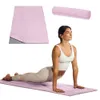
- Start in a low lunge position with your right leg forward, left leg back hip-width apart and left knee supported. I recommend using one of the best yoga mats
- Lift your chest and rest your hands on your hips, the mat, or lightly on your right thigh without putting pressure on the knee joint
- Draw your right knee forward over your toes as far as you can without lifting your heel away from the mat. You should feel a deep stretch down the calf and ankle
- Pause at your end range, then release the stretch back to your starting position
- Repeat, rocking gently forward and backward, then switch sides.
For warm-ups, I recommend 3-4 sets of 8-12 reps per leg. You could also hold the stretch at your end range of motion for 30-45 seconds per side after workouts, first thing in the morning, or before bed.
You should find a gentle stretch through the hip flexor of the back leg. If you feel the hip flexor stretch more than down the back of the front leg and ankle, bring your back knee forward into a shorter-stance low lunge; this should help you drive your front knee further forward without your back hip taking over.
I also recommend some other squat mobility exercises to try below.
More from Tom's Guide
- Develop lower body flexibility and build ankle strength with this one bodyweight exercise
- The candlestick roll is the best bodyweight exercise for barbell squats
- I tried this one move every day to reduce hip flexor pain, here's what happened