Headphones and earbuds that cover or fill your ears have one clear weakness when you're out for a run — they block out the world, making you less aware of your surroundings. That's where the best bone conduction headphones come in.
They leave your ears free to hear what's going on around you, so you're safer when you're out and about. But which options should you be adding to your exercise arsenal?
The best for most people are the Shokz OpenRun Pro 2, thanks to their comfort and solid sound quality for bone conduction headphones. If you're on a tighter budget, the Shokz OpenRun are a good alternative.
What other options do you have? Read on to find out which of the bone conduction headphones I've thouroughly tested are worthy of your attention.
The best bone conduction headphones you can buy right now
Why you can trust Tom's Guide Our writers and editors spend hours analyzing and reviewing products, services, and apps to help find what's best for you. Find out more about how we test, analyze, and rate.
Best bone conduction headphones overall
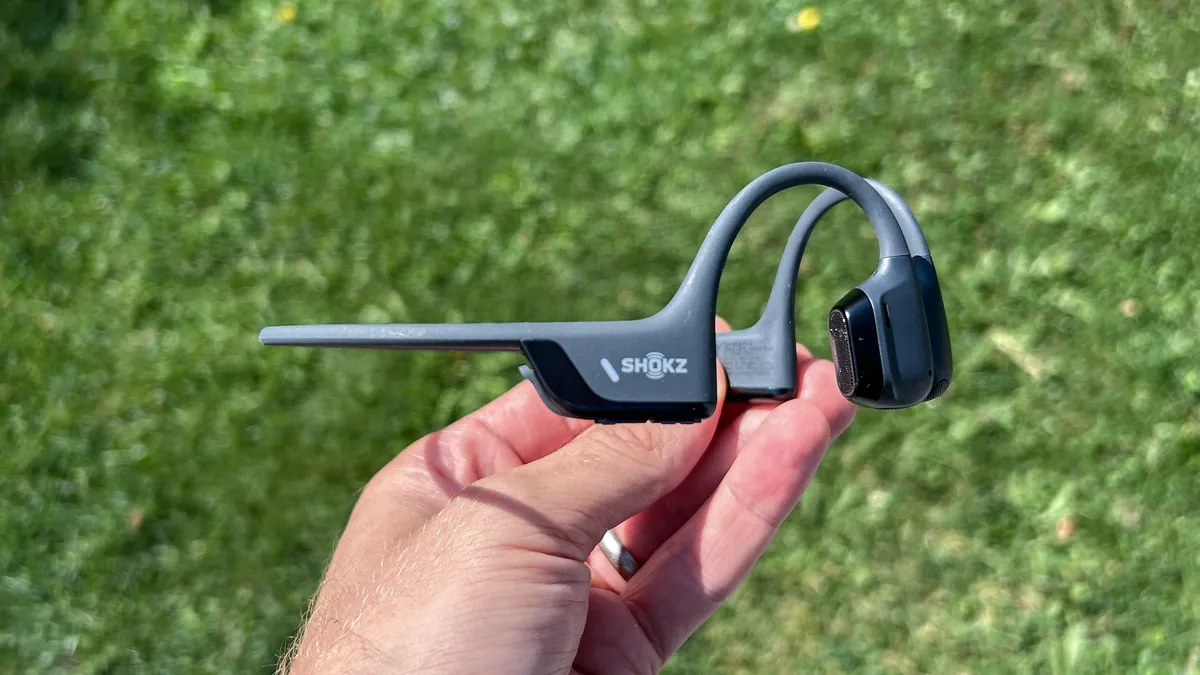

Of all the bone conduction headphones I’ve tested, the Shokz OpenRun Pro 2 sound by far the best. They’re a more engaging listen than any other pair on the list — although there’s more to their no. 1 spot on this list than their fabulous sound quality.
But first, the sound. It’s the bass that sees the biggest upgrade here, with more low-end rumble than the original OpenRun Pro and the other entrants on my shortlist. They’re more dynamic than the running-oriented OpenRun, and offer better sound quality than the water-bound OpenSwim Pro. If I was to use any of these headphones for listening to music, it would be these.
They’re the ultimate all-rounder. They might be slightly weightier than the OpenRun, but they offer superior features for any exercise. They’re not as good for swimming as the eponymous OpenSwim, but they’re are more comfortable and flexible.
Battery life solidifies their place at the top of the list, with 12 hours on tap. That’s 4 more hours than the OpenRun, and 3 more than the OpenSwim. The two sizing options are useful too, especially if, like me, you prefer a snugger fit. Or you’ve got a large head.
A jack of all trades is a master of none — but oftentimes better than a master of one. The OpenRun Pro are that jack of all trades, and as a result, they land at the top of our best bone conduction headphones list.
- Read our full Shokz OpenRun Pro 2 review
Best bone conduction headphones for running


If the OpenRun Pro 2 are the jack of all trades, the OpenRun are a master of one — but they are very, very good at it. Like a stripped-back version for going as fast as possible, the OpenRun are our pick for runners for one very important reason — they are super light.
At just 26g, the OpenRun are some of the lightest bone conduction headphones on the list. That means they’re more comfortable for longer periods of time than the OpenRun Pro 2 and the OpenSwim Pro. Add in the security of the fit, and the knowledge that they’re not going to fall off anytime soon, and you’re onto a winner for long-distance heroes and sprinting warriors.
The battery life isn’t quite as good as either the OpenRun Pro 2 or the OpenSwim Pro, but the 8 hours you’ve got on tap is still going to be plenty for longer training sessions. That’s a tradeoff for that lightness — less battery, less weight. You win some, you lose some.
The sound isn’t as good as the OpenRun Pro 2, but it’s a little better than the OpenSwim Pro. The biggest pain point in the sound department is, as you might expect, is the bass. It gets lost amongst the rest of the outdoor or gym din. Still, the rest of the sound is good, and perfect if you want to listen to a podcast while you go for a run.
They might not be quite as good as the OpenRun Pro 2, but if you’re a runner looking to spend a little less and get a stellar set of bone conduction headphones for listening to podcasts while you train, then you’re in the right place.
- Read our full Shokz OpenRun review
Best bone conduction headphones for swimming

We’ve seen the best bone conduction headphones overall (the jack of all trades), and the best for running — but now we’re looking at another master of one. The OpenSwim are our pick for (you guessed it) the best swimming bone conduction headphones, thanks to a very cool feature indeed that means you don’t need a device nearby to listen to “A Wrinkle In Time.” There’s a built-in MP3 player, so you need only fill it with your favorite tunes/podcasts/audiobooks and get swimming.
That’s a big bonus over both the OpenRun Pro 2 and the OpenRun, which both require a device nearby in order to play any audio. Why is this so great for swimming? Well, I don’t know about you, but I’m not a massive fan of putting my phone in my swimming trunks pocket and going for a swim. Phones might be waterproof now, but there’s no point risking it.
We found them fairly comfortable while swimming in them, and the sound was pretty good too despite our watery surroundings.
There are some drawbacks to this MP3-playing pair of headphones. The 9-hour battery life isn’t as good as the OpenRun Pro 2, and it drops even more if you use the built-in MP3 player to 6 hours. They’re heavier than both the OpenRun and OpenRun Pro 2, so you might not want to wear them for as long.
But if you’re a swimmer and you want some extra audio while you do your lengths, then the OpenSwim Pro are just the bone conduction headphones you’ve been looking for.
- Read our full Shokz OpenSwim Pro review
Best budget bone conduction headphones

If the options above are a little too rich for your blood, then the Creative Outlier Free Pro are going to be the pick of the bunch. They come in under $100, making them a whole lot cheaper than the other options on the list, and even have their own very compelling reasons you might want to pick them up beyond their much lower price.
For one, much like the OpenSwim Pro, you’ve got a built-in music player. That means you don’t need to have your phone nearby, and thanks to their IPX8 waterproofing, you can take them swimming with little worry that the water will damage them. Just as long as you don’t expect to be able to listen to them with any kind of good sound quality.
There’s the drawback, the compromise that has had to be made on the altar of budget pricing. They just don’t sound as good as the OpenRun Pro 2, OpenRun, or OpenSwim Pro. They’re pretty thin across the board, making them useful for pretty much the spoken word only. Music doesn’t sound good at all.
But they don’t cost much — and when you take into account the price, the comfortable fit, the 10-hour battery life (more than the OpenRun and the OpenSwim Pro, I might add), and the quick-charging battery, then you’ve got a very compelling case for your dollars.
- Read our full Creative Outlier Free Pro review
Also tested
The team at Tom's Guide are constantly testing headphones to make sure that the ones recommended are truly the best bone conduction headphones worth your money. But that means there will be some that don't quite make the cut.
So, if you're after more options, these are the bone conduction headphones that have been reviewed but didn't make the list.
How to choose the best bone conduction headphones for you
Before you decide on a pair of bone conduction headphones, there are a few factors to consider, aside from the way they transmit audio. Some sets have adjustable headbands to help you find a more comfortable fit, while others come in multiple (and often vibrant) colors to match your aesthetic.
One of the most important features is the degree of water resistance on offer, and this will depend on how you want to use them. For swimming, you need waterproof sets with an IPX8 rating, but for sweaty sessions and rainy outdoor walks and runs, you can opt for a pair with a high-degree of resistance around IPX4 or higher.
Of course, as your ears are left untouched with bone conduction headphones, you won't get the same experience as with the best workout headphones, which have noise cancellation and can block out the environment around you until you switch to a transparency mode to keep tabs on your surroundings.
Though that doesn't mean you have to compromise on the audio quality. Some pairs focus on bass-heavy performance and are ideal if you like to listen to (or train with) dance or tracks with an intense lower end. Others, meanwhile, are optimized for more general performance, so they'd be good for music and podcasts.
How I test the best bone conduction headphones
Every pair of bone conduction headphones has been used over the course of several weeks including multiple workouts. This allows the tester to both gauge the performance across a mix of audio material such as podcasts and music at different volumes, and to see how comfortable they are when worn for extended periods.
I test any waterproof models designed for swimming with pool swims, and I make sure manufacturer claims about battery life and Bluetooth range are accurate. Build quality, the ease of setup and any control schemes — including those involving an app — are also judged.
FAQs
What is the best brand for bone conduction headphones?
Shokz currently dominate our round-up of the best bone conduction headphones and it is the most well-established brand in the area, having originally led the charge with the technology under its previous name of Aftershokz.
There are many rivals who seek to undercut Shokz on price though, with NANK (formerly Naenka) and Haylou both being good affordable alternatives, and Suunto is a brand to watch for bone conduction headphones as its range is growing fast.
What are the negatives of bone conduction headphones?
The main drawback with bone conduction headphones is that they don't sound as good as in-ear, over-ear or even open buds. The best of them do sound good, but they can't offer the power and depth of more traditional headphones.
In addition, while the open design is great for staying aware of your surroundings, that is not a positive when you're travelling or seeking to block out external noise. In loud environments, it can be hard to hear your audio.
Bone conduction headphones also have a headband design that hooks over the ears, which can make them less convenient than individual buds that you can only wear one of at a time.
Finally, some people don't like the tickling sensation you get on your cheeks from bone conduction headphones, especially when you turn the volume up to a high level. Personally, I quite enjoy it, but it's something you obviously don't get with in-ear buds.
What's the difference between bone conduction headphones and open headphones??
Bone conduction headphones leave your ears clear and deliver sound through vibrations against your cheekbones. Open headphones are an increasingly popular option that also don't block your ear canal, but instead position a speaker near it to play sound in a more traditional way.
The advantage of open headphones is that they can offer better sound quality than bone conduction, and a wider variety of designs. Bone conduction headphones are still better for awareness though, as open buds drown out more external noise in my experience.
What do bone conduction headphone IP ratings mean?
Your electronic devices are valuable, so you want to be sure that they won't accidentally break if they get splashed with water — that's what IP ratings are for.
Most manufacturers test their devices for Ingress Protection (IP) and the resulting rating (IPXY) is a measure of how hardy the unit is when it comes to dust and water.
The first digit refers to protection from solid materials, like dust and sand, and is represented by a number from 0 (no protection) to 6 (full protection). However, you'll often spot that the IP rating is shown just as X for this area — this shows the company hasn't actually tested it for protection.
The second digit is for water protection, and is the more common of the two. Phones, smartwatches, and headphones are usually tested for water resistance, ranging from no protection (0) to full waterproofing (8).
So, for bone conduction headphones, you'll want to make sure that they'll be able to withstand the environment you'll use them in. If you plan for some light indoor use to work out, an IPX4 rating for sweat resistance might do.
But for outdoor runs, where there's always the potential for rain, an IPX7 rating or above might be best. However, if they're exposed to more than the rating allows, that doesn't mean they'll immediately break, but it increases the risk.
Though because of the design, bone conduction headphones are often pretty durable and resistant to wet conditions. Unlike standard headphones, there are no audio drivers or speakers to get damaged, and all the electric components are stored inside the device.
Can you hear better with bone conduction headphones?
If you're wondering if you can hear better with bone conduction headphones compared to more traditional in-ear designs, the answer is yes. That's the premise for this form — keeping your ears open so you can stay aware of your surroundings.
By vibrating the areas near your ears, the headphones recreate sound, but only for you to hear. So this avoids generating a lot of noise for everyone else, but also means you get a speaker-like experience, where the audio is at the forefront, but you can still hear what's going on around you.
However, this approach does mean that there are no on-board microphones covering the exterior to pick up sound for noise cancellation, as you'd find on many of the best workout headphones.
This is purposeful (the point of bone conduction headphones is to not block out noises) but means that there's no way to repurpose the mics to boost background sounds, a technique that Apple has used with the AirPodsPro 2 to turn its earbuds into hearing aids.