
New study reveals that the size of this finger can give you an athletic edge
The link between fingers and fitness
Here at Tom’s Guide our expert editors are committed to bringing you the best news, reviews and guides to help you stay informed and ahead of the curve!
You are now subscribed
Your newsletter sign-up was successful
Want to add more newsletters?
Daily (Mon-Sun)
Tom's Guide Daily
Sign up to get the latest updates on all of your favorite content! From cutting-edge tech news and the hottest streaming buzz to unbeatable deals on the best products and in-depth reviews, we’ve got you covered.
Weekly on Thursday
Tom's AI Guide
Be AI savvy with your weekly newsletter summing up all the biggest AI news you need to know. Plus, analysis from our AI editor and tips on how to use the latest AI tools!
Weekly on Friday
Tom's iGuide
Unlock the vast world of Apple news straight to your inbox. With coverage on everything from exciting product launches to essential software updates, this is your go-to source for the latest updates on all the best Apple content.
Weekly on Monday
Tom's Streaming Guide
Our weekly newsletter is expertly crafted to immerse you in the world of streaming. Stay updated on the latest releases and our top recommendations across your favorite streaming platforms.
Join the club
Get full access to premium articles, exclusive features and a growing list of member rewards.
Some people thrive off running long distances while others loathe every mile and it turns out this might have something to do with the length of your ring finger.
You read that right, in a recent study published in the American Journal of Human Biology scientists concluded that those with ring fingers longer than their pointer finger may be more blessed with an athletic edge.
The conclusion comes from a meta-analysis of 22 studies with over 5,000 participants showing that people with longer ring fingers relative to their index fingers, which means a lower 2D to 4D ratio, generally had better exercise performance and endurance thresholds.
This ratio between the lengths of the second digit, the index finger, and the fourth digit, the ring finger, is known as the digit ratio.
So, what does your finger length have to do with fitness? This digit ratio is linked to prenatal testosterone exposure, which scientists believe may help explain differences in cardiorespiratory fitness and endurance. In other words, the length of your fingers might hint at how well your body handles long workouts like running, cycling, rowing, or team sports.
If news of this study has left you feeling more inspired to lace up, make sure you’re supported with one of the best running shoes for the job.
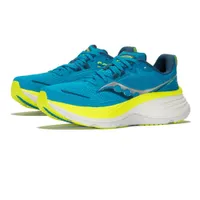
The Hurricane 24 is a super comfortable, well-cushioned running shoe that works brilliantly as a daily trainer. It also has a wide base and supportive midsole, making it a solid choice for runners who want extra stability. Buy today and save $31!
What does this study mean for you and your fitness?
If you are currently looking down at your hand and having an existential crisis about your fitness abilities according to the shortness of your ring finger, fret not. While the results may relay some truth, there are potential flaws to the study.
Get instant access to breaking news, the hottest reviews, great deals and helpful tips.
For one, your digit ratio can actually change over time, so the measurements taken in adulthood might not truly reflect what was happening in the womb. So while it’s an intriguing idea, your fingers aren’t exactly a crystal ball for your athletic potential.
It’s also worth remembering that biology isn’t the whole story. Just because someone may be naturally built for harder and longer forms of exercise, that doesn’t mean they’ll reach their potential without putting in the work.
On the flip side, people who train consistently, follow a plan and keep challenging themselves can build up far greater endurance than you might expect.
A longer ring finger might give you a slight edge, but dedication and good training habits, along with tools like the best running apps, will always take you further. Or at least that’s what I’m telling myself as someone with a shorter ring finger!
More from Tom's Guide
- No jumping — this joint-friendly, low-impact workout uses a pair of light dumbbells to build full-body strength in 6 moves
- Over 60? Forget running and swimming — these 5 bodyweight exercises help strengthen your entire body, using just a chair
- Forget the gym — build full-body strength with this equipment-free 15-minute workout

Jessica has been a fitness writer at Tom’s Guide since 2023, bringing three years of experience writing about health, fitness, and the great outdoors. Her passion for exercise began during her childhood, where she spent weekends hiking and competing in local athletics club events. After earning a master’s degree in journalism from Cardiff University, Jessica found the perfect way to combine her love of storytelling and fitness into a career.
Jessica is passionate about testing fitness gear and tech, using her reviews to help readers make informed buying decisions. She ran her first marathon in April 2024, finishing it in 3 hours and 48 minutes. Through her training, she’s developed a deep understanding of what it takes to grow as a runner, from effective workouts and recovery techniques to selecting the right gear for every challenge.
When she’s not at her desk, Jessica enjoys spending time in the kitchen crafting new recipes, braving cold water swims and hiking.
You must confirm your public display name before commenting
Please logout and then login again, you will then be prompted to enter your display name.

