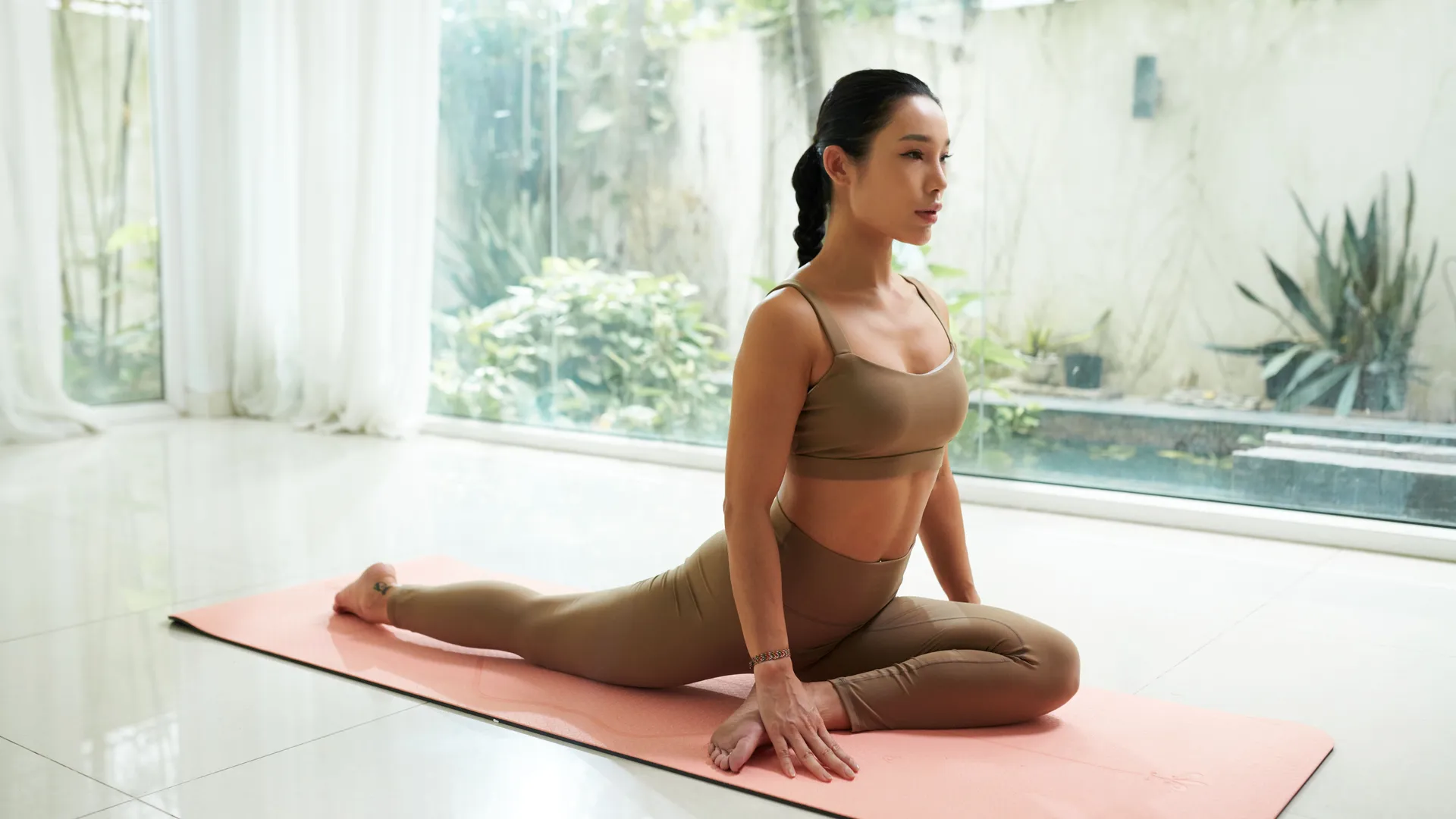
Honestly, there isn't a person who knows me who doesn't hear about my tight glutes. My right hip is also much tighter than my left, which my family and friends also have the joy of hearing about daily.
Pigeon pose is a yoga posture that's featured regularly in my mobility routine for years, and while I know it's not for everyone, there is a simple adjustment my yoga teacher recently made that has changed the stretch forever in my books. And my hips and glutes couldn't be happier, so I wanted to share it.
Before we get started, you must listen to your body. I am not a yoga teacher, and I followed specific advice from my teacher. If you are currently pregnant or post-natal, working with an injury or illness, or experiencing any form of mobility issue or pain, please seek advice from your physician or an experienced yoga teacher first.
How to do a pigeon pose

First, let's take a look at pigeon pose. I recommend the best yoga mats before you get started, as they will help support you. I would also recommend a cushion or yoga block if your hips and glutes are floating, and while it is optional, it can help with alignment and comfort. This also relieves pressure on your back.
Pigeon primarily targets the glutes, hip flexors, and external rotators, promoting flexibility and mobility in the hips. Done correctly and adjusted to your body, the pigeon pose can help alleviate lower back tension and release stored tension in the hips. The idea is to create space by targeting the muscles surrounding and supporting the pelvis.
- Start on your hands and knees in a tabletop position.
- Position your right knee behind your right wrist and right ankle behind your left wrist, resting the leg on the mat
- Sweep your left leg back and extend it down your mat. Ensure you rest on the front of the leg and hip, and the top of your foot
- Square your hips to the front of the mat and sit tall with your hands close to your hips
- Flex your right foot, and either draw it closer to your body for less intensity or further away for a deeper stretch. Your front knee should be resting regardless
- Maintain a long, straight spine. Avoid rounding your back, and engage your core to protect your lower back
- Hold for at least 30 seconds, focusing on a long inhale and exhale
- Switch sides. I recommend leaving this pose by sitting off to the side on your right butt cheek, then sweeping your left leg around.
The benefits of pigeon pose
Pigeon pose involves a deep stretch of the muscles surrounding the hips, including the hip flexors, external rotators and glutes.
Pigeon pose involves a deep stretch of the muscles surrounding the hips, including the hip flexors, external rotators, and glutes. Because we live in a very sedentary society, prolonged sitting can cause weak, tight postural muscles, which include your hips, lower back, glutes, core, and hamstrings.
Even if you're exercising regularly, you could be overusing and underusing certain muscle groups, so either way, mobility exercises, some stretching, and a more active lifestyle can all help counteract these issues.
A study from the National Library of Medicine in the UK highlighted the connection between tight hip flexors, spinal pain, and their adverse effects on exercise performance. It concluded that hip flexor stretches can offer significant advantages to athletes and enhance their overall performance. But your hips need to be prepared for motion as well, so consider mobility training for a more well-rounded approach.
You may find, over time, that your range of motion improves and you feel more open around your hips and back. When performed correctly, pigeon can offer a deep release and even reduce stress, promoting calmness. If you know this pose isn't for you, or you're unsure, check out some pigeon pose alternatives like 90/90 and figure-4.
Here's one simple adjustment my yoga teacher recommends
Pigeon requires deep breathing and holding the stretch so that your muscles can relax (your stretch reflex system may initially restrict how far you can push a stretch to protect you from strain), and you can settle more into the pose. That's why most Yin classes will have you in the same position for several minutes at a time.
After, say, 30 seconds of holding pigeon, my yoga instructor came over and slowly adjusted my hips. With my left leg forward, she sat my left hip back slightly, sliding my left butt cheek toward the mat, then gently drew my right hip flexor forward and, slowly, adjusted my hips down and back. In combination, not only did I feel my glute switch on far more, but it also changed how the stretch felt in my hips overall, and helped to realign my body.
Another way to achieve this is to tuck your back toes and lift the back knee, then pull the back hip forward while drawing the front hip back. It doesn't sound like much, but it took weight away from my knee, too, while making the stretch more active in the glutes and deeper piriformis muscles.
Tuck your back toes and lift the back knee, then pull the back hip forward while drawing the front hip back.
If you sit for long periods, work a desk job, or exercise often, you can benefit from trying pigeon pose, as long as there are no contraindications relevant to you. Over time, the stretch can reduce tension, improve flexibility around your hips, and relieve stress.
- Follow Tom's Guide fitness on Instagram for more workouts, routines, tips, and tricks.

Follow Tom's Guide on Google News and add us as a preferred source to get our up-to-date news, analysis, and reviews in your feeds.
More from Tom's Guide