Tom's Guide Verdict
The 2026 Toyota bZ sets a new record for EV efficiency, delivering more range and a spacious interior at a surprisingly budget-friendly price. While the software remains a weak point, its incredible cost-per-mile value makes it the most practical and accessible EV for the everyday driver.
Pros
- +
Class-leading efficiency
- +
Improved value
- +
Sharper, larger main display
- +
Spacious interior
- +
Excellent adaptive cruise control
Cons
- -
Dated software interface
- -
Distracting placement of driver's display
Why you can trust Tom's Guide Our writers and editors spend hours analyzing and reviewing products, services, and apps to help find what's best for you. Find out more about how we test, analyze, and rate.
I had high expectations for Toyota’s first all-electric vehicle in the U.S., but the Toyota bZ4X came up a little short, falling flat with its short range and modest power. It’s no wonder it didn’t captivate me in the same way as other compact crossover EVs I was testing at the time, like the Ford Mustang Mach-E and Hyundai Ioniq 5.
Toyota appears to have learned from the errors of its past effort because the 2026 Toyota bZ is a resounding upgrade that turned out to be one of the most underrated EVs people don’t know much about. I spent a week driving the 2026 Toyota bZ XLE FWD Plus trim, and while I was skeptical at first, it turned out to smash records I didn’t think were possible.
Not only does it have a new name, but nearly everything about it is also improved. From its more charming design to its increased EPA-estimated range of 314 miles, the bZ finally puts Toyota into the EV conversation.


2026 Toyota bZ: Specifications
| Row 0 - Cell 0 | 2026 Toyota bZ XLE FWD Plus |
Battery Size |
74.7 kWh |
Motor |
167 kW FWD Single Electric Motor |
0 to 60 mph |
N/A |
Range |
314 miles |
Horsepower |
221 hp |
Wheels |
18-inches |
MSRP |
$37,900 |
Price Tested |
$40,468 |
2026 Toyota bZ: Testing summary

I drove a total of 118 miles in my week’s worth of testing the 2026 Toyota bZ XLE FWD Plus, reaching an average efficiency of 5.4 mi/kWh. That sets a new record for all EVs I’ve tested to date, besting the previous record of 4.5 mi/kWh achieved by the Hyundai Kona Electric. What’s even more impressive is that the bZ has a slightly larger 74.7 kWh battery, up from the bZ4X’s 71.4 kWh pack.
That’s a small difference in capacity, yet a significant improvement in efficiency, especially considering I averaged 3.1 mi/kWh with the bZ4X. This matters because it means the car can go much farther than its EPA-estimated range of 314 miles. To be fair, I drove the bZ mainly in ECO mode to preserve as much power as possible — but if it were to sustain that 5.4 mi/kWh average, it would effectively have 403 miles of range.
Additionally, its Level 1 charging speed has improved to an average of 3.23 mi/hr. While that still trails the speeds I got out of comparable crossover EVs like the Subaru Solterra and Nissan Leaf, it’s better than most EVs. Of course, I still recommend installing a Level 2 charger at home to ensure the car is sufficiently charged overnight.
| Row 0 - Cell 0 | 2026 Toyota bZ XLE FWD Plus |
2026 Subaru Solterra Touring XT |
2026 Nissan Leaf Platnium+ FWD |
Price tested |
$40,468 |
$45,555 |
$41,930 |
Total miles driven |
118 miles |
373.7 miles |
372 miles |
Average Efficiency |
5.4 mi/kWh |
4.2 mi/kWh |
3.6 mi/kWh |
Best long distance driving efficiency |
5 mi/kWh |
4.5 mi/kWh |
4.1 mi/kWh |
Best short distance driving efficiency |
8.1 mi/kWh |
6.1 mi/kWh |
5.1 mi/kWh |
Level 1 charging rate |
3.23 mi/hr |
3.82 mi/hr |
4.24 mi/hr |
2026 Toyota bZ: What I Like
Class-leading efficiency

Efficiency matters a lot, especially when there’s such volatility with gas prices nowadays. That 5.4 mi/kWh efficiency with the Toyota bZ means it’s getting the most out of its battery, using every bit of juice to get it to last longer and go farther — much like how hybrids can get around 50 mpg nowadays compared to comparable ICE vehicles at 25 to 30 mpg.
Another point worth making is the long-term savings you get here. Based on the 18.05 cents per kWh cost of electricity in the average residential home in the U.S., it would end up costing $13.48 to charge the bZ’s battery. Over a span of five years driving it for 1,000 miles a month, it ends up costing you $2,005.56.
Better-than-expected starting price

Pricing remains a hot topic for EVs, especially as average costs continue to rise. Shockingly, the 2026 Toyota bZ arrives with a much lower starting price of $37,900 — a significant drop from the $43,070 sticker price of the 2024 Toyota bZ4X.
By bringing the price under $40,000, Toyota now has a compelling entry in the budget-friendly category. It’s honestly one of the most affordable models I’ve tested this year, and when I factor in its impressive efficiency, it becomes an even more attractive value for drivers looking to maximize every dollar spent at the charger.
Spacious interior

Sitting in the driver’s seat, it feels less claustrophobic than the bZ4X’s more cockpit style design. You wouldn’t think that the bZ is a compact crossover SUV based on the amount of spacious room on the inside, including the backseats and the decent amount of legroom there — which is way more than other compact crossover SUVs like the Hyundai Kona Electric.
Smooth adaptive cruise control
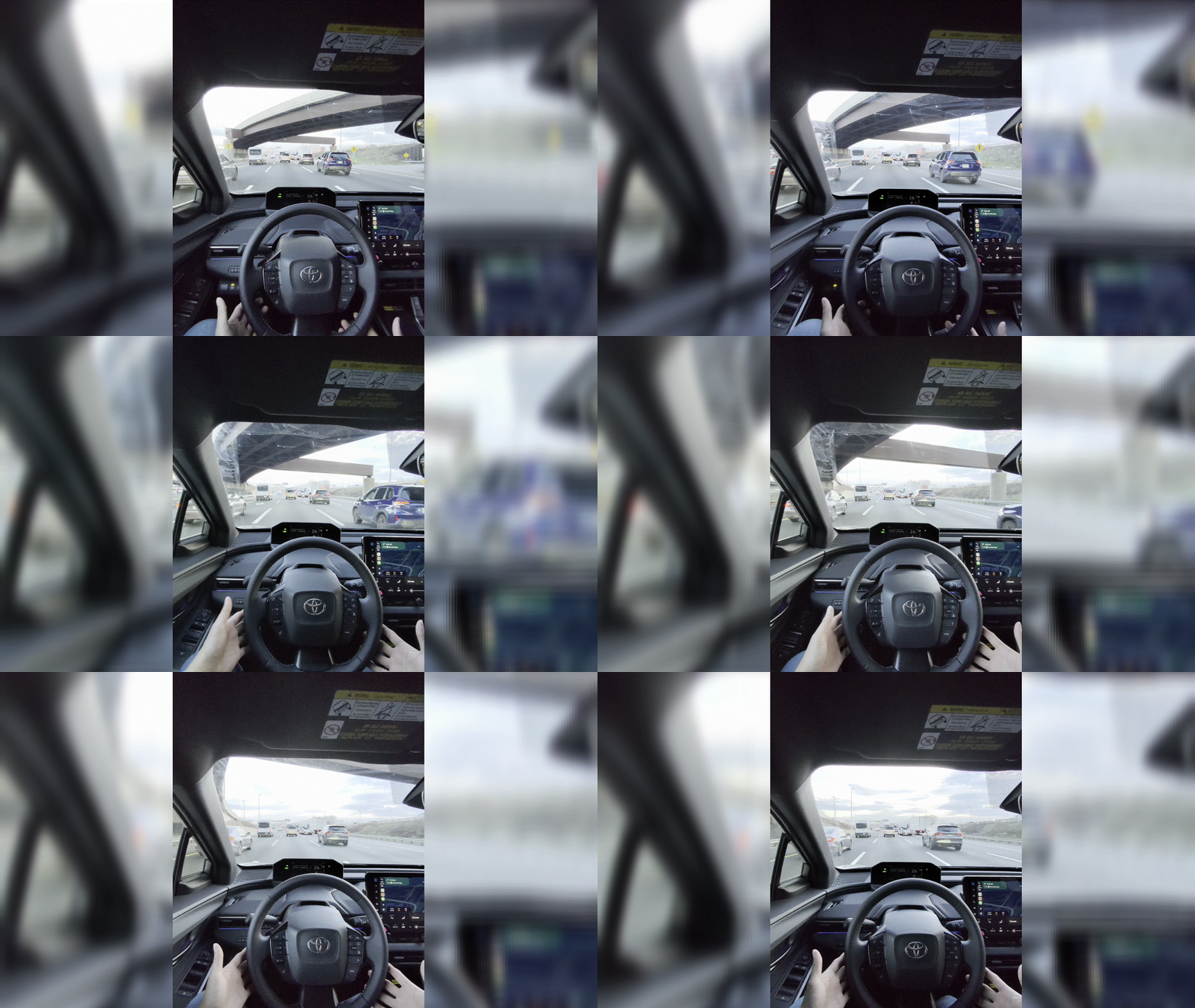
Just as before, the adaptive cruise control works very well on highways — even in slow-moving traffic. The sensors and cameras around the vehicle work in tandem to proactively react to road conditions, applying all necessary braking and acceleration to maintain cruising speed.
Thankfully, it’s responsive enough to handle abrupt changes, such as merges. It reacts quickly to vehicles entering my lane by applying a gentle brake. Conversely, it accelerates smoothly to return to cruising speed once the path is clear.
Larger, much sharper display

For the price of the base trim, I really appreciate that Toyota upgraded the main dashboard screen to a 14-inch display, which is a nice step up from the previous 12.3-inch unit. Not only is it larger, but it also appears much sharper — especially because I always found the previous one a bit dull. Colors are certainly richer this time around, too.
2026 Toyota bZ: What I Don't Like
Raised driver’s display

Similar to other Toyotas, such as the Prius Plug-In Hybrid, the 7-inch digital gauge cluster is positioned much higher than most other driver displays.
While it’s raised to provide better visibility and prevent the steering wheel from blocking your view, I found it to be a bit distracting in its current position. It’s a helpful design in theory, but I personally wish it were lowered just slightly.
Dated software interface
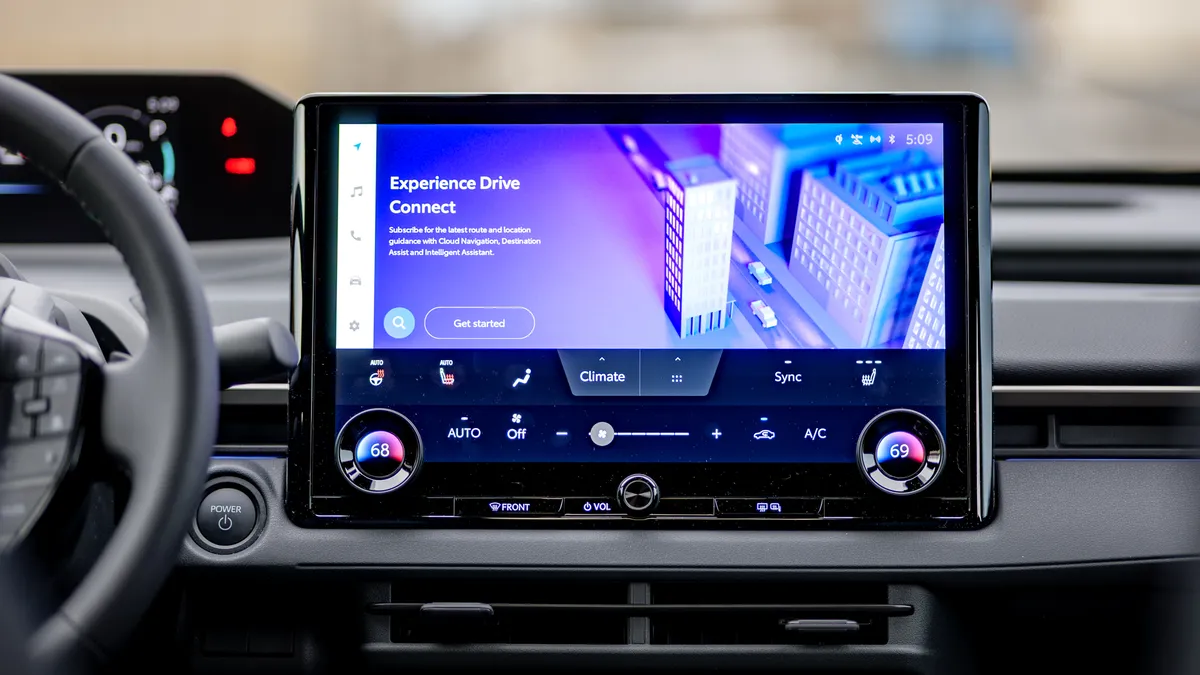
Toyota needs a lesson in software design because its user interface looks and feels incredibly outdated. It’s fairly generic—reminiscent of the interface you'd find on an in-flight entertainment system. Even though it isn't as cumbersome as the software Mazda or Honda uses in their vehicles, it doesn't win any awards for its visual flair or intuitive navigation. At least it offers CarPlay and Android Auto.
2026 Toyota bZ: Verdict

If value and reliability are what you’re looking for, then the 2026 Toyota bZ is just your thing. I still can’t believe how much it has improved since the bZ4X, with just about everything having been upgraded — including its price.
Speaking of that, it’s such a relief that a budget-friendly daily driver such as this gets such outstanding range. There are certainly alternatives that are cheaper, like the Nissan Leaf, Chevrolet Equinox EV, and Fiat 500e, but the bZ’s class-leading efficiency, slick design, and spacious interior make it a diamond in the rough I didn't expect to shine this brightly.

Follow Tom's Guide on Google News and add us as a preferred source to get our up-to-date news, analysis, and reviews in your feeds.
More from Tom's Guide
- I'm not anxious that it's getting darker earlier with this thermal camera for my car — here's why
- I just test drove the new Nissan Leaf — and it's irresistible at under $30,000
- CrabWalking with the GMC Sierra EV is the weirdest thing I’ve ever done with a car — and it’s actually pretty useful