LG Display has announced a new "dream OLED" production method that is supposed to improve brightness, lifespan and efficiency.
LG has traditionally produced its OLED panels using a fine metal mask (FMM) process that evaporates OLED materials through tiny holes in metal plates. That method is costly and isn't flexible depending on the scale of the panel.
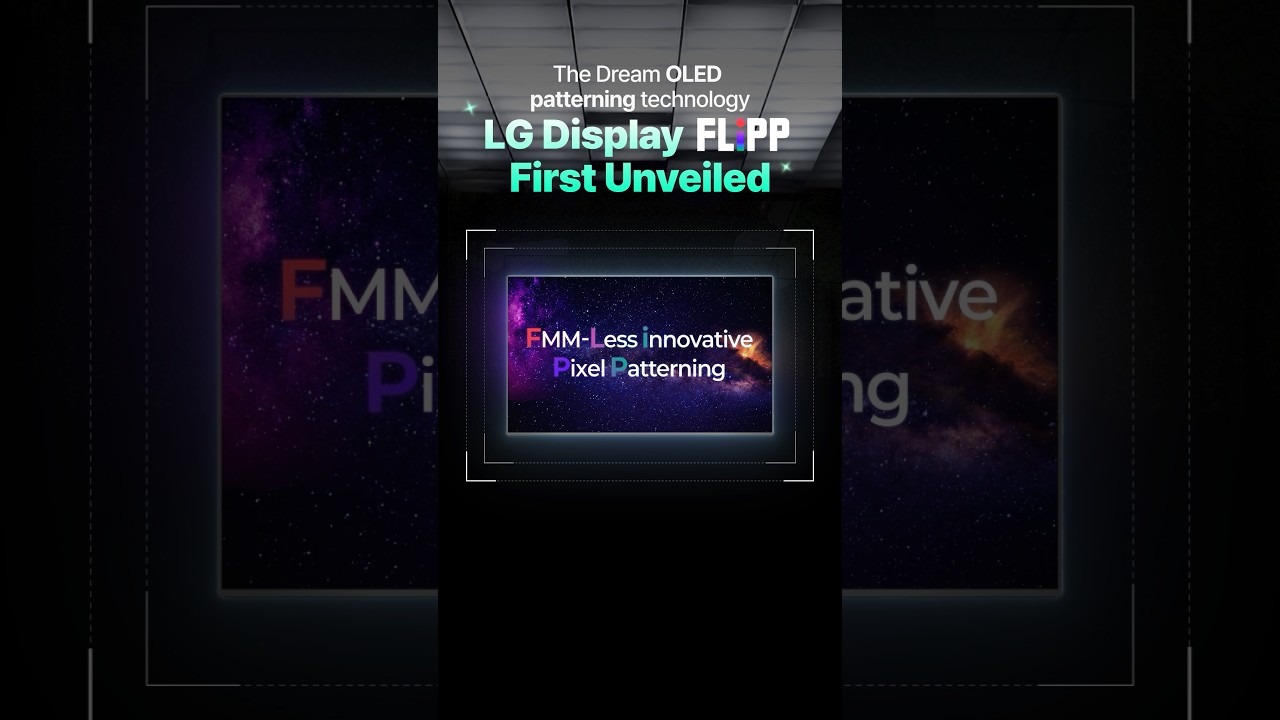
The new FLiPP method deposits RGB pixels without using the FMM plates. "Compared with panels produced using FMMs under identical conditions, FLiPP enables displays to increase brightness by 1.6 times, extend lifespan by 2.4 times, and reduce power consumption by 13%," the LG press release claims.
Ostensibly, removing the metal panel should also reduce weight, but that may not be significant enough to note.
LG's YouTube video explains it a bit more, comparing FMM to a staggered stencil art process while FliPP secures pixels in more precise positions.
Per LG, this new production method could be used to produce RGB OLED panels from as small as 1 inch all the way up to 100 inches.
"One of FLiPP’s greatest advantages is that it is free from panel size and resolution constraints. In theory, it can be used to produce displays ranging from 1 inch to 100 inches and can be applied not only to conventional panels but also to VR and AR displays, making it a virtually universal, 'ultimate technology'," the company said.
Initially, it appears LG will start with tablets and monitors, but as the video above notes, it could expand to everything from smartwatches to TVs. However, production won't really start until late 2027 at the earliest.
As far as we can tell, LG may be one of the first companies to potentially ditch metal masks at a commercial level, especially for TVs.
However, TCL may beat LG to the punch. Last year, TCL showed off its inkjet OLED printing method, and in July OLED-Info reported that the company is starting to enter mass production with a 27-inch 4K RGB display.
The difference is that right now, it's unclear if inkjet-printed OLED displays can be scaled up to larger TVs, but this is be worked on.
All in all, OLED monitors, TVs and more could get very interesting in the next couple of years.

Follow Tom's Guide on Google News and add us as a preferred source to get our up-to-date news, analysis, and reviews in your feeds.
More from Tom's Guide
- 'LG TVs are better than they've ever been' — here's what they're doing right, what they're doing wrong, and what needs to change in 2026
- Tom's Guide TV Satisfaction Survey: Tell us what you love (and hate) about your TV
- We asked readers which TV brand they trusted most — and one company rose above the rest