Tom's Guide Verdict
The Pixel 11 remains a highly capable, AI-centric phone with a much brighter display and practical creator tools, but it fails to match the standout generational excitement of its predecessor. Given the $100 price hike alongside stagnant battery life and benchmark power, it simply doesn't offer as strong a value proposition.
Reasons to buy
- +
Extraordinarily bright OLED
- +
Helpful Gemini AI features
- +
More camera tools
Reasons to avoid
- -
$100 price hike
- -
Very minor Tensor G6 performance improvements
- -
Flat battery life
- -
No major camera performance gains
Why you can trust Tom's Guide Our writers and editors spend hours analyzing and reviewing products, services, and apps to help find what's best for you. Find out more about how we test, analyze, and rate.
I was so enamored with the Pixel 10 when I reviewed it last year that I didn't hesitate to call it the biggest update to the series in years — going as far as to say it was without question my favorite Pixel in the lineup at the time. It was a massive leap forward over the Pixel 9, thanks to meaningful hardware additions like a dedicated telephoto camera, noticeably brighter display, and a slew of helpful AI features that made daily use a breeze.
With the Pixel 11, however, Google is raising the stakes — and the price tag — by asking for $100 more. At this new premium, I have higher expectations for a return given that steeper upfront cost. Quite frankly, it needs the upgraded hardware and day-to-day performance to back it up.
In my Pixel 11 review, I’ll break down whether these newest additions truly justify the higher cost or if it’s a pass.
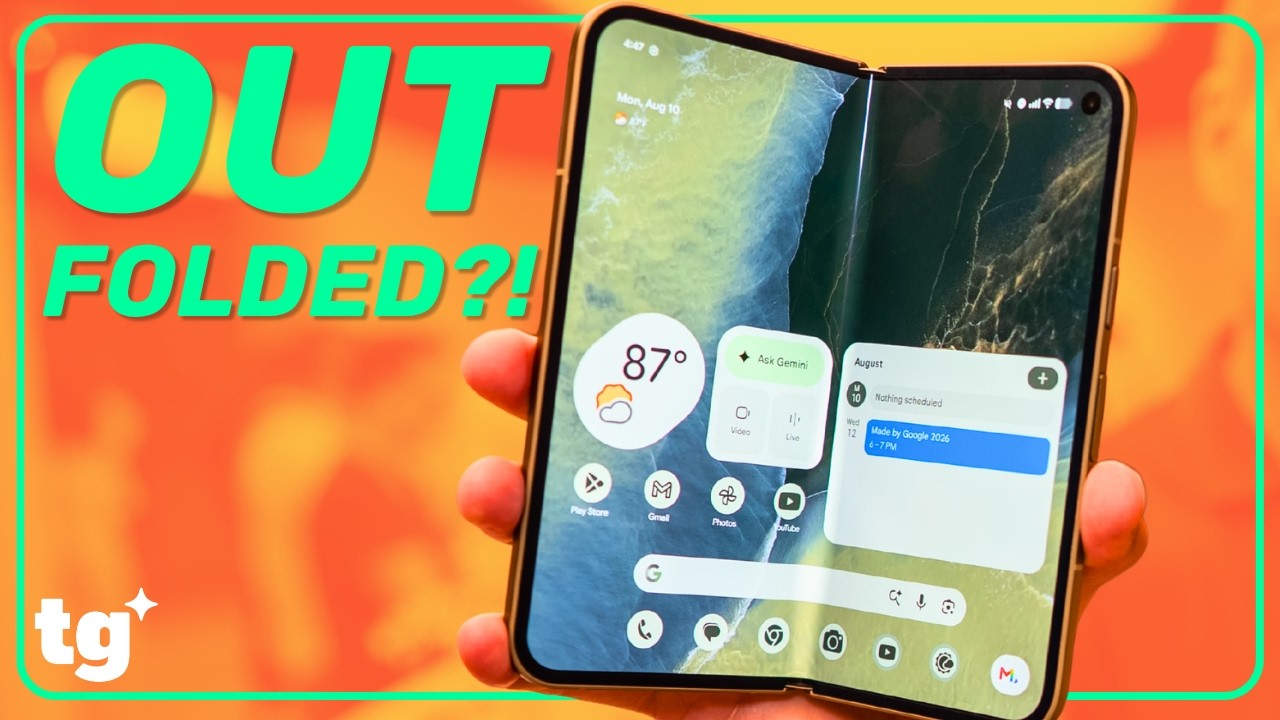
Google Pixel 11 review: Cheat sheet
- What is it? Google’s standard flagship phone for 2026, serving as the successor to last year’s Pixel 10 while offering top-tier hardware for a little less money than the Pros.
- Who is it for? Buyers who want the pure Android experience with helpful AI features that make daily tasks a breeze in a more compact form factor — especially those who don't want to pay $1,000 for a flagship.
- What does it cost? Pricing starts at $899 for the 128GB base storage configuration, reflecting a $100 price increase over the previous model.
- What do we like? An even brighter Actua display that holds up in direct sunlight, expanded camera tools, helpful new AI features, and a noticeably thinner camera plateau.
- What don’t we like? The $100 price hike is tough to swallow given the minimal year-over-year hardware upgrades, Tensor G6 performance still lags behind rivals, and battery endurance remains mostly middle-of-the-road.

Google Pixel 11 review: Specifications
| Header Cell - Column 0 | Google Pixel 11 |
|---|---|
Price |
$899 / AU$1,499 |
Display |
6.3-inch 1,080 x 2,424 Actua Display (OLED) |
Refresh Rate |
60-120Hz |
Chipset |
Tensor G6 |
RAM |
12GB |
Storage |
256GB, 512GB |
Rear cameras |
48MP (f/1.7) main, 13MP (f/2.2) ultrawide, 10.8MP (f/3.1) telephoto w/5x optical zoom |
Front camera |
10.5MP (f/2.2) |
Battery |
4,985 mAh |
Charging Speeds |
30W wired, 25W wireless |
Construction Rating |
IP68 |
Size |
6 x 2.8 x 0.3 inches |
Weight |
6.9 ounces / 197g |
Colors |
Frost, Pistachio, Hibiscus, Obsidian |
Google Pixel 11 review: The ups
A much brighter display

On paper, the screen doesn’t seem any different from before — a 6.3-inch Actua display — but don’t be fooled, as it packs a serious brightness boost.
Outdoor visibility gets a noticeable lift this year, backed up by solid numbers in our lab testing. This OLED panel reaches a peak brightness of 2,480 nits, up from the Pixel 10’s 2,333-nit peak rating. Whether I’m streaming rich 4K video or previewing high-contrast photos I’ve shot outdoors, this display delivers punchy highlights and excellent clarity without washing out details.
Helpful AI features

Despite the hardware upgrades being more subtle this time around, Google continues to take the lead when it comes to delivering some of the best AI features around.
Gemini is integrated more deeply into daily workflows, and that’s what I continue to love about its task automation feature, which now extends to even more third-party apps than when I first tried it on the Galaxy S26. In fact, I asked Gemini to find and book dinner reservations at a nearby restaurant — and it handled everything seamlessly up until the final step, leaving only the booking confirmation to me.
Everyday assistance also feels considerably more intuitive thanks to Proactive Assistance, which intelligently surfaces contextual information right when I need it — like suggesting showtimes and calendar invites when friends mention a movie night in a group chat.
I’m even finding myself typing messages less frequently because Rambler, a new voice dictation tool in Gboard, is smart enough to filter out all the imperfections in natural speech, including filler words like "ums" and "ahs." Together, they prove once again that Google’s AI features are built around practical utility rather than gimmicks.
Thinner camera plateau

Google’s signature camera cutout gets a much-welcomed refinement this year, slimming down so it isn't nearly as raised as before. Personally, I like how the elongated cutout accentuates the camera setup, but this subtle redesign positions the housing significantly closer to the back glass.
While it’s still technically raised, pairing it with Google’s official case makes the plateau sit completely flush with the rest of the phone — leaving the back entirely flat.
More Camera tools for creators

The Pixel lineup has consistently delivered some of the best camera phones around, and despite the hardware remaining mostly unchanged this year, Google adds even more tools for creators. Leading the charge is Magic Capture, which lets me shoot video while automatically analyzing every frame to extract picture-perfect snapshots — like catching bright smiles right in the moment.
Camera Looks allows me to bypass aggressive post-processing enhancements in favor of a specific aesthetic, applying distinct photographic styles that I can easily dial up or tone down to my liking.
Finally, vloggers and content creators will find the new Creator Suite within the camera app especially handy. It bundles social media framing gridlines, a live audio visualizer, upgraded Speech Enhancement, and my personal favorite, an in-camera teleprompter, making video recording feel far more seamless.
Google Pixel 11 review: The downs
Tensor G6 continues to underperform
| Row 0 - Cell 0 | Google Pixel 11 |
Google Pixel 10 |
Samsung Galaxy S26 |
iPhone 17 |
Processor |
Tensor G6 |
Tensor G5 |
Snapdragon 8 Elite Gen 5 for Galaxy |
A19 |
Geekbench (single core/multicore) |
2,664 / 7,347 |
2,345 / 6,581 |
3,531 / 10,778 |
3,701 / 9,460 |
WildLife Original Unlimited( fps) |
84.28 |
80.58 |
171.6 |
130.97 |
While Google’s Tensor silicon has never been about topping benchmark charts, the Tensor G6 powering the Pixel 11 still trails its main rivals like the Galaxy S26 and iPhone 17.
In Geekbench 6, it averaged a single-core score of 2,664 and 7,347 with multicore — only a marginal boost over the Pixel 10’s scores. Don’t get me wrong: the phone still feels exceptionally fluid navigating around the interface and running Google’s on-device AI models, but the fact that these scores remain nowhere near competing top-tier chips is still disappointing.
Graphics testing paints a similar story, with the Pixel 11 posting an average overall score of 14,074 and an average frame rate of 84.28 fps in 3DMark Wild Life Unlimited. It’s capable enough for mainstream gaming, including titles I frequently play like Diablo Immortal and Age of Origins, but power users looking for bleeding-edge frame rates will notice the performance gap.
Flat battery life
| Row 0 - Cell 0 | Google Pixel 11 |
Google Pixel 10 |
Samsung Galaxy S26 |
iPhone 17 |
Battery size |
4,985 mAh |
4,970 mAh |
4,300 mAh |
N/A |
Battery Life (Hrs:Mins) |
12:45 |
13:13 |
11:28 |
12:47 |
Charging Speed |
30W |
30W |
25W |
29W |
Charge % after 30 minutes |
52% |
52% |
57% |
71% |
After putting the Pixel 11 through the Tom’s Guide battery drain test, I’m honestly underwhelmed by the results, as endurance stays firmly in place rather than taking a meaningful step forward.
Its average time of 12 hours and 45 minutes is actually a step down from the 13 hours and 13 minutes posted by last year's Pixel 10. Although I still find it sufficient in my real-world use — easily powering me through a typical workday — it could've been better. At least it still pulls in longer endurance than other flagships, but it does benefit from a much larger battery capacity.
Charging speeds are equally stagnant, reaching just 27% in 15 minutes and 52% after 30 minutes using a standard charger. On the plus side, Google’s magnetic PixelSnap feature is still here, offering seamless alignment for Qi2 wireless chargers and full compatibility with all of my favorite magnetic accessories.
No major camera improvements


There’s no denying that the Pixel 10 was a dramatic leap last year, introducing a dedicated telephoto lens to the baseline flagship for the first time. However, the Pixel 11’s triple camera setup doesn’t move the needle all that much for me — carrying over a 48MP main shooter, 13MP ultrawide, and a 10.8MP telephoto with 5x optical zoom.
Side-by-side shots I’ve captured against the Pixel 10 look nearly identical across most everyday shooting scenarios, delivering virtually the same contrast, color rendition, and fine detail across the sensors.


The only subtle distinction surfaces in low-light conditions, where the updated Night Sight processing produces slightly darker, more underexposed frames compared to the brighter exposures of the Pixel 10. The tradeoff, however, is a noticeably cleaner image with less visible digital noise in shadowy areas.
$100 price hike

At a starting price of $899, the Pixel 11 represents a 12.5% price increase over the Pixel 10’s $799 launch tag — a hike that I think is hard to justify given how minimal the gains are.
For an extra $100, you’re primarily getting a brighter display, minor low-light noise tweaks, and software features that could very well trickle down to older hardware in future Pixel Drops. With processor performance, battery life, and core camera hardware remaining largely static, the added cost simply doesn’t deliver a matching leap in value.
In fact, if you can find the Pixel 10 discounted at retailers or carrier promotions, it remains the smarter buy.
Google Pixel 11 review: Verdict


The Pixel 11 is a solid Android phone, but it doesn’t quite match the excitement I had for its predecessor. The biggest incentives to pick one up are undeniably the smarter Gemini AI capabilities and handy new camera tools, both of which genuinely elevate daily use. While there are a few welcome hardware refinements, like a brighter display and a slimmer camera plateau, the generational leap isn't nearly as dramatic as what I saw with the Pixel 10.
When you factor in the $100 price hike, the value proposition takes a hit. If you're currently holding onto a Pixel 9 or an older device, the Pixel 11 offers a rewarding step up in camera versatility, screen quality, and on-device intelligence. But if you already own a Pixel 10, there simply aren't enough hardware gains here to justify the upgrade cost.