Gardening does not make for an easy life, especially if you like to have a perfect lawn. Apart from giving your lawn a regular mow, it needs constant care and attention. From reseeding your lawn when it becomes patchy, to aerating and scarifying your prized patch. It’s a never-ending chore to keep it looking lush.
However, more gardeners are looking at alternatives to the perfectly manicured lawn and considering a ‘lazy lawn' instead. I was so intrigued that I tried it out myself and was surprised at the results. To help you decided whether it's right for you, I've called on the expertise of a lawn care expert.
What is a lazy lawn?

Rather than assuming that a ‘lazy lawn' is a traditional lawn left to defend for itself, this is not the case. Although No Mow May means leaving your lawn uncut for a month to encourage wildlife and pollinators into your yard, a ‘lazy lawn’ can be left all year round, without much care, apart from a few mows.
A ‘lazy lawn’ is composed of low-growing, low-maintenance grass and groundcover which is often drought-resistant.
Angelika Zaber, Online Turf
A ‘lazy lawn’ is composed of low-growing, low-maintenance grass and groundcover which is often drought-resistant. And apart from being easy to maintain, it acts as an eco-friendly alternative to traditional grass, attracting butterflies and pollinators.
Angelika Zaber, lawn care and gardening expert at Online Turf, says that Irish moss, creeping clover, or creeping thyme are ideal plants for a ‘lazy lawn’, while a low-maintenance grass variety, such as rye grass, can also cut down your workload.
Zaber also adds, "A lot of ground covers also do not need much fertilization to thrive. This is especially true for clover, which is known for its ability to convert nitrogen from the air and then adding it to the soil."
Tread carefully
But beware. Zaber says that many ground-cover lawns can only handle light foot traffic, so they might not be the best choice if you have kids who love to run around. In this instance, she recommends rye grass. "It establishes quickly, is extremely durable, and has elements of pest and disease resistance built in, requiring fewer treatments than many other grass types to keep it looking its best. As a result, it will save you both money and time in the long run."
How to start a lazy lawn

Although a lazy lawn won’t need much work once it is established, you will need to put in some grass to get it off to the best start.
Firstly, you’ll need to prepare the soil. “Start by removing any weeds, so that they don’t compete with the new plants, along with other debris,” says Zaber. “Then, you may need to turn the soil to a depth of 6 inches, and then clear any more debris again.”
If your soil is poor or you’re struggling to turn it, she recommends adding some topsoil. Once this stage is complete, rake the soil in different directions until it’s smooth and level. She then says, “Slowly walk heel-to-toe to spot any soft patches, then rake again.”
You are now ready to sow or lay your lazy lawn. If you are looking to create a ‘lazy lawn’ on a budget, I’d recommend choosing seed over laying a lawn. The impact won’t be quite so instant, but with patience, it won’t be long until you can enjoy your new lawn.
What plants make a great 'lazy lawn'

“Creeping thyme and Irish moss are a great choice for grass lawn alternatives,” says Zaber, although she adds, “If you want a more traditional lawn, but with less maintenance, then turf or a seed mix with a high percentage of rye grass in it is going to be the perfect choice.”
However, the choice is endless; you could also opt for other low-growing plants such as clover, creeping jenny or chamomile. Here we take a look at three plants that are perfect for a 'lazy lawn'.
Creeping thyme
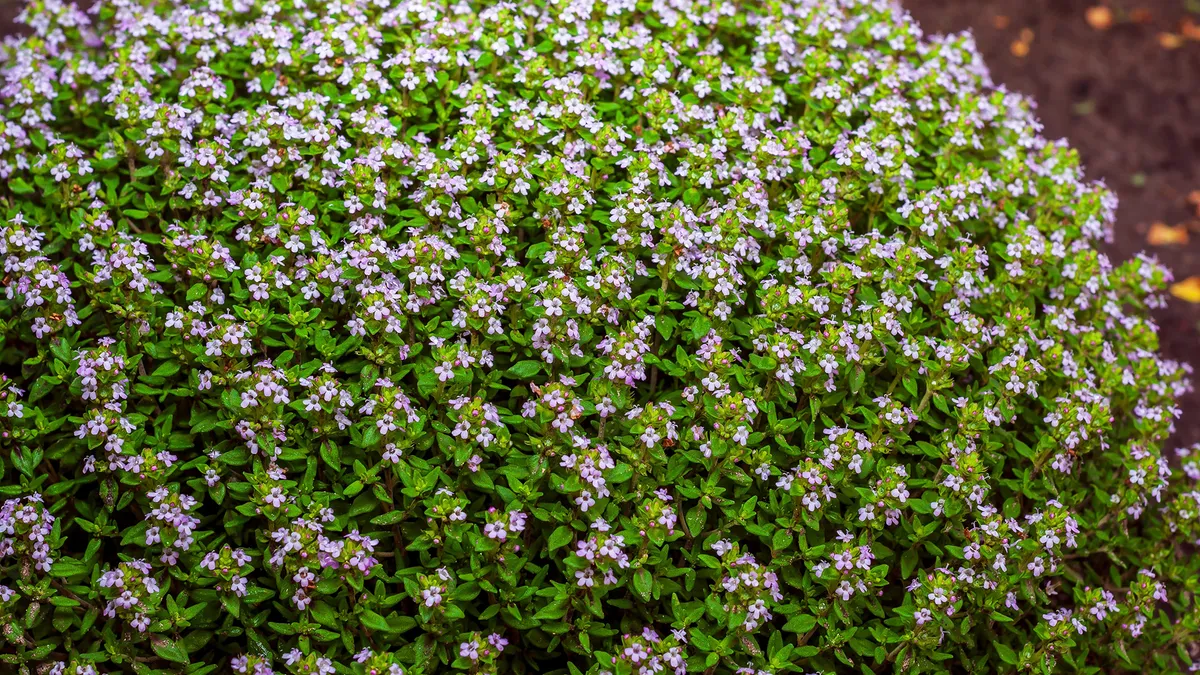
What makes creeping thyme a good choice? “It’s often used as a ground cover due to its ability to spread quickly. At the same time, it is also drought-tolerant, thrives in shallow soil, and does well at suppressing weeds while attracting beneficial pollinators to your garden,” explains Zaber.
Creeping thyme is suitable for USDA hardiness zones 4-9, and it needs full sun and a well-drained soil. Although it won’t need as much water as a traditional lawn, Zaber recommends watering it regularly during dry spells, until it’s established.
It will the benefit from a light prune in late fall and early spring, “this will improve its overall appearance and stop it from becoming too woody,” she says.
Irish moss

Irish moss is an alternative to creeping thyme that grows well in USDA zones 4-8, although Zaber says, “It's not actually moss, but a low-growing perennial plant that works well as ground cover.”
“To plant Irish moss, wait until the frosty temperatures have passed and then choose a spot that receives full sun or partial shade,” explains Zaber. “Simply sprinkle the seeds around the area and then wait 2-3 weeks for them to germinate.”
But don’t be tempted to cover the seeds, as Zaber says they need to be exposed to sunlight, and kept moist too.
Rye grass

For a tougher alternative, rye grass is a good choice. It's suitable for USDA hardiness zones 3-8 and does best in a sunny area, with Zaber adding that it can tolerate some shade.
She suggests watering regularly until the grass is established and then water deeply but infrequently to encourage deep roots.
I can also benefit from fertilizer in the spring and fall to help it recover from the winter and prepare for it. And to gain a "lush, thick turf effect", Zaber recommends mowing it frequently.
Lawncare essentials we love

Follow Tom's Guide on Google News and add us as a preferred source to get our up-to-date news, analysis, and reviews in your feeds. Subscribe to Tom's Guide on YouTube and follow us on TikTok. Finally, you can visit our dedicated Tom's Guide Savings Squad hub for expert help on getting the best products for less.
More from Tom's Guide