How do I love my induction cooktop? Let me count the ways. It offers energy efficiency, enhanced safety and a sleek minimalist finish that I find easy to keep clean. But with the switch to induction comes one major trade-off, especially if you love Asian cooking.
Induction struggles to replicate the intense, focused heat needed for authentic wok cooking. That's because woks rely on flames to wrap around their domed base and cook veggies, noodles and sauces at high heats from all angles.
With induction cooking, you're only getting heat on the small part of the wok that touches the cooktop, and this also means you can't toss your food in the same way, as removing it from the cooktop surface cuts off the heat entirely.
Here's why you should weigh up your love for stir-fry when switching to induction.
Why don't woks work on induction cooktops?
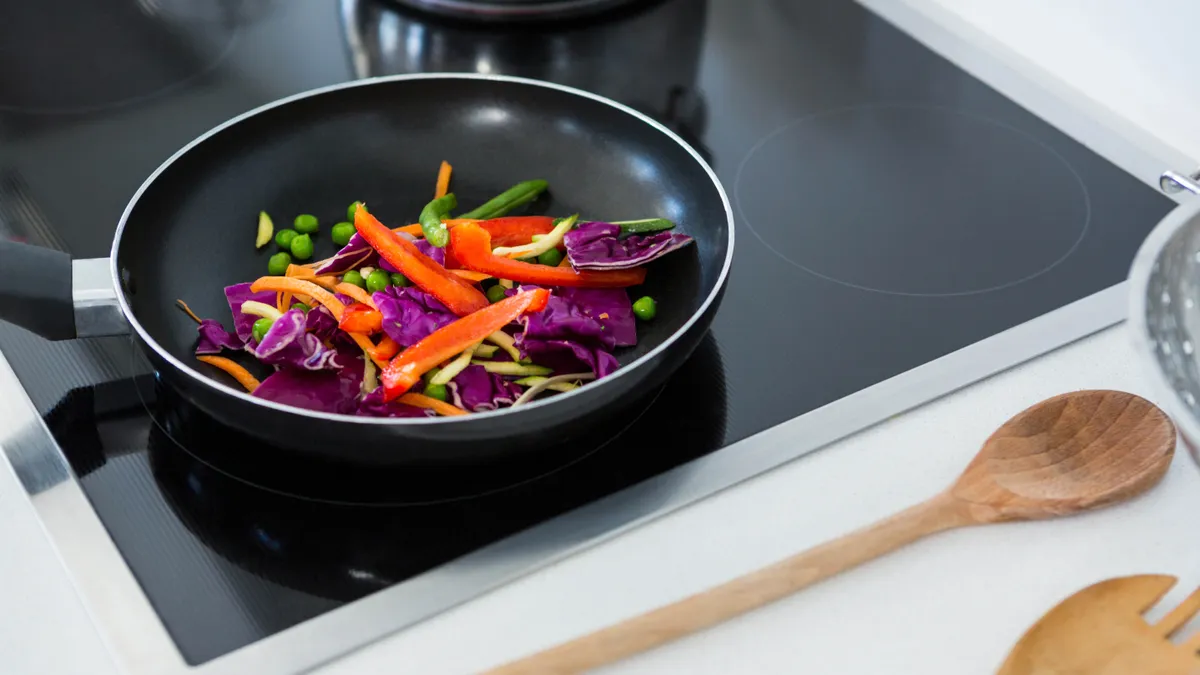
Most woks don't work well on an induction cooktop. Or, they don't work at all. Why? Because they're not made from the ferromagnetic material (e.g. stainless steel, carbon steel, or cast iron) needed for an induction cooktop to heat it up. Plus, if not enough of the bottom is connecting with the cooktop, then it also simply won't heat up.
While an induction cooktop heats up the limited contact area available, like it would on a flat-bottomed pan, with wok cooking you want it to heat up the sides, and an induction cooktop simply won't do this. And if you're using a classic round-bottomed wok, it won't heat up at all.
Or, it might heat them up a little, but not to the high heat you're after for excellent wok cooking. Ultimately, they're made for flame cooking, which is of course not the style of an induction cooktop. But, there's a reason I say they might work, but not well and that's because you can invest in a flat-bottomed wok.
When you're stir-frying, it's handy to toss your wok in the air to quickly fry different foods. Taking your wok off an induction cooktop can confuse the magnetic controls, which could think that you're done cooking as opposed to flexing your stir-fry prowess.
For me, hanging up my round-bottomed wok was an adjustment, but one I'm learning to get used to.
Can you overcome it?

There is such a thing as a 'wok adapter' sold in various forms across the internet that promises to act as a conduit between induction cooktop and wok, channelling the heat between the two. But, I absolutely wouldn't risk using one of these and here's why.
Firstly, safety. The beauty of an induction cooktop is how many safety features it has, automatically turning off when not in use and not generating heat unless to a specific surface just two of these.
If you use a wok adapter, you're adding in a unsecured piece of equipment to your setup, which has also not be recommended by the manufacturer.
Heat-wise, you could also be bringing in something unstable that may heat up as intended, but then you risk burning yourself when using it between cooktop and wok.
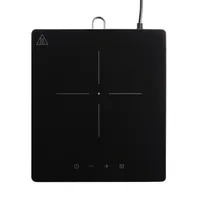

Finally, when it comes to cooking, only a slight movement off-balance may stop the heat distributing as it should, or it may never heat to its full ability regardless of how you line it up. Wok cooking is all about high, quick heating with consistent stirring – and for this to work, you need control over the heat and how it accesses your wok.
So, sure, you can overcome it on some levels, but you may need to sacrifice your much-loved wok and the technique you've come to know and love when using a gas grill.
More from Tom's Guide
- I love my induction cooktop, but here are 5 things I wish I'd looked for before buying
- Does an induction cooktop work with cast iron pans? Here’s what the experts say
- Induction vs. electric cooktop: Which type is better for you?