For months, buying a PC or upgrading your RAM has felt like a losing battle against the AI industry. Prices skyrocketed, supply vanished and consumers are left footing the bill. There are many, many reasons why this is happening, with a whole lot of data behind it — so I turned to Carmen Li, Founder and CEO of Silicon Data, to get to the bottom of it.
Silicon Data has been tracking the price of GPUs and providing plenty of super accurate market intelligence around them. But as of today, the company is officially launching its RAM pricing indices tracking too — giving us a raw look at the economics of the compute shortage. So far, the GDDR6 price index has jumped around 21% last month alone.

And as we’re in the midst of a potential crack in the AI boom that triggered this hardware squeeze in the first place, I got the chance to speak to Li about how we got here, how a closer look at the pricing of AI infrastructure build-out can help us read the tea leaves of where things are going, and how we may be slowly (but surely) getting out of this mess.
The HBM ripple effect

It all seems to have started when AI companies started getting super hungry for High Bandwidth Memory (HBM) to feed this beast they were creating. OpenAI set themselves up to consume up to 40% of the global DRAM output, and in turn, memory companies like SK Hynix, Micron and Samsung pivoted to where the lionshare of the money was.
"Everyone has shortages, obviously HBMs had the highest margin, so I don't blame them,” Li commented. “So they start saying ‘hey I want to maximize my profit for my shareholders, let's switch a lot of production capacity to HBMs.’"

And looking closer at the machinations of this huge AI driver (particularly around Nvidia’s GPUs that are fueling this datacenter boom), the B200 rental prices surged by 24% in March alone.
All this is happening while the older H100 GPU has stabilized in price, but with a roughly 3x spread, as the hyperscalers (the giants like AWS and Microsoft Azure) keep costs lower, while the Neoclouds (specialist operations like CoreWeave) charge a premium.
This price hike to companies in the space was driven by four key things:
- The price of HBM being revised upwards by Samsung and SK Hynix
- Nvidia’s GTC building hype and generating a new wave of enterprise commitments
- New major frontier model launches like Claude Opus 4.6 and GPT 5.4
- The exponential growth in token generation needed for agentic AI (the biggest talking point of GTC)
This created a huge shift away from demand for batch training to consumers looking for persistent, low-latency compute in their AI bots. And in the companies’ mission to do this, we ended up paying quite a penalty for it.
The victims of the RAM crisis

It’s a big old corporate pass-down, folks! But you knew that already… Companies like Asus had to raise computing gear prices by 25-30% to cope with the doubled cost of RAM — most recently hiking the price of the new Zephyrus G14 and G16 to absurd levels.
But Carmen issued a more stark warning about budget tech. While chances are the premiums on more expensive gear may help certain pricier options weather the storm (given they’re costly), the lower end of the market could very well be devastated. Not in the way that lower-end tech will be priced out of reach, but rather that companies may just stop making it altogether.
“With the price increasing so much, the manufacturer can't really pass down the cost increase, because consumers are very, very price sensitive,” Li explained. “[Companies] might have to just decrease production or eliminate certain products."
Larger companies like Apple have been able to withstand this in the value space with the likes of the MacBook Neo, but others may not be so lucky.
The cracks in the crisis (why prices are dropping)

However, there’s been a twist in this story. Recently, we’ve seen a sudden 20% drop in some DDR5 retail prices. As Silicon Data has seen, server-grade DDR5 RAM has increased by 4.5%, while consumer chips fell by 7.8%. There's a divergence happening here.
On top of that, we’re seeing the cost of some consumer GPUs drop too — with the MSI Ventus RTX 5060 Ti 16GB climbing back down from its $699 high at the midst of this crisis to $514.

Don’t get me wrong. This is nowhere near the MSRP, but it’s the right direction of travel. There are several factors all coming together that impact this, which I’ve talked about before:
- Improved efficiency: Google’s TurboQuant has shown AI companies can do more with less — compressing AI’s working memory by 6x and making it 8x faster at the same time and drastically easing the pressure on global DRAM supplies.
- OpenAI’s backing out: Those massive non-binding orders for global RAM output were quietly dialed back.
- The Tariff refund and exemption: The U.S. Court of International Trade ruled that $130 billion in tariff refunds must be paid to companies like Dell and Asus. On top of that, a new loophole has been added into consumer computing goods under Section 232 that exempts “Non-Data Center Consumer Applications” (like gaming PCs) from the 25% AI hardware tax/
But there’s one even more important factor to consider here.
The cavalry arrives (new supply chains)
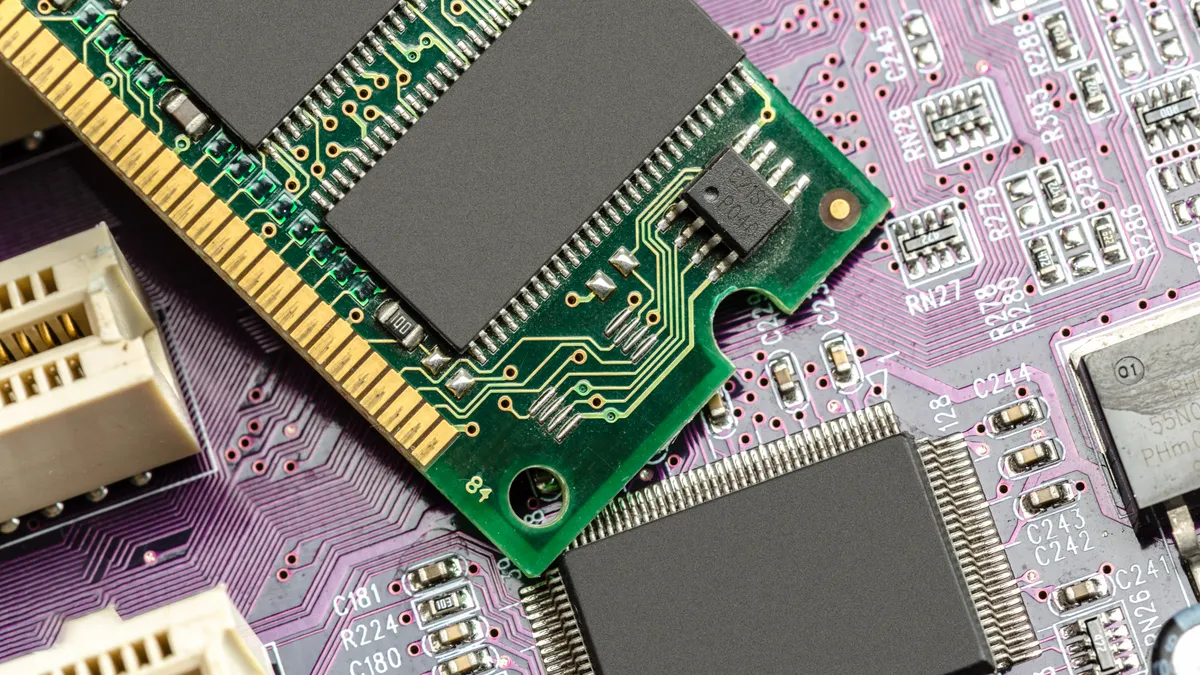
Fun fact: I did this interview with Carmen Li a couple weeks ago, and in those couple of weeks, her most critical prediction came true. She said that relief would come from a newly certified Chinese foundry for making consumer RAM.
"Obviously they will not do HBMs. They will probably do a lower end memory more for consumers, so I think that could potentially get better once they ramp up production," Li stated.
This corroborates our original reporting that major PC manufacturers like Acer have been testing memory packages from Chinese companies like CXMT and YMTC for the past couple of months. Reaching out to other experts in the area, I’ve found that certification is close.
Of course, as I’ve mentioned before, this could lead to a bit of a quality and reliability lottery depending on where the RAM has come from. But specialization is going to be the long-term key for bringing consumer computing prices down — frontier labs (the big three) making HBM, while alternative fabs make the consumer DDR.
The verdict on your next PC

“Memory always goes through these cycles,” Li added. “However, this cycle is a little different where it’s driven by many other factors.” This lines up nicely with what Scan UK's CEO told me, and it’s a good expectation to set on the big question: when will things go back to normal?
One thing we all agree on is that the recovery will not be quick. “Right away, there’s no sort of expectation [of consumer prices] to come down in the near future. That’s the problem.” Li commented.
But going back to what I’ve been telling you, dear reader, for a while now. Hold until August 2026. By that point, we’ll see whether these upcoming events will make for a pivotal moment of change for the price of computing. Will the Chinese memory supply enter the retail stream? Will the tariff refunds trickle down to consumers? It’s going to be an interesting summer for sure.

Follow Tom's Guide on Google News and add us as a preferred source to get our up-to-date news, analysis, and reviews in your feeds.
More from Tom's Guide