The smart glasses category is at a tipping point, and Google knows it.
2026 has been utterly dominated by negative headlines around smart glasses. Not only did a black market develop for disabling Meta glasses LEDs, a whole cottage industry formed around recording surreptitious pickup videos, putting unsuspecting women in the crosshairs. No wonder the "pervert glasses" moniker took off.
While Meta has updated its software to thwart tampering and removed harassing smart glasses videos from its platforms — and even released camera-free glasses — the stigma is still very much prevalent. Enter Google, which has the very challenging task of convincing the masses that its new Intelligent Eyewear is not just cool, but safe.
Co-developed with Samsung, the new smart glasses come in slick designs from two of the biggest names in eyewear: Warby Parker (from $395) and Gentle Monster ($449 to $489). And they have a very powerful assistant inside with Gemini. But none of that will matter if shoppers stay on the sidelines over privacy fears.
“Our goal is not to compete on who has the most private glasses,” said Juston Payne, Google’s senior director of product management for XR. “What we want to do is to set a standard and then have people rise up to that standard.”
I spoke with Payne as well as Chris Breithaupt, group product manager for AI on glasses, about how Google plans to take smart glasses from a menace to a wearable companion you actually trust.
Bright LEDs that you can’t cover
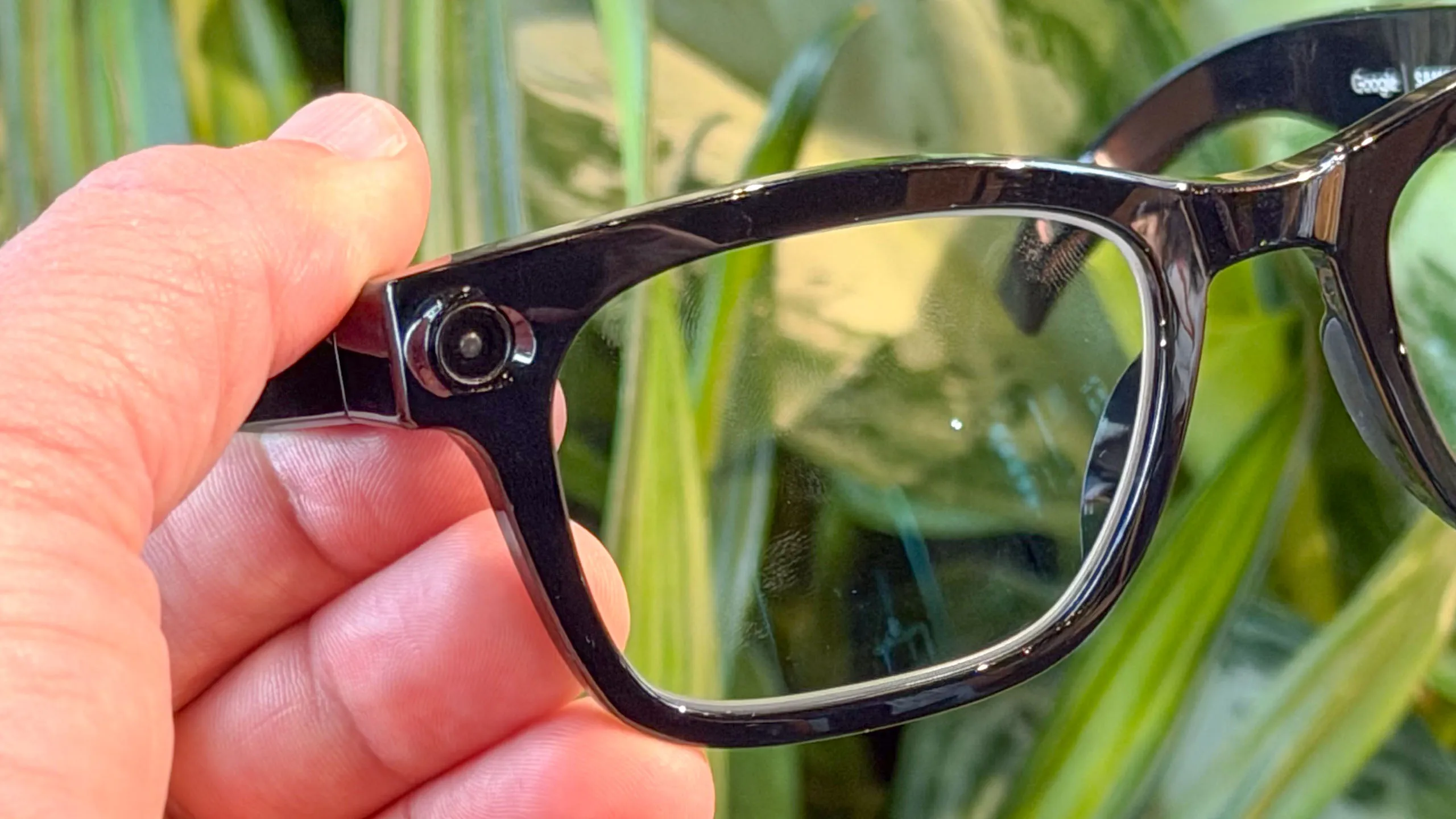
During a demo of the new Intelligent Eyewear, I noticed that the LED is fairly bright and that it pulsates while recording video. It’s pretty hard to miss, and it’s even harder to tamper with — at least for now. It was critical for Google to build in protections from the outset.
“If you cover the LED, then the camera stops working,” said Payne. “So whether it's a simple cover like putting your finger over it, or a piece of tape, or a sharpie, or you do something more sophisticated, like buy a camera cover or tamper with the hardware, in all of these cases, from day one, we have protections against those things.”
In addition, Payne told me that his team is collaborating with other parts of Google to help with glasses privacy. For example, Google Ads will not run or accept ads for LED covers for smart glasses. And Google Shopping isn’t going to sell them.

Payne admitted that there’s never going to be a perfect solution for covering the LED, but that Google is committed to staying one step ahead of hackers and bad actors.
“Somebody will figure out a way around it,” Payne said. “We publish a patch and so on. But we're actually very happy with where we're starting.”
Faces redacted by design, no ad targeting
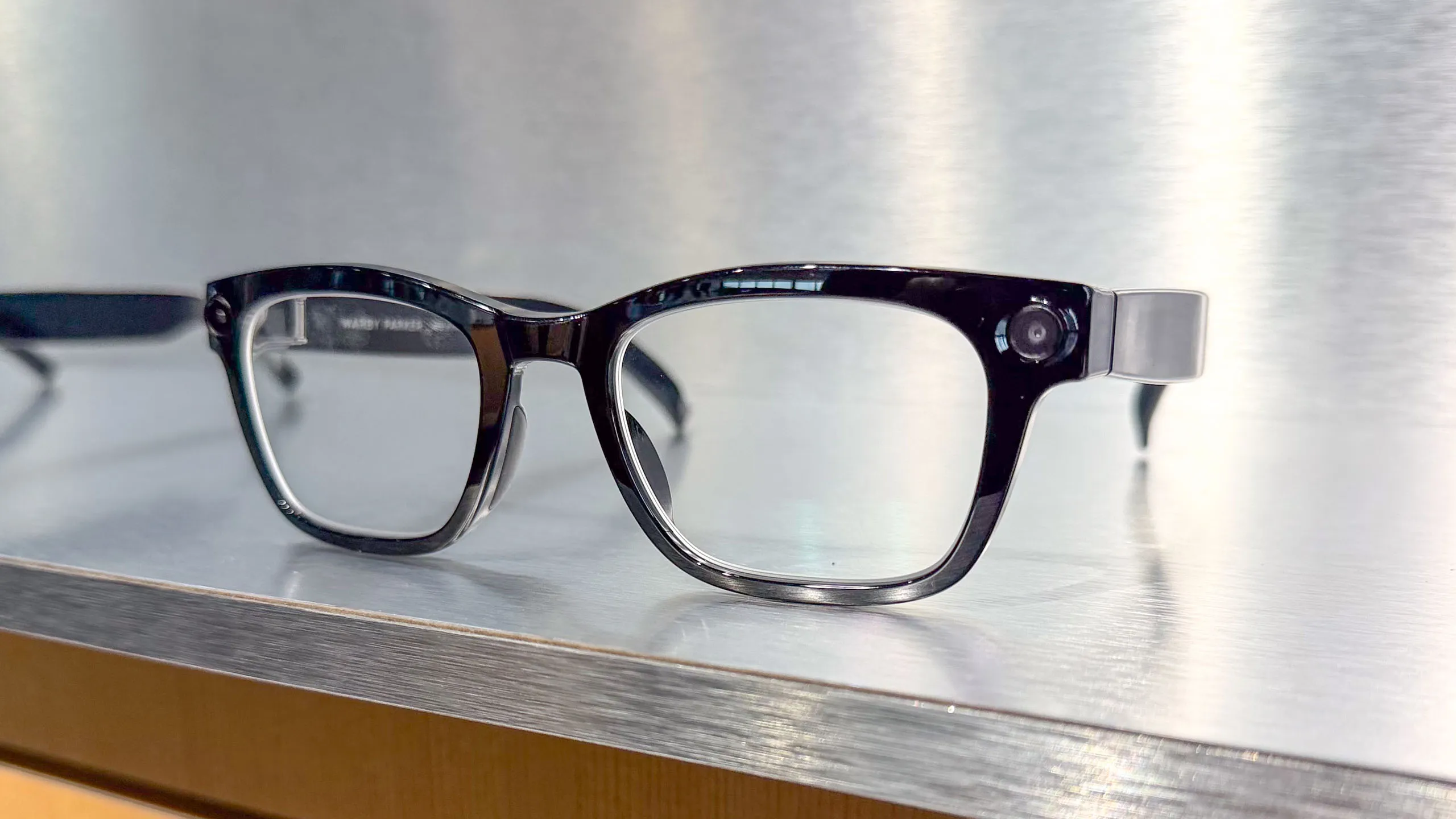
I was actually somewhat frustrated that I had to explicitly tell Gemini to use the camera a couple of times during my demo. Unless it’s super clear to Google’s assistant that you’re looking for it to see what you see, you’ll have to specifically ask for it to stream video.
This is a safeguard Google built in so that Intelligent Eyewear doesn’t start streaming to the cloud when you don’t want it to. But these new smart glasses go a step further than that.
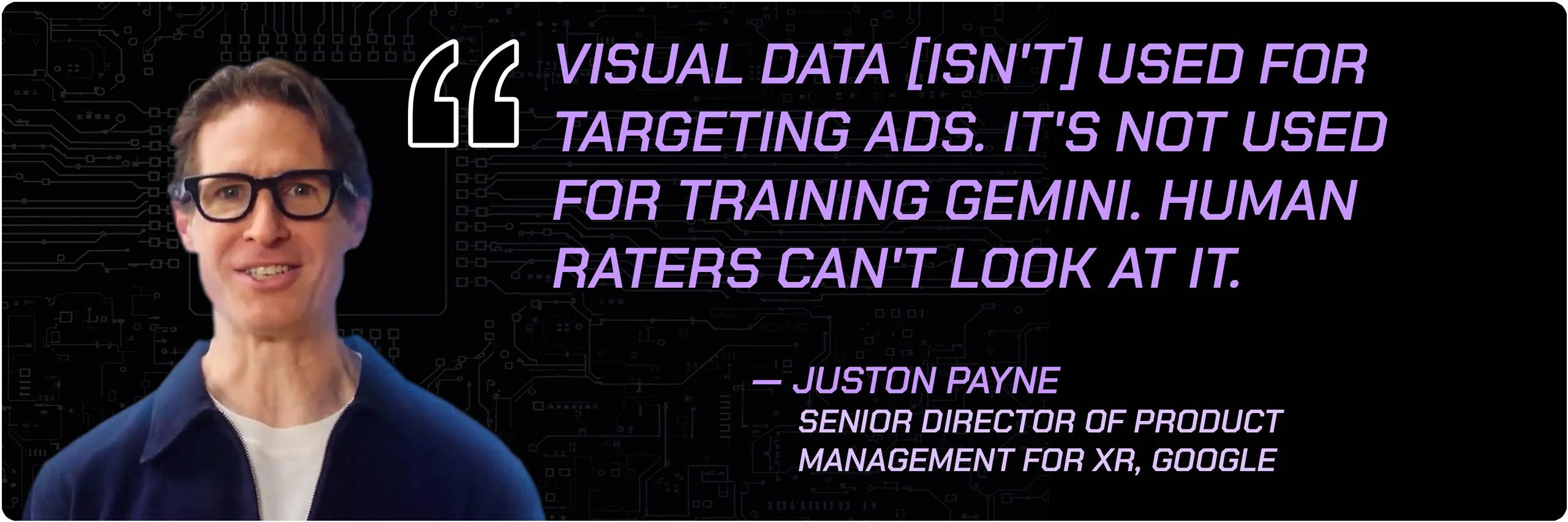
“We're treating this data really differently,” Payne said, “differently than actually Google has before, and also than how other companies have been treating it. So that visual data, it's not used for targeting ads. It's not used for training Gemini. Human raters can't look at it.”
The way the pipeline works is that the video goes from Intelligent Eyewear glasses to your phone, and then from the phone to the cloud.
“So before it actually even gets to the Gemini app on your phone, we redact faces,” Payne said. If you remember back to the Snapdragon Summit, you’ll know that this face censoring happens at a silicon level on the chip — as confirmed by Ziad Asghar, Qualcomm’s SVP and GM of XR.
Visual privacy is only part of the battle; ambient audio is the other. Google is also trying to make bystanders’ sound private when you’re chatting with Gemini. The glasses use beam-forming mics so that it pays attention to your voice, but not the people around you.
Cracking down on ‘pickup videos’
It’s one thing to focus on the hardware and software when it comes to privacy, but Google is also working on curbing demand for the very types of “cold approach” and “pickup artist” content that has gone viral over the past couple of years.
For example, the Intelligent Eyewear team is working with YouTube to block problematic videos captured with smart glasses.
“We're looking for videos with harassment in them, sexualization of people from covert sources, and then we'll be enforcing policies around those,” Payne said.
That includes video takedowns, Google’s Breithaupt told me.
What trust could potentially build
Assuming Google can assuage people’s fears around smart glasses and privacy — which is a huge ask — Intelligent Eyewear could be a potential breakthrough for the nascent category.
Instead of unlocking your phone hundreds of times a day, you might use Intelligent Eyewear to get quick answers to questions via Gemini, troubleshoot a home project with real-time answers, listen to music or podcasts or take calls on the go. And while Meta’s Muse is quite capable, I’ve found Gemini to be smarter and rely on it every day.
During my hands-on time I used the smart glasses to get spoken directions via Google Maps while I was walking around New York City, to help mix a cocktail using the ingredients in front of me and do live translation during an in-person conversation. It would be even better if the glasses had a built-in display, but that feature is coming with future products.
For just a moment, I forgot about all of the privacy concerns around smart glasses and appreciated the sheer utility of these specs, even if they’re thicker than my usual Warby Parker reading glasses.
And that’s what Google and all of its partners need to do to make Intelligent Eyewear more than a curiosity. Establish trust so the privacy concerns start to recede. “If there's a simple message, we care a lot about trust. We care a lot about responsibility here, and we're really trying to move the needle on how this category is perceived. Because once that happens, then you get back to people talking about how incredibly helpful these [glasses] are.”

Follow Tom's Guide on Google News and add us as a preferred source to get our up-to-date news, analysis, and reviews in your feeds.
More from Tom's Guide