Club Benefits


Tom's Guide Verdict
This small plug makes it a cinch to make your floor lamp or some other appliance into a "smart" device.
Pros
- +
Physical on/off switch
- +
Works with lots of smart home systems
- +
Home/Away Mode
Cons
- -
No energy monitoring
- -
Larger than other mini plugs
Why you can trust Tom's Guide Our writers and editors spend hours analyzing and reviewing products, services, and apps to help find what's best for you. Find out more about how we test, analyze, and rate.
The Wemo Mini smart plug is the one worth knowing about. Not only is it one the best smart plugs, but it was once of the best smart home devices overall, too.
Though it's since been unseated by a smaller option, the Wemo WiFi Smart Plug, this Wemo Mini review explains why this gadget is still a winner. Smart plugs like this one are a very cost-effective way to let you control otherwise "dumb" appliances from your smartphone and link them to a smart home network. These plugs often cost less than $40, connect directly to your Wi-Fi, and can be controlled to a host of other smart home systems.
Wemo Mini price and availability
The Wemo Mini costs $39.99 at full price, although we often find it on sale for less. As such, it's one of the best cheap smart home devices around — especially when you can snag it at 50% off.

Major tech retailers like Amazon and Best Buy have the Wemo Mini available for purchase.
Wemo Mini review: Design and size
One of the things I like most about the Wemo Mini has nothing to do with its smarts: A simple on/off switch lets you control any appliance connected to it, no smartphone needed. While other plugs have a similar switch, I liked the Mini's for its large, circular button. I just wish it lit up, so you could find it easily in the dark. To be fair, there is a small LED status light.
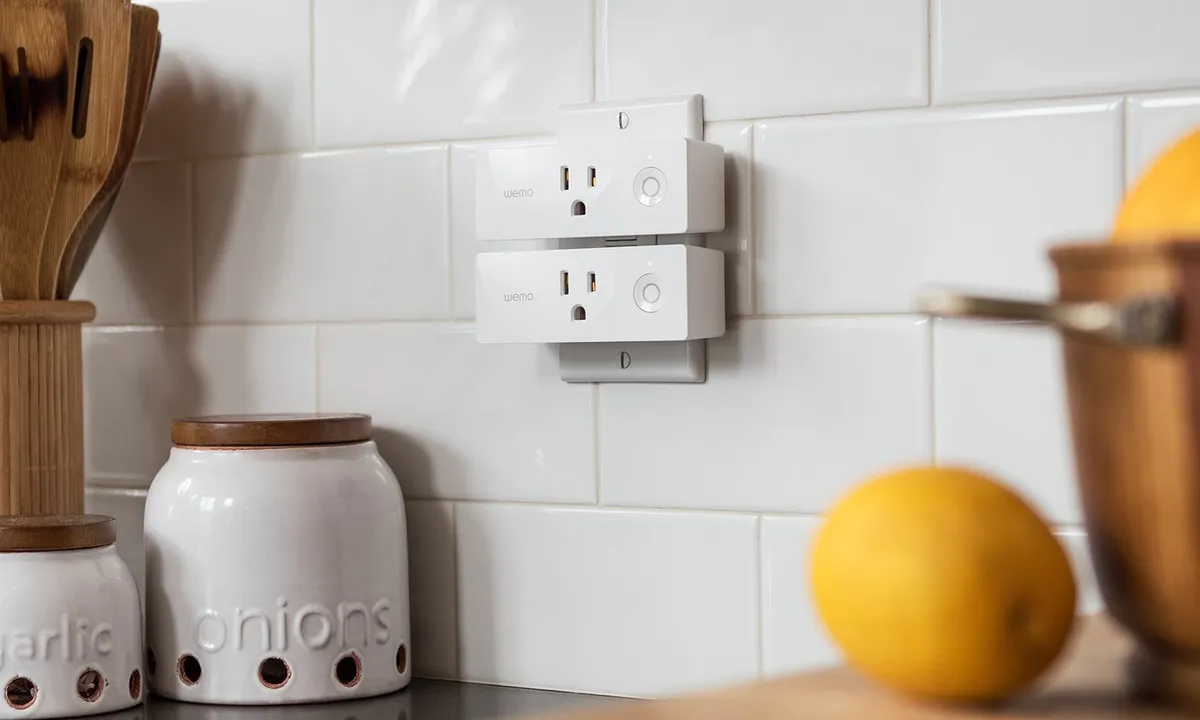
Link this smart plug up to your Wi-Fi network, though, and you can control it through a host of smart home systems, including Alexa, Google Assistant, Nest, and IFTTT. In fact, its one of the best Google Home compatible devices and the best Alexa compatible devices.
It also among the best Apple HomeKit devices, making it one of the few smart plugs to work with the three major smart home assistants.

Measuring 3.8 x 2.4 x 1.4 inches, the Wemo Mini is thin enough so that you can fit two of them on top of each other, though it's longer than most plugs. Still, the Mini is not the mini-est smart plug. The TP-Link HS-105, for instance, is 2.75 x 2.2 x 1 inches, while the iHome ISP6X measures 2.8 x 2.1 x 1.5 inches.
The new Wemo WiFi Smart plug, meanwhile, measures just 1.3 x 2.0 x 1.8 inches.
Wemo Mini review: App
The home screen of the WeMo app shows all connected WeMo devices, and gives you the option to turn them on or off with a simple power button icon. Digging deeper, a Rules tab at the bottom lets you set schedules for the plug to turn on or off, an auto-off timer, and activate an away mode.

By default, the app shows a sample for each of these options, which is intended to make things less confusing, but left me a bit confounded at first. It was only when I hit the Save button that I realized I had created a new schedule.
An Away mode will randomly turn the plug on and off during the time you specify, to lend the appearance that you're home. It's a clever feature. From the app, you can also connect your Wemo devices to IFTTT, Alexa, and Nest.
Unlike the Wemo Insight smart plug, which costs $5 more, the Mini doesn't monitor your energy usage. It also lacks a dimming feature, like the pricier, but more capable plugs from Lutron.
Wemo Mini review: Verdict
The Wemo Mini is a good all-around smart plug. Its slim design doesn't block the second outlet; a physical button makes turning it on and off convenient; and its app, while a little confusing, has a clever Away mode, and lets you link the plug to a host of other smart home systems.

TP-Link's HS105 does all that, and more, in an even more compact package, for about $6 less, but doesn't work with HomeKit. But if you like what Wemo has to offer, you won't be disappointed with the Mini.