About a month ago, I saw someone in the gym elevating their feet on a tall box during pike push-ups, and it got me thinking about other bodyweight exercises I could transform using the same equipment.
The bear plank and pike push-up are both hard on the core muscles while strengthening various other muscle groups like the arms and shoulders, but combining the two and adding a box for height has absolutely changed the game for my functional strength and flexibility.
You just need a box, sofa, bed, or similar to elevate your feet, and you're ready to get started. Here's what they are, how to do them, the benefits and what happened when I added them to workouts for a month.
How to do bear plank-to-pike push-ups
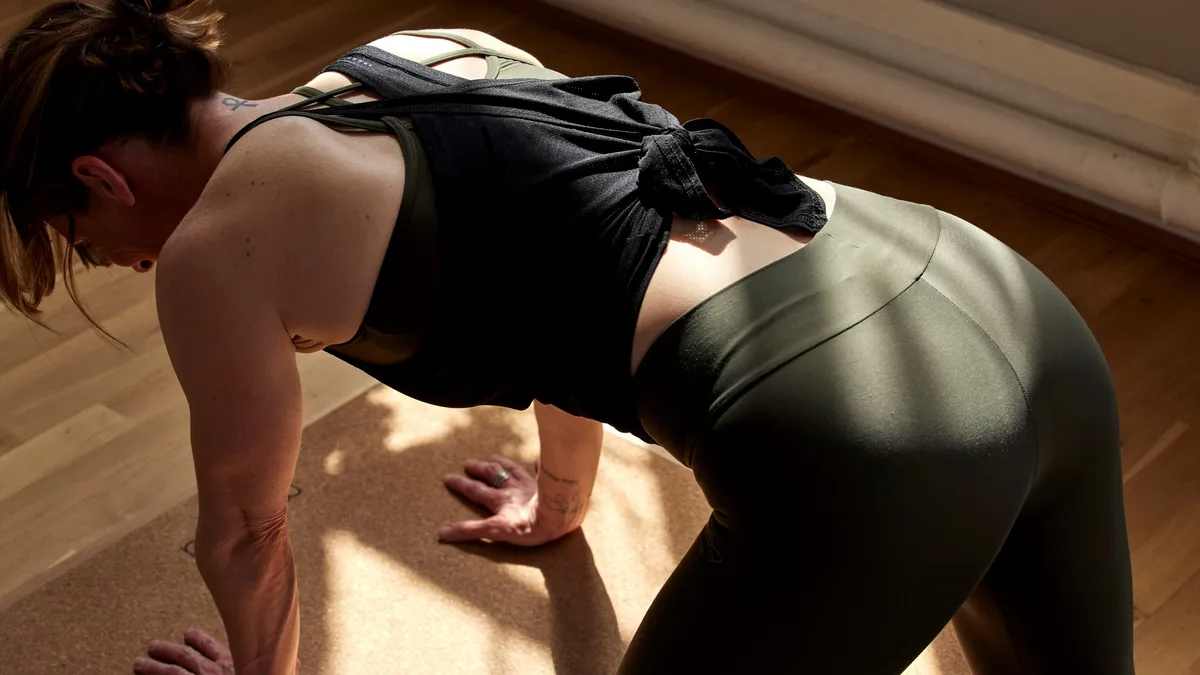
You'll start in a bear plank, which strengthens your hips, quads, arms, shoulders, and deeper core muscles; then you'll lift your hips up and back, similar to a downward-facing dog.
From here, shift your weight forward slightly over your hands while keeping your hips high, then perform an overhead press by tapping the crown of your head to the ground (or as close to it) in front of your hands. Push back up, then drop your knees back into the bear plank.
Don't worry, it's hard to visualize, so I demonstrate how to do it below.
There's quite a lot of weight-bearing on your wrists, so only move to your ability and stop if you need to. You could also elevate your hands on dumbbells or push-up bars. If you cannot reach your head to the ground, place a block or book in front of your hands and aim for that instead.
Seek medical advice first if you're unsure about trying this exercise.
- Start in a tabletop position with your shoulders over your wrists and hips over your knees
- Zip your navel in and brace your stomach
- Lift your knees to hover just above your mat, keeping your toes tucked under
- Lift your hips up and back into downward dog with a slightly shorter stance
- Shift your weight forward, bend your elbows, then tap the crown of your head down just in front of your hands
- Press up and extend your elbows, pushing your hips back
- Drop your knees to hover again in the bear plank position
- Once you feel comfortable, place a step or box behind you and repeat the move with your feet elevated on the box. This will slightly change your range of motion and body positioning.
- Continue for 8-12 reps and 3-4 sets, or 50 seconds of work and 10 seconds of rest for 5-6 rounds.
The benefits
Here’s what a bear plank-to-pike push-up can do for your body:
Strengthen your core
Bear planks and pike push-ups already require your core to work hard to stabilize your torso and drive movement. However, your deep core will be working here, not just more superficial muscles like the abs, but also the internal and external obliques along your waist, sometimes playfully referred to as "shark gills." Elevating your feet will shift weight into your chest, shoulders and arms, working your upper body harder.
Challenge your range of motion and overall strength
The box provides a deficit, which means your overall range of motion and distance to travel increases, increasing time under tension and load on the body. Your knees will have further to drive downward, and you'll notice it's also harder to lift your hips high, working the back body flexibility, including your hamstrings, even more. Without weights, this move will really test strength, and I can guarantee it'll work up a sweat.
Improve functional movement
While I don't anticipate you're doing this type of movement daily, practicing this movement can improve your ability to weight-bear on your wrists and open up the back of the body if you find your hamstrings are tight. While it doesn't transfer directly to crawling, it can mimic activities that involve being on your hands and knees or using your upper body.
What happened when I added it to my weekly routine?
At Tom's Guide, we love experimenting with different exercises and movements, and these can last anything from a week to a few months, or even a year or more.
At Tom's Guide, we love experimenting with different exercises and movements, and these can last anything from a week to a few months, or even a year or more. Of course, the longer you give something, the more time you have to notice its drawbacks or benefits.
For that reason, I've been trying to add this move to most of my workout routines for roughly 30 days; more than enough time to see how the move impacted my body. Combined with my yoga and Pilates routine, I've found this exercise beneficial for my shoulder and arm strength, hamstring flexibility, and I can really feel my core working throughout, especially with both feet elevated.
Follow Tom's Guide fitness on Instagram for more workouts, routines, tips, and tricks.
Obviously, I haven't seen a difference in how my abs look (it's unlikely I'll ever sport a six-pack, as this comes down to a lot more than your workouts), but how they feel? Game-changer. Combined with diaphragmatic breathing (or belly breathing), I feel like I've improved my ability to engage my deep core and drive movement through those powerhouse core muscles.
My ability to perform the exercise has improved, and I feel stronger during my yoga and Pilates workouts. Win-win.
Why not add it to your routine and let me know what you think?

Follow Tom's Guide on Google News and add us as a preferred source to get our up-to-date news, analysis, and reviews in your feeds. Alternatively, you can read our content on the Tom's Guide app available now for iOS and Android.
More from Tom's Guide
- Not sit-ups, planks, or crunches: I do this simple Pilates exercise every single day to build a strong and stable core and work on my hip flexor mobility
- I'm a weightlifting coach — 3 exercises I prefer over lunges for building strong, stable legs and knees over 40
- I tried a 7-day standing core routine. Here are the differences I noticed in my strength and posture