When it comes to building strength and stability in your core, sit-ups and crunches aren’t the best way to do so. While these exercises are great at targeting the outer “six-pack” muscles, they don’t work the deepest layers of your midsection, responsible for stabilizing your spine and supporting your pelvis.
Instead, I use this simple Pilates exercise to build deep core strength and work on my shoulder stability at the same time. As a reminder, I’ve been practicing Pilates for the past 15 years, so what works for me might not be right for you and your body. If you’re a complete beginner, you’re currently practicing with an injury, or you’re pregnant or postpartum, it’s always best to seek personalized advice from a qualified professional.
What is the exercise?
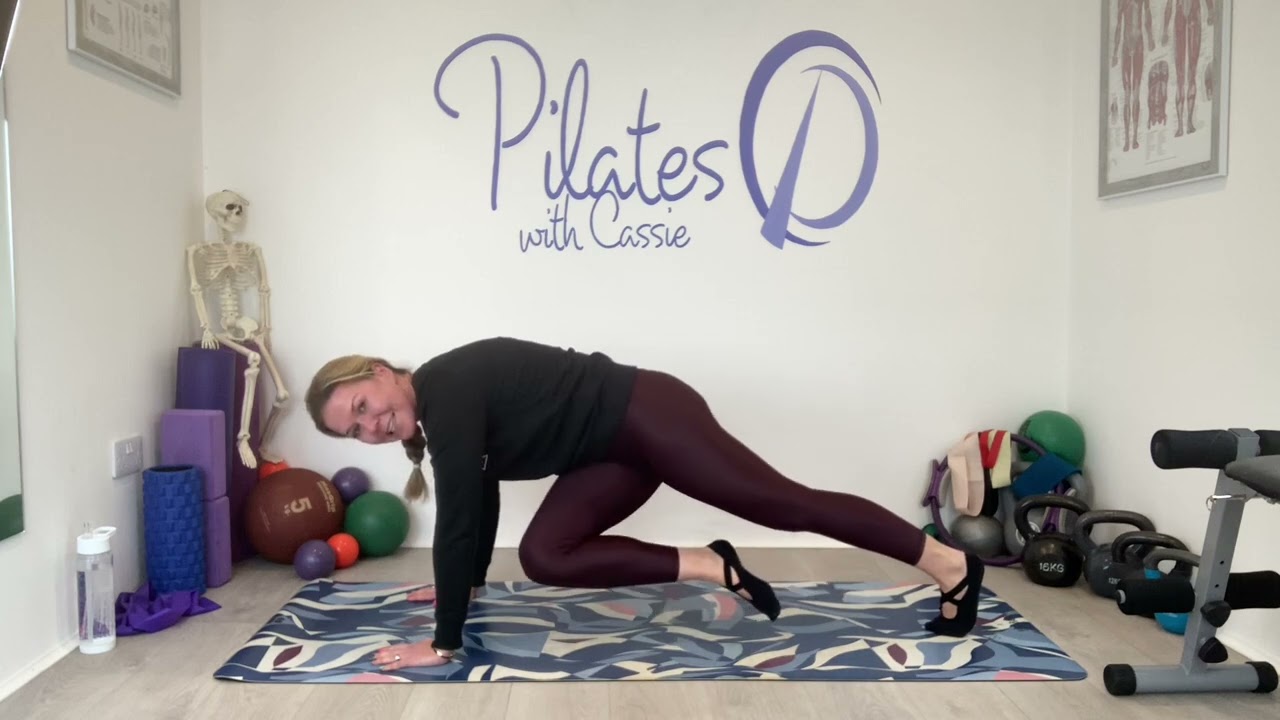
My go-to Pilates exercise for building endurance in my core and working on my shoulder stability at the same time is the plank with knee tuck. You can watch a video of Pilates instructor Cassie doing the exercise here.
The move works both your inner and outer core muscles at the same time, requiring total abdominal recruitment to stabilize your torso and drive your knee toward your chest.
Here’s how to do the Pilates plank with knee tuck:
- Start in a high plank position, with your wrists stacked underneath your shoulders and a straight line from the crown of your head to your heels.
- Engage your core, sucking your belly button into your spine and zipping your abs up and in.
- Think about pushing the ground away. Don’t let your shoulders sag.
- From here, drive one knee in towards your chest. Pause, and then extend back to your starting position.
- Repeat on the other side.
- To increase the intensity, place your feet on sliders or a towel on a smooth floor. This will create a massive eccentric burn in your lower abs. Alternatively, drive your knee towards the opposite elbow — this will force your internal and external obliques to work.
What are the benefits?
This move might look simple, but it’s helping build strength and stability in your midsection. The active flexion involved as you drive your knee to your chest forces your deep abdominal muscles and outer ab muscles to fire in unison. The key here is to really move slowly and with control; the slower you move, the longer these muscles will remain under tension.
If, like me, you spend a lot of time sitting behind a desk, or your free time running, you’ll also be pleased to hear this exercise helps condition your deep hip flexors. If you spend too long sitting, your hip flexors can get tight, short, and weak.
Exercises like this strengthen the primary hip flexors — the psoas and iliacus muscles. Keep your core engaged as you move, really thinking about sucking your belly button into your spine, and you’ll help eliminate the hip weakness that can often trigger lower back tightness.
The most common mistake people make during this move is letting their hips drop as they extend their leg back to the high plank. Squeeze your glutes and engage your abs in high plank before moving your knees to avoid any hip sagging.
Finally, you’ll also be working on your shoulder stability during this move, as your deltoids will be working hard to stabilize your shoulder blades as your lower body moves. Your triceps and lats will also be getting a workout here. Keep focused on pushing the floor away as you move one leg, then the other.
Follow Tom's Guide fitness on Instagram for more workouts, routines, tips, and tricks.

Follow Tom's Guide on Google News and add us as a preferred source to get our up-to-date news, analysis, and reviews in your feeds. Subscribe to Tom's Guide on YouTube and follow us on TikTok. Finally, you can visit our dedicated Tom's Guide Savings Squad hub for expert help on getting the best products for less.
More from Tom's Guide
- I'm a personal trainer, and if I were 60, these are the 6 exercises I’d do to build strength, muscle and leanness
- I tried a 7-day standing core routine. Here are the differences I noticed in my strength and posture
- You don't need heavy barbell squats to strengthen your quads, glutes and hamstrings — try the pendulum squat instead