






Editors' Note: This article was originally published when the Meizu Zero was first previewed, and is now updated with pre-order information.
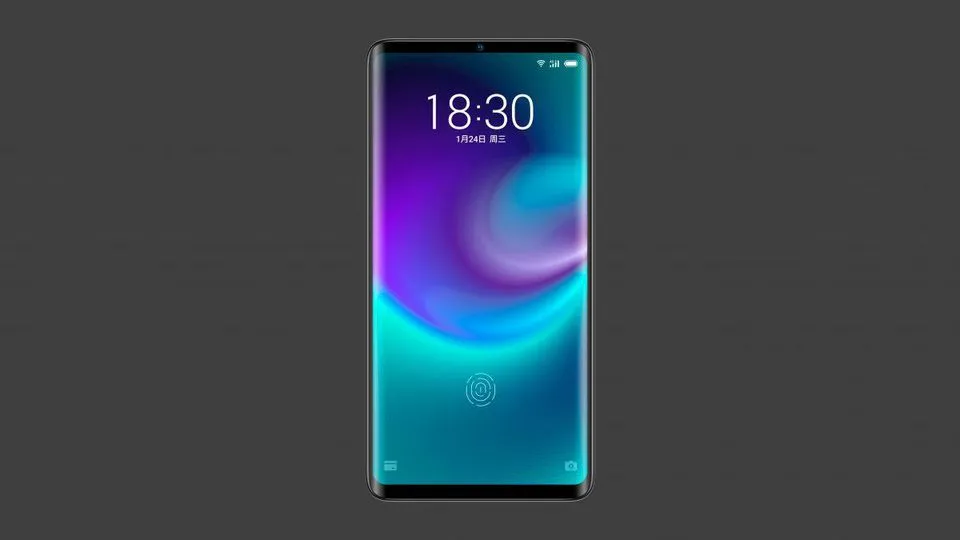
This is the Meizu Zero, the world’s first phone that is completely seamless. And if you've got $1,299 lying around, you can now pre-order one.
A week after taking the wraps off its buttonless, portless phone, Meizu started taking orders for it on the Indiegogo crowd-funding site, where the phone commands a $1,299 asking price.
While offering the phone through a crowd-funding campaign instead of a more traditional retail channel adds the whiff of a marketing ploy, you can understand what interests people abut the Meizu Zero.There are no power or volume buttons. There is no USB-C port. No stereo jack. No speaker grilles.
In fact, except for two tiny microphone holes on the bottom of the phone and the cameras on the back, this is a perfectly clean slab made of glass and glossy black ceramic that sandwiches the electronics and a 5.99-inch OLED display with in-display fingerprint reader and a camera sensor on the very top. The screen has a very thin forehead to accommodate the selfie camera and a symmetric chin.
To achieve this feat, the phone relies on wireless technology for everything.
The Zero features 18W wireless charging, which beats the current record holder: 15W by Huawei.
The power and volume buttons have been replaced by touch controls on the phone’s sides that give haptic feedback. Like in the iPhone 7 and 8, users will feel like there are physical buttons to push when in fact there are none.
There’s no SIM tray either. This phone only supports e-SIM, like the Apple Watch Series 4. The iPhone XS also supports e-SIM, but it gives you the option of using regular SIMs because many carriers don’t support the e-SIM tech yet.

The speakers (and their grilles) have been replaced by a piezo-electric sound system that turns the entire screen into a vibrating surface capable of making sound. Forbes’ Ben Sin says that the company claims the technology is greatly improved from the first version of this tech used in the Xiaomi Mi Mix.
And headphone audio uses Bluetooth, of course.

Meizu's Zero phone beat Vivo by one day. Unveiled shortly after the Zero was announced, Vivo’s Apex 2019 also proposes a similar design in which everything is screen and body, with no seams or holes whatsoever. Aside from a theoretical better protection against water and dust, and the wow aesthetic factor, it’s not clear why this is happening now — with e-SIM limited support and the limitations of wireless power, it may be too early.
But it is cool that these manufacturers are pushing the envelope, forcing us into the future.
We will see how all these phones really feel and look at the Mobile World Congress next month, in Barcelona, Spain.
Credit: Meizu

