Once upon a time, you turned on a TV and it was just… on. If you watched an episode of “Seinfeld” the night before, you might've found your TV still tuned to NBC the following morning. There was no home screen between you and your shows, and if you were confronted with an advertisement, it was because NBC happened to be running a commercial at that moment.
I’ve been testing and reviewing TVs for over 12 years, and while I’m not that old, my memories of a time before smart TVs are starting to fade. I’ve watched my tiny living room ecosystem accumulate litter — like a bug in a jar with a leaf, stick and increasingly bigger piles of discarded candy wrappers. Worse, it seems like the folks in charge of the jar are watching my every move and selling off the data to a bug-squashing company.
It’s not just the cheap TVs, either — the worst aspects of the best TVs I review usually relate to the user experience. Can anything be done about this? Are we destined to be forever bummed out by our TVs?
The internet is (mostly) to blame
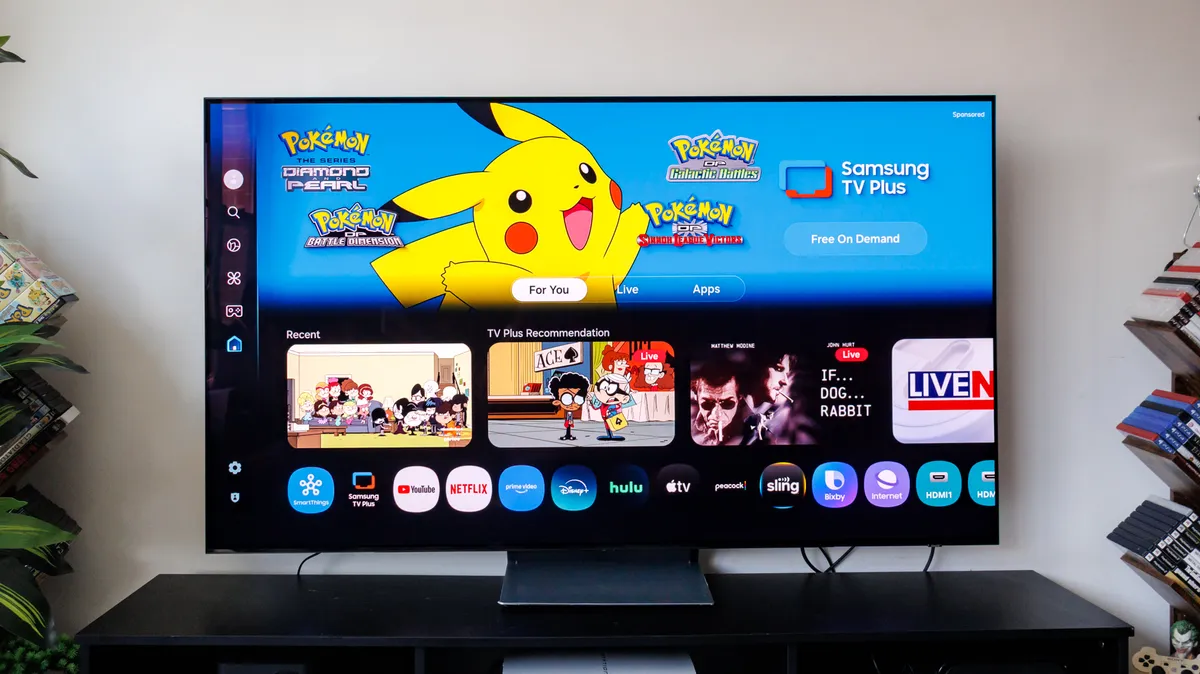
Ask yourself this: What percentage of my movie- and show-watching experience is made possible by the web? For me, the answer is close to 100%.
I’m a big-time advocate for indoor antennas and over-the-air broadcasting. Plenty of people still pipe-in TV shows by way of a cable box. But in 2026, internet-based streaming dominates, and brands are acutely aware of how this all shakes out.
Why would LG, Samsung or any TV manufacturer move away from the smart TV business model? Viewers want to watch “The Bear” on Hulu and “The Mandalorian” on Disney Plus. “Seinfeld” is on Netflix now and NBC puts its newest slate of programming on Peacock (starting at $7.99 with ads).
And then there’s the data collection. As is the case with seemingly every other aspect of our lives, we — the viewers — are just as much of a product as the TVs themselves.
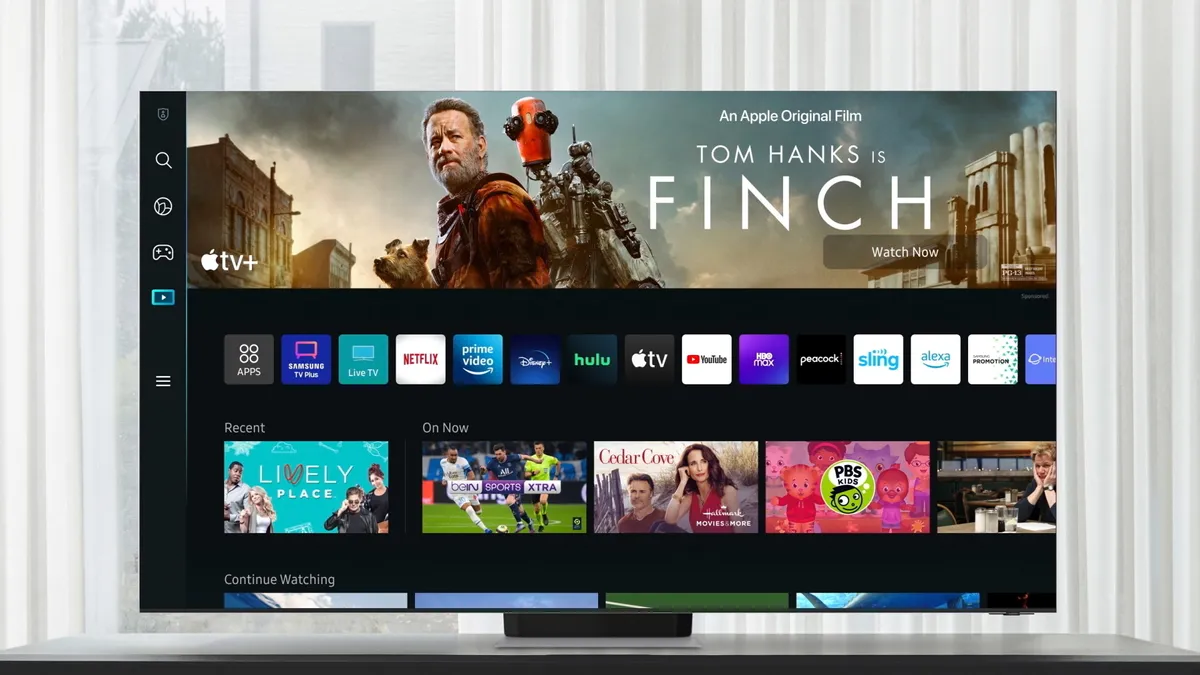
Here's how to stop Samsung TV Plus from auto-playing on your TV.
Streaming apps catalogue what we watch, what we skip and when we skip it. Netflix is anything but transparent about how it measures viewership, but its — ahem — somewhat lofty figures are nevertheless bandied about in business earnings calls.
If you own a relatively new Samsung TV, you're probably sick and tired of the brand's free streaming service automatically booting up every time you turn on the TV. When I yearn to return to the halcyon days of a TV powering on, being forced to stomach Samsung TV Plus is not what I had in mind, but what incentive is there for Samsung not to immediately funnel the viewer into an experience they very likely stand to profit from?
In other words, we're stuck. Smart TVs have made streaming more accessible than ever and the era of streaming has made it critical for brands to cater to the streaming lifestyle.
More software = more slowdown

Now that TVs are closer to computers than ever before, there's more crap waiting to crap out on you.
The longer we use our TVs, the more apps and updates we pile into its storage. The answer's not as simple as "stop installing updates," because we've been told — and correctly so — that not staying up to date on these patches could introduce some security holes.
So we soldier on, watching "Seinfeld" on Netflix and updating the app on a regular basis. Regardless of the brand of TV we use, its hardware won't last forever. When you first set up your TV, a clock begins counting down on the display, the processor and other critical components.
This was always true to a certain extent, but now that TVs are closer to computers than ever before, there's more crap waiting to crap out on you. And when some critical, piece-of-crap component finally craps out, it's curtains for your crappy TV.
There's no going back

People always ask me why they can't buy a so-called "dumb TV." It sounds like a great idea, right? Just bypass the sluggish software, the annoying algorithms, the banner ads and the on-board data collection. Unfortunately, it's not as simple as all that.
There are vanishingly few dumb TVs available to consumers. The market just isn't there. Brands are tied up in too many licensing deals and there's too much money to be made off sponsorships, partnerships and user data.
Further, any TV worth buying from a performance standpoint is, I'm sorry to say, going to be saddled with smart features. You can set out to find the TV with the least amount of these features, but I promise that you'll be on a crash course for disappointment. The picture will look bad and the menu software will drive you bonkers.
This is the world we live in now. On average, TVs are better-looking than ever, but they're all nodes in a complicated, nightmarish network. But there are ways to disengage.
People who own TVs built around the Google TV streaming platform can enable Google TV's Basic Mode, thereby taking their entire TV offline. If you want to increase privacy, some brands offer ways to disable data collection on your TV.
But until our entire media ecosystem changes, the little ecosystem in our living room will be, to varying degrees, a microcosm of ads and outbound data.

Follow Tom's Guide on Google News and add us as a preferred source to get our up-to-date news, analysis, and reviews in your feeds.
More from Tom's Guide