Samsung’s new foldables were announced at Galaxy Unpacked, and despite their vastly different form factors, the Galaxy Z Flip 8, Z Fold 8, and Z Fold 8 Ultra all share one crucial component: Qualcomm’s Snapdragon 8 Elite Gen 5 chip.
That’s a big deal. Last year, Samsung opted for its in-house Exynos 2500 chipset on the Z Flip 7 while saving Qualcomm’s flagship silicon for the Z Fold 7. This year’s rollout puts all three foldable contenders on even ground — and after putting them through a full suite of benchmark tests, I can tell you they’re easily the most powerful foldables to ever pass through the Tom’s Guide labs.
However, subtle performance variations between the three reveal which device actually reigns supreme. Here’s how the numbers break down.
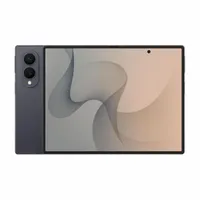
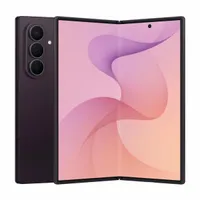
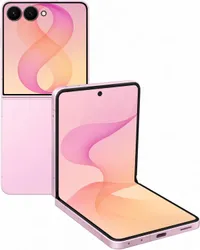
Galaxy Z Flip 8 vs Fold 8 vs Fold 8 Ultra: GeekBench
| Row 0 - Cell 0 | GeekBench 6 (single / multi-core) |
Galaxy Z Flip 8 |
3,627 / 11,215 |
Galaxy Z Flip 7 |
2,286 / 8,079 |
Galaxy Z Fold 8 |
3,659 / 11,020 |
Galaxy Z Fold 8 Ultra |
3,733 / 11,457 |
Galaxy Z Fold 7 |
3,052 / 9,735 |
When it comes to raw processing power, the Z Fold 8 Ultra leads the pack, breaking the 3,700 barrier in Geekbench 6.7 with an average single-core score of 3,733 and a multi-core score of 11,457.
A surprising trend emerges between the other two foldables. While the standard Galaxy Z Fold 8 posts a slightly higher single-core score (3,659), the compact Z Flip 8 actually outperforms it in multi-core performance, hitting 11,215 compared to the Fold 8’s 11,020.
What’s really notable here is how the Z Flip 8 yields a massive 59% jump in single-core performance
What’s really notable here is how the Z Flip 8 yields a massive 59% jump in single-core performance and an equally compelling 39% increase in multi-core power — starkly highlighting the gap between Samsung's previous Exynos silicon and the Snapdragon 8 Elite Gen 5.
While the generational leap isn’t quite as dramatic for the Z Fold 8 Ultra, it remains a marked improvement. Samsung's top-tier foldable still delivers a solid 22.3% boost in single-core power and a 17.7% bump in multi-core performance over the Fold 7.
| Row 0 - Cell 0 | GeekBench 6 (single / multi-core) |
Motorola Razr Ultra (2026) |
2,886 / 8,982 |
Motorola Razr Fold |
2,711 / 9,134 |
Google Pixel 10 Pro Fold |
2,344 / 6,332 |
Against their biggest rivals, Samsung’s new foldables still come out on top hands down. The Z Flip 8 comfortably outperforms the Razr Ultra (2026) in Geekbench 6, boasting a superb 25.7% advantage in single-core speeds and a 24.9% lead in multi-core performance.
Meanwhile, the Z Fold 8 Ultra delivers 37.7% faster single-core and 25.4% higher multi-core output compared to the Razr Fold. The contrast is even starker against the Google Pixel 10 Pro Fold, where Samsung’s flagship foldable completely blows past Google’s offering with a 59.3% higher single-core score and an astonishing 80.9% lead in multi-core performance.
Galaxy Z Flip 8 vs Fold 8 vs Fold 8 Ultra: 3DMark
| Row 0 - Cell 0 | Wild Life Unlimited (score / FPS) |
Galaxy Z Flip 8 |
29,723 / 177.9 |
Galaxy Z Flip 7 |
19,144 / 114.64 |
Galaxy Z Fold 8 |
26,608 / 165.3 |
Galaxy Z Fold 8 Ultra |
30,980 / 185.51 |
Galaxy Z Fold 7 |
20,529 / 123.83 |
Out of the bunch, the Galaxy Z Fold 8 Ultra once again claims the top spot, breaking past the 30,000 threshold with a high score of 30,980 and an average frame rate of 185.51 fps. The latter is honestly mind boggling and shows the kind of graphic processing muscle power it’s packing.
The compact Galaxy Z Flip 8 delivers another impressive showing, taking second place with a score of 29,723 and 177.90 fps, outperforming the Galaxy Z Fold 8, which logged a score of 26,608 and 165.30 fps. While all three foldables deliver plenty of graphical muscle for mobile gaming, the Ultra and Flip 8 demonstrate a noticeable edge in peak rendering speeds for those who can’t afford a sliver of choppy gameplay.
Again, the biggest year-over-year improvement goes to the Z Flip 8, which achieves a 55.3% higher score and a 55.2% boost in average frame rate over the Z Flip 7. I can’t stress enough the immense graphical power boost it’s getting going from an Exynos to a Snapdragon.
As for the Z Fold 8 Ultra? It tells a similar story of dominant growth by delivering a 50.9% increase in overall score and a 49.8% jump in frame rate performance compared to the Z Fold 7. This, obviously, should result in gameplay being a lot smoother.
| Row 0 - Cell 0 | Wild Life Unlimited (score / FPS) |
Motorola Razr Ultra (2026) |
24437 / 146.33 |
Motorola Razr Fold |
21,580 / 129.23 |
Google Pixel 10 Pro Fold |
13,306 / 79.68 |
In the battle of the clamshells, the Z Flip 8 holds a commanding lead over its primary rival, the Motorola Razr Ultra (2026). In fact, Samsung's flip phone maintains a solid 21.6% advantage in both overall score and frame rate rendering.
Samsung’s dominance is even more pronounced in the book-style category, where the Galaxy Z Fold 8 Ultra delivers 43.6% higher graphical performance than the Razr Fold. That gap widens tremendously against the Pixel 10 Pro Fold, with the Z Fold 8 Ultra boasting a mind-boggling 132.8% lead over Google’s flagship foldable.
Galaxy Z Flip 8 vs Fold 8 vs Fold 8 Ultra: Verdict

Samsung’s decision to go all-in on Qualcomm’s Snapdragon 8 Elite Gen 5 silicon across its entire 2026 lineup pays off. All three foldables deliver generational leaps in raw CPU processing and peak graphical output.
However, if you want the absolute pinnacle of performance, the Galaxy Z Fold 8 Ultra reigns supreme — dominating every metric while outpacing rivals like the Pixel 10 Pro Fold and Motorola Razr Fold.
Meanwhile, the compact Galaxy Z Flip 8 emerges as the surprise hero of the bunch, proving that big things come in small packages. While the standard Galaxy Z Fold 8 remains a dependable workhorse, Samsung’s new devices aren't just incremental upgrades — they set a new benchmark for foldables.

Follow Tom's Guide on Google News and add us as a preferred source to get our up-to-date news, analysis, and reviews in your feeds.
More from Tom's Guide