Hands up, I’m guilty! I’ve always used bleach to whiten whites, but I’ve discovered I’ve been getting it all wrong. It turns out there’s a better way to transform graying whites back to crisp white without using chlorine bleach.
The summer season is the prime time for wearing white clothing, but the buildup of body oils, detergent residue and mineral deposits traps dirt and discolors the fabric. So, those once whiter-than-white whites start to look distinctly dull.
Rather than ditching my dull white clothing that has turned a shade of gray, I favor bleaching them to extend their life. However, instead of turning my whites white, bleach can actually turn them yellow if I’m not careful.
Why using bleach is a bad idea

According to Clorox, it’s all down to user error rather than the product itself. And unfortunately, if you do use bleach incorrectly, the damage is permanent.
So to avoid using bleach in your laundry the wrong way, don’t make these two laundry-care mistakes.
1. Not checking that the fabric is bleach-safe. To ensure your garment is safe to bleach, check for a triangle on the care label; this indicates that the item is safe to use regular bleach. If you spot a triangle with a cross through it, do not use bleach on the item.
2. Using too much bleach. Clorox recommends adding ⅓ cup of bleach for a regular-size load with an average soil level. Using too much bleach, even when it is diluted, can cause yellowing.
Warning:
You should always take care when using bleach. It’s a strong chemical that can harm your eyes, skin, and lungs, and it produces a dangerous gas when mixed with certain substances, such as ammonia and vinegar.
A better alternative to bleach: Use hydrogen peroxide
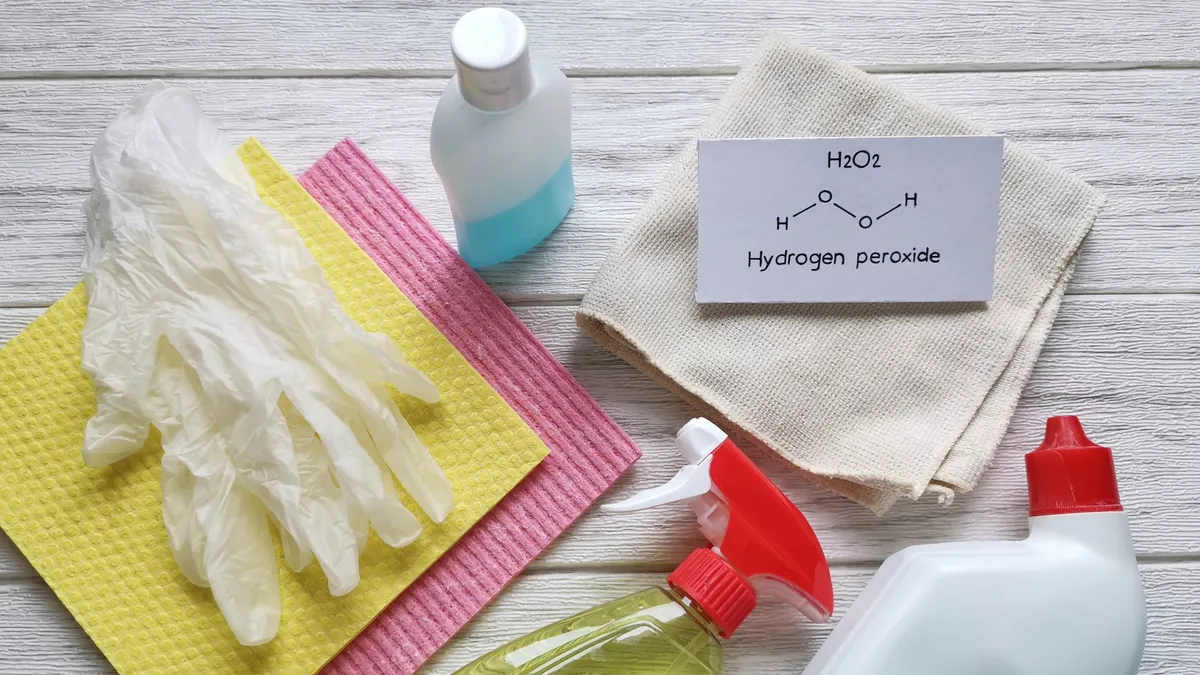
Hydrogen peroxide can be used as a gentler alternative to bleach on white fabrics. It’s a combination of hydrogen and oxygen, available in different strengths. And because it’s oxygen-based, it breaks down stains more gently than harsh bleach.
So, how do they remove stains differently? While bleach chemically alters and strips color through a fast chlorine reaction, hydrogen peroxide lifts organic stains by releasing oxygen as it bubbles.
And while bleach is stronger and works faster, hydrogen peroxide is safer and biodegradable, making it better for the environment.
3 ways to use hydrogen peroxide to boost your whites

1. Add to a washing machine cycle
To brighten whites that aren’t heavily soiled, you can add hydrogen peroxide to your normal washing machine cycle.
1. Add 1 cup of hydrogen peroxide to your liquid bleach dispenser, or wait until your drum fills with water, then add the hydrogen peroxide. Never add the full-strength hydrogen peroxide to dry clothes — it needs to be diluted first.
2. Run a normal cycle with the hottest temperature setting that’s recommended for your clothes.
2. Pre-soak your garments

For more heavily soiled items, your garments will benefit from a pre-soak.
1. Fill a sink or bucket with warm water.
2. Add one cup of hydrogen peroxide per gallon of water and stir well.
3. Submerge your garments in the solution.
4. Allow the garments to soak for 30 to 60 minutes.
5. Gently wring out your garments and transfer them to your washing machine.
6. Finish with a normal cycle with detergent.
3. Treating spot stains
Spot stains are notoriously obvious on whites. Underarm stains, grubby collars and organic stains from food, blood and grass can be treated with a paste.
1. Mix equal parts hydrogen peroxide with baking soda to form a thick paste
.2. Apply a thick layer of the paste over the stain. For stubborn stains, gently rub the paste with a toothbrush.
3. Leave the paste to work for 30 to 60 minutes.
4. Brush away any dried-on paste and wash the garment as usual.
Top tip: Try the 10-second fizz test
Once opened, hydrogen peroxide loses its potency and becomes less effective at disinfecting and whitening. While an unopened bottle can last one to three years, once opened, it may only remain active for one to six months.
If your hydrogen peroxide is still effective, Alliance Chemical suggests trying this 10-second fizz test.
Pour a splash of hydrogen peroxide into a clean glass.
Add a small piece of raw potato or a pinch of active dry yeast.
Watch for the bubbles. Strong, sustained fizzing means the peroxide is still active.

Follow Tom's Guide on Google News and add us as a preferred source to get our up-to-date news, analysis, and reviews in your feeds.
More from Tom's Guide