We’ve tested over 140 mattresses, and we were impressed by how many offer great comfort for a budget-friendly price. But with so many questionably cheap beds online— and rising mattress tariffs pushing former budget favorites into mid-range territory— we created this guide to help you find the best cheap mattress for your sleep needs, rescuing you from the false economy of a bed that won't last.
A cheap mattress is any bed regularly sold under $400 for a queen size. The best cheap mattresses tend to have a all-memory foam build (the most body-cradling of all four mattress mattress types) but there are some with both foam and springs to recreate the hybrid designs found in this year’s best mattress guide.
Every cheap mattress here has been tested by us, a panel of experts with extensive mattress-testing experience, to see which are worth buying in this month's mattress sales. Following strict guidelines, we narrowed all low-budget beds we’ve tested down to seven best cheap mattresses.
The best cheap mattress overall

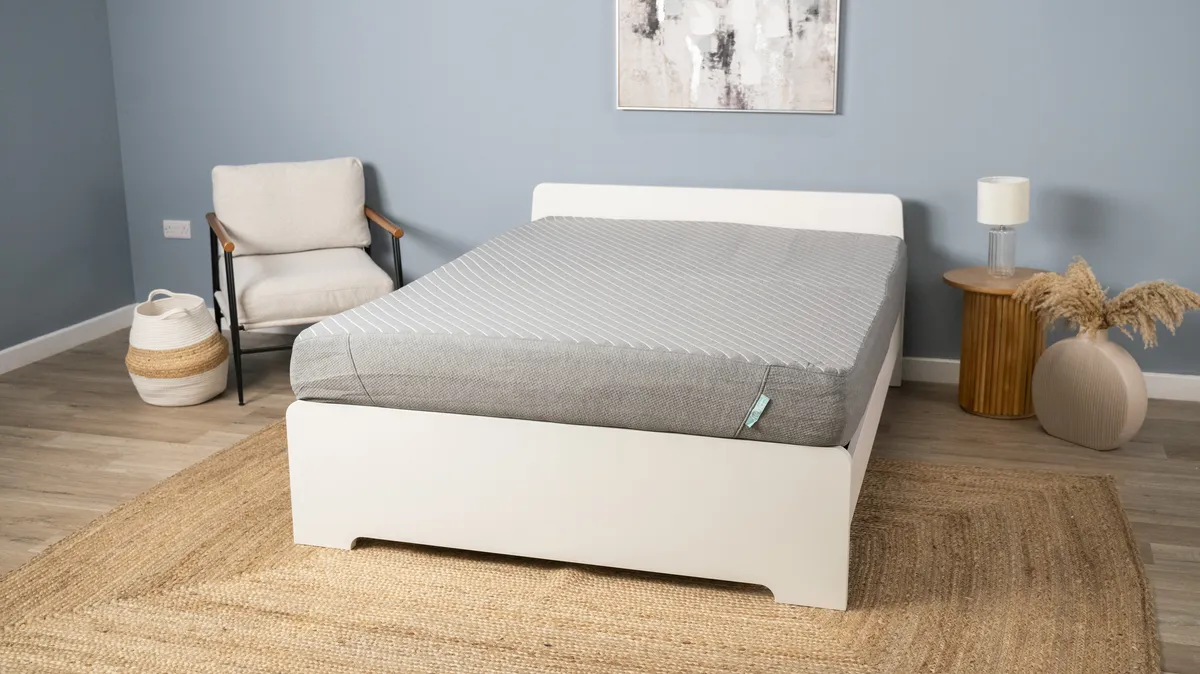


A queen Siena 10" Signature mattress consistently sells for $399 (and $359 in flash deals). The Siena is a three-layered, all-foam mattress, and we had high hopes for this model given that its parent brand, Resident Home, also makes the super-popular Nectar mattress (which is our best memory foam mattress pick). We weren't disappointed — the Siena punches well above its ultra-affordable price tag.
The Signature, like a lot of budget beds on the market, has a simple all-foam design. Consisting of just two layers of memory foam – one for stability and the other for body-contouring comfort – the Siena is topped by a breathable cover.
We were impressed with the edge support and motion isolation on offer here, making the Signature a good choice for those who share a bed and don't want to be bothered by restless partners. Some lower-priced memory foams can trap heat, but our lead reviewer never woke up sweaty. This cooler sleep was reflected in our thermal imaging tests, which showed that our tester's body heat almost entirely dissipated by the time testing came to an end.
In our tests, we found the Signature sleeps very firm — a 25kg weight only sank 3.25" into the shoulder region — so expect more support and less softness. That makes it a good choice for stomach sleepers or back sleepers who need that extra support, but side sleepers might find it doesn't have enough give around the shoulders and hips for a comfortable night's sleep.
The quality and affordability earn this model a spot high up in our list of the best mattresses for college students. The Siena 10" Signature mattress includes a 180-night trial, which is the longest on this list. This will allow you to test drive this cheap mattress throughout a couple of seasons. The warranty is more standard at 10 years.
- Read more: Siena Memory Foam Mattress review
The best cheap mattress for front sleepers


While our best affordable hybrid mattress recommendation is the DreamCloud, the Allswell is the best cheap hybrid mattress under $400 that we've found. As you might expect from Walmart's own bed-in-a-box brand, this offers a lot for a very low price (all the more impressive because this is a hybrid mattress with springs, and those are typically more expensive than all-foam models). At full price a queen comes in at $352, but you can usually get it for $314.
Beneath the luxurious-looking quilted top cover, there's a layer of charcoal- and copper-infused gel memory foam. These additions are designed to help with temperature regulation, by absorbing your body heat and helping to dissipate it. The foam layer sits on top of a tier of individually-wrapped coils, which are reinforced around the perimeter of the mattress to create sturdy edges that you can comfortably lie or sit on.
We tested an Allswell and were pleasantly surprised by how supportive it was for back and front sleeping (side sleepers may need more cushioning to feel satisfied here). Motion isolation is also impressive, as is the edge support. That said, these impressions were based on our experience with a newly unboxed mattress. According to customer reviews, the Allswell tends to lose its shape over time with regular use, especially along the edges, so keep that in mind before buying this otherwise comfortable and inexpensive mattress.
Heavier bodies (over 200lbs) might find they sink right through the foam layer and won't get the full benefits there, while lighter-weight sleepers may need something with more contouring and plushness. As for temperature regulation, we didn't overheat on the Allswell but if you're prone to overheating, consider investing in one of the best cooling mattresses instead.
Allswell is no longer operating its own storefront, so instead of a 100-night trial you'll now have to abide by Walmart's 90-day return window, which is only eligible for unopened products. The 10-year warranty remains the same, per the product page.
- Read more: The Allswell mattress review
Best cheap mattress for side sleepers


The Zinus Green Tea Memory Foam bed-in-a-box is one of the most well-known budget mattresses in America. It's among the best mattresses on Amazon, with an average rating of 4.4 stars out of 5 from over 163K customer reviews. Part of its appeal is that it comes in four mattress heights – 6, 8, 10, and 12 inches. We tested the 10-inch version and found that it delivered a perfectly adequate night’s sleep for the low price, making it the best option for upgrading your main mattress without spending much.
The Zinus is made with toxin-free memory foam, plus green tea-infused foam with ActivCharcoal microparticles to naturally control odors and bacteria. Zinus rates it a 6.5 out of 10 on the firmness scale and in our experience, that's an accurate assessment. In fact, we recommend the Zinus Green Tea Memory Foam as one of the best mattresses for side sleepers on a super-tight budget because it offers support along the shoulders, hips and knees without too much sinkage.
It also offers good pressure relief, so while it won’t be enough for people with long-term back and hip pain, it should be enough to boost general sleep comfort for most child and adult sleepers. We also noticed zero motion transfer with this mattress, making it a budget alternative to The Allswell for couples and restless sleepers.
The user reviews on both the Zinus website and on Amazon (the brand’s authorized third-party retailer) are largely positive, with most customers recommending it as a good balance of value for money versus comfort and support. We did spot some user reviews complaining that it’s too firm for lighter side sleepers, and others who said they had issues returning the Zinus during the trial period, but the brand’s customer services team responded in most cases with a solution.
Overall, if you want a decent memory foam mattress at some of the cheapest prices online, the Zinus Green Tea Memory Foam should be on your list. It's a best-seller on Amazon where it often sells for a much lower price (right now we're looking at a queen for $263.50), and you'll have up to 100 days to return it there should you change your mind. Check out our guide explaining how to return a mattress to Amazon.
- Read more: Zinus Green Tea Memory Foam Mattress review
Best cheap mattress for back sleepers
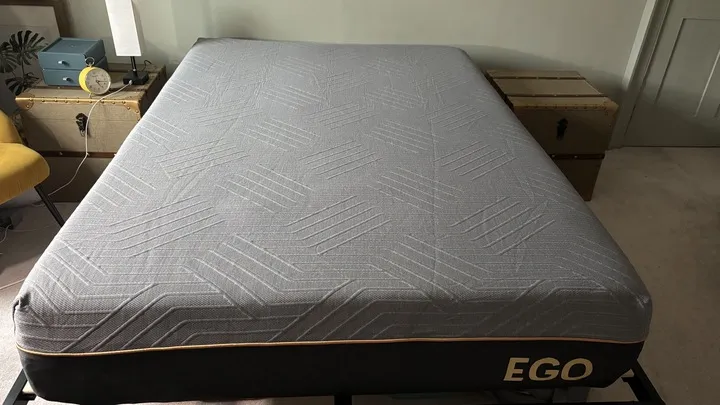


The Black 12" Mattress is EGOHOME's top-rated model, regularly priced under $400 for a queen thanks to frequent discounts that are usually over 40% off. While this all-foam bed is often touted as a soft side-sleeper bed while its firmer hybrid counterpart (#7) is promoted as the all-rounder, the all-foam Black 12" that we tested proved to be supportive in all sleep positions.
The mattress has three internal layers, plus a graphene cover and a fiberglass-free, fire-retardant inner cover. The top comfort layer is made from copper-infused gel foam, the middle layer from liquid gel foam, and the bottom layer from high-density foam for a durable and supportive base.
After sleeping on the EGOHOME Black 12" Mattress, we think the is much firmer and supportive than the description lets on and award it a medium-firm (7.5/10) rating. Our back-and-side sleeping lead tester was pleasantly surprised with how comfortable the bed was in all positions, back and stomach included, and didn't wake up with any back or joint pain in the mornings.
The Black 12" Mattress also had sturdy edges for sitting and didn't allow us to dip or slip when sitting on (or sleeping close to) the sides. Restless couples will also enjoy the low motion transfer, which means the slow-moving foam won't allow you to feel your partner's tossing and turning. However, that slow-moving foam can feel a stuffy and doesn't allow ease of movement, plus it is prone to trapping body heat despite using heat-dissipating technology. With that in mind, hot sleepers should try the breathable hybrid counterpart at #7.
The starting price of an EGOHOME Black 12" is usually $316 for a twin (MSRP: $449) thanks to an evergreen 30% off deal, and this discount also means you'll always get a queen for under $400. Extras include free shipping, a 10-year warranty and a 100-night sleep trial. These benefits are good but pretty standard, but you'll pretty much always find a promo code on the EGOHOME website that gets you an extra 10% off your order.
Best cheap mattress for kids and guests

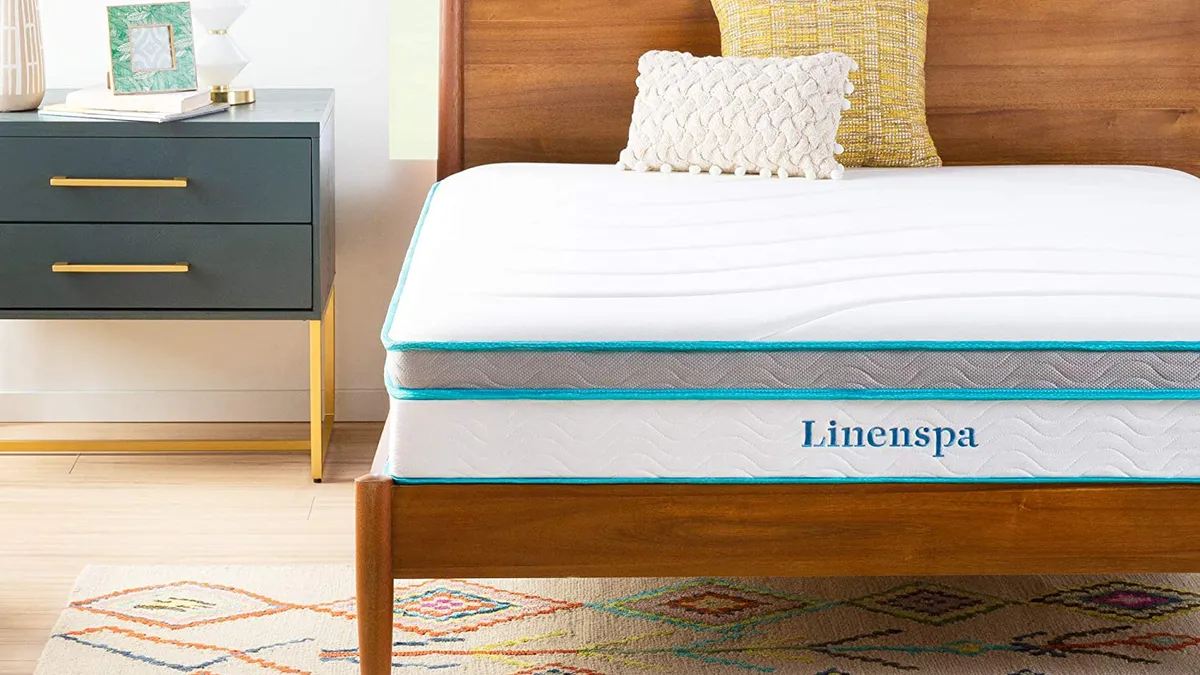


The Linenspa Memory Foam Hybrid Mattress is another best-selling Amazon mattress, with over 134k reviews and a rating of 4.5 stars out of 5. It comes in three height choices: 8, 10, or 12 inches. We tested the 8-inch version, which is the firmest of the bunch (6.5 out of 10 on the firmness scale). However, if you want your mattress to hug you, go for the plush 12-inch version (5 out of 10 on the firmness scale).
All iterations of the Linenspa Memory Foam Hybrid Mattress contain three layers. On top is a polyester-blend cover quilted with 1.5 to 2 inches of memory foam. That's followed by a 1.5 to 2.5-inch layer of supportive comfort foam, then a base layer of 6-inch durable steel springs to offer some bounce and airflow.
The 8-inch Linenspa mattress that we reviewed suited our main tester, who's a lightweight stomach sleeper. However, average to heavier builds may want to consider the 10-inch or 12-inch versions — but even those may not offer enough support for larger sleepers.
Whilst the 12-inch Linenspa Memory Foam Hybrid Mattress could be a decent luxury alternative for a main bedroom, we find that overall, this is among the best budget mattresses for guest rooms or kids' bedrooms — instances where there's little heavy-duty use. After all, the price is right, as you'd not want to spend a lot on a mattress that'll barely be used or need to be replaced within a couple of years, given how quickly kids can grow.
The low price tag also means you don’t need to be too precious about it if you're buying this mattress for a younger child, but we'd still recommend using a mattress protector. A 10-year warranty applies, although you'll get 100 days to return it if you purchase via Amazon.
- Read more: Linenspa Memory Foam Hybrid Mattress review
The best cheap mattress for hot sleepers


While we named the EGOHOME Black 12" Memory Foam at #4 the best for back sleepers, we found it slept rather warm. However, its foam-and-springs counterpart, the EGOHOME Black 12" Hybrid kept our testers cool thanks to the addition of airflow-boosting springs.
While we wouldn't say it's as supportive as the all-foam version (which is curious, as it's designed to be) the pocketed spring system worked with copper-infused foam and a graphene cover to deliver a cooler night to our testers — including a sleeper prone to overheating.
We found its medium-firm feel to be supportive and comfy when side sleeping, especially if you're in an average (130lbs-230lbs) or plus-sized (230lbs+) weight category. We also found the edges to be quite strong, making it perfect for sitting or sleeping close to the edge without feeling like you're going slip out.
However, back and stomach sleepers may feel that their shoulders and upper back aren't being offered enough support (even if their lower back and hips feel supported). Meanwhile, petite sleepers (under 130lbs) may want something more plush.
Still, an average queen price of $439.99 is incredibly affordable for a 12" hybrid mattress, and you can always find a new promo code on the EGOHOME website that'll get you an extra 10-15% off the sale price. A 100-night sleep trial and a 10-year warranty means you're getting some good benefits, too.
- Read more: EGOHOME Black 12" Hybrid Mattress review
The beat cheap hybrid mattress

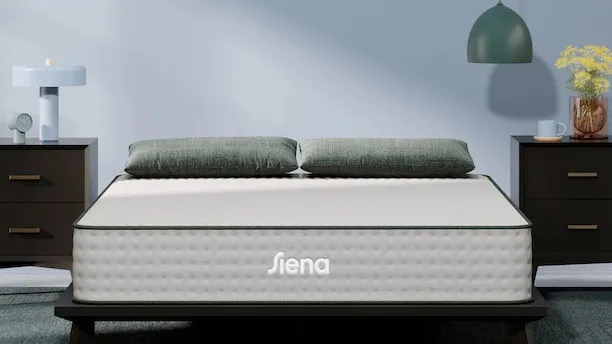

While there are other hybrid mattresses on this list, none offer the universal support that the Siena Premier Hybrid does. All sleep positions are accommodated with this 10" Hybrid, with our reviewers labelling the Premier Hybrid a "solid performer".
While most mattresses with this kind of design are outside the budget price tier, the Siena Premier Hybrid is an outlier that offers foam-and-springs comfort at an all-foam price. Its 10" build features two top layers of foam – one a 2" support foam layer for healthy spinal alignment, the other a 1" slab of gel-infused memory foam for comfort – and a 7" layer of individually-wrapped springs for sturdier edges.
For the most part, we found the Premier Hybrid's features deliver on what they promised. Our testers found the edges to feel secure for sitting or leaning and loved how the bed firmly supported all sleep positions without feeling too hard — even rating it as a budget version of the luxury DreamCloud Mattress.
However, the firm, supportive nature of the Premier Hybrid may not be to everyone's liking. Those who prefer plusher beds will likely find the Premier Hybrid too firm and check out the EGOHOME Black 12" Hybrid (#7) instead. Meanwhile, those seeking better back support should check out the all-foam Siena Signature (#1) and EGOHOME Back 12" Memory Foam (#4) mattresses instead.
Still, the Siena Premier Hybrid offers superb value for money. While the Linenspa (#6) and the Allswell (#2) are the cheapest hybrid mattresses on this list (both under $300 for a queen), they don't have the same durability and higher-tier design as the Premier Hybrid. It was formerly stuck at $424 for a queen, but now a queen the Siena Premier Hybrid is $389 and comes with a 180-night sleep trial, 10-year warranty, and free shipping and returns.
- Read more: Siena Premier Hybrid Mattress review
Alternative mattresses under $600
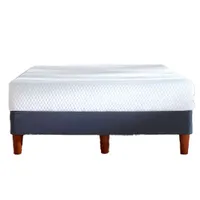
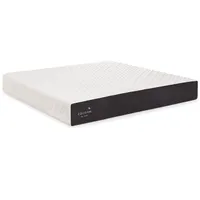
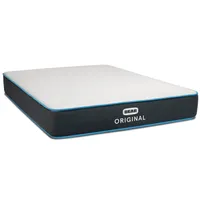
We've tested plenty of great affordable mattresses that don't quite fit into the cheap mattress category as a queen is slightly over $400. However, we've tested these three picks under $600 for a queen-size mattress, and we think they're worth considering if you're willing to pay a little bit extra...
Cheap mattresses currently being tested...
This is where we let you know of any budget mattresses we're currently testing that show promise and will likely be an entry in this guide soon...
How we test the best cheap mattresses
When we perform our editorially-independent tests on budget mattresses, we test them in areas that may matter to shoppers when choosing a cheap bed: support and comfort, edge support, temperature regulation, and motion isolation.
Support and comfort are usually primary concerns when buying a cheap mattress, particularly the latter. Because budget beds have a reputation for being flimsy, short-lived, and uncomfortable, we perform tests for both pressure relief (how well a mattress prevents pressure build-up) and edge support (how sturdy the edges are for sleeping, sitting, and getting in and out of bed).

For pressure relief, a reviewer rates how comfortable and supported they feel on the bed in different sleep positions, and a hand compression test measures the responsiveness (how quickly the foam snaps back into shape one you leave the mattress).
Of course, comfort and firmness is subjective, so we also perform a lab test with a laser and weights. This test consists of a laser aimed at the surface of the bed, so when we put the weight on the mattress, the laser will hit the tape measure to show the indentation depth. The deeper the indentation, the deeper the body part will sink into the mattress.
When measuring support (important for a mattress with a price that hints at a lack of durability and sag-resistance) we align a laser with the spine of a tester lying on their side. After 10 minutes, we check to see if the two are still aligned — if they're not, it's probably because the lower back (lumbar) or hip region has started sinking into the mattress's foam, indicating weak support.

As for edge support, which can be a problem with cheaper all-foam beds, we perform lab-based tests. These tests consist of us measuring how close to the edge a tester has to be to tumble out of bed, and placing a 25kg weight on the corners, sides, and foot of the bed to measure how far it sinks. The further the weight sinks, the weaker the edge support. We also ask reviewers to how stable the edges feel when sitting on the edge, bouncing and pushing the edges down, and getting in and out of bed.
Motion isolation (how well the mattress blocks a restless co-sleeper's movements from reaching your side of the bed) tends to be quite high in cheaper mattresses, as most consists of an all-foam structure. However, cheaper hybrids tend to have low motion isolation, as they don't have the features that more premium hybrids have to dampen the bounce of the springs (such as individually-wrapped coils).
To test motion isolation in cheap mattresses, we drop a heavy slam ball onto a mattress with an accelerometer attached to it. The accelerometer records the initial impact absorption (IIA) (how much the mattress wobbles after the slam ball drops onto it) and motion dampening speed or decay rate (how long the mattress takes to dampen the wobbles.
Meanwhile, a more subjective test involves a tester simulating a restless sleeper (such as tossing and turning and getting up and out of bed) on a bed where another tester lies down completely still. Immediately after the test, the second tester fills out a questionnaire where they opine how much movement they felt at different stages. This lab-based data is then compared to the experience that a bed-sharing reviewer has at home on the mattress.

Last but not least, we have temperature regulation (how well a mattress prevents body heat building up in its materials). Now, we don't expect a cheap mattress to have the advanced cooling tech of the best cooling mattress, nor do we expect the natural breathability of the best organic mattresses. However, as many cheap mattresses are made out of memory foam, a material notorious for trapping heat, it's important to test how well a cheap mattress regulates temperature.
To test the temperature regulation of a budget bed, the lead tester performs an at-home test where they set a stopwatch and record how cool they think the temperature of a mattress is at four different intervals: immediately after lying down, five minutes after lying down. 10 minutes after lying down, and 15-minutes after lying down. Meanwhile, at an air-conditioned testing lab, a tester will place a heating pad on the mattress and measure how much heat it absorbs and then dissipates.
However, the ultimate test of temperature control is the 30-minute objective thermal imaging camera test, which records how much a mattress absorbs and retains a tester's body heat after 15 minutes, and how quickly the mattress then dissipates (releases) that heat within 15 minutes of the tester leaving the mattress. During the half-hour experiment, we record the temperature of the corners, center, and the "hotspot" (where the tester rests) using the thermal imaging camera every minute
Cheap mattress FAQs
How much does a good cheap mattress cost?
Why you can trust Tom's Guide Our writers and editors spend hours analyzing and reviewing products, services, and apps to help find what's best for you. Find out more about how we test, analyze, and rate.
When you buy a cheap mattress, it’s a given that it won’t offer the same state-of-the-art features that luxury mattresses offer. Mattress sales occur all year and you’ll rarely have to pay the full retail price. Our selection of the best cheap mattresses all cost less than $400 for a queen size, but we acknowledge that they each come with their own limitations.
However, mattresses under $400 are still worth it as long as you check that they meet your criteria (e.g. soft or firm enough for your body type and sleep style). Also, some good quality mattresses for under $400 are sold on Amazon. There’s also a difference between the best cheap mattresses and the best affordable mattresses, which are between $400 and $1200 for a queen size and are of higher quality.
When is the right time to buy a cheap mattress?
Mattress sales occur throughout the year, and Amazon frequently offers deals on budget-friendly mattresses (make sure you check out our guide to the pros and cons of buying a mattress from Amazon, Walmart, and Costco first) while you can find many budget sleep brands throwing price drop events, like the regular Siena mattress sales.
However, there are certain times of the year that provide a better landscape for buying a mattress at a lower price. Here's a breakdown of the months of the year when it's the best time to buy a mattress:
Take November for example, when Black Friday mattress sales start early in the month and reach their apex on Black Friday itself (November 27 this year) and can hang around until the Cyber Monday mattress sales (Cyber Monday is on November 30 in 2026) or Cyber Week is over.
The Presidents' mattress sales in February and the Memorial Day mattress sales in May have already come and gone, as have the Prime Day mattress sales.
Summer brings some good deals with the 4th of July mattress sales and Amazon Prime Day mattress sales (usually in mid-July).
Another round of the Amazon Prime Day mattress sales come by in October, but not before the Labor Day mattress sales in September (Labor Day falls on September 7 in 2026).
How to choose the best cheap mattress for you
There’s no denying that budget mattresses don't last as long as mid-range and premium models, which is why many of them come with limited warranties that only cover you for certain defects. It’s also fair to expect that you’ll be sacrificing some features in return for the cheapest prices, but as our list of budget mattresses shows, you don’t have to skimp on support and comfort if you’re clever about the mattress you pick.
When choosing a cheap budget mattress (a.k.a. any mattress that costs less than $400 for a queen size) in the sales, it’s important not to get so distracted by the low prices that you forget to check whether the bed is actually right for you.
Figure out which type of mattress you need (see our guide on how to choose the right mattress for you), so you don’t buy on price alone. Always check warranties and return policies, and spend some time shopping around for bigger discounts. Also, look for the price history (some mattress brands have huge price drops throughout the year).
Our best tip is to only buy a cheap mattress that comes on a trial basis or that offers a money-back guarantee that extends for longer than 30 days. All of our top choices above tick this box. We’d also recommend looking through existing user reviews to see what customers think of the mattress – especially if they have been using it for longer than a year and can comment on durability; one of the biggest issues with budget mattresses.
When choosing the best cheap mattress for you, consider the following:
- Your sleep position (side, stomach, back or combi)
- Your body type (thin mattresses won’t offer enough support for heavier bodies)
- Whether you share your bed (you’ll need motion isolation and good edge support)
- The base you’re using it on (most budget mattresses are compatible with all bed types, though some can’t be used directly on the floor)
- Whether you can return or exchange it (if it doesn't work out, you'll want to send it back for something else)
Are cheap mattresses worth it?
Sometimes we have no choice but to buy a cheaper mattress. The current cost of living crisis means that many of us are looking to tighten our belts, and a mattress can be a big expense depending on the one you opt for. Memory foam and innerspring mattresses are cheaper than hybrids, while organic mattresses are the most expensive - that’s why you rarely see queen size latex beds for under $400.
From our experience, budget mattresses are a good stopgap to get you through a period of time where you need a new mattress but have little to spend on one. You can get a decent queen size for under $300 or less, and many manufacturers are now offering finance plans to help spread the cost. Of course this applies to mid-range and luxury beds too, so you could consider whether a more expensive mattress bought in that way is better value in the long-term.
The other option is to take a good look at your current mattress and decide whether its lifespan can be extended by a great mattress topper. You can find some very effective ones for under $100 for a queen size, picking one to add softness, firmness or extra cooling. This really depends on the state of your current mattress though - if it’s sagging badly, then it’s time to move on for the sake of your back health. If the sagging is slight, a topper could help it to last for another year or two. We cover this more in our feature on how to fix a saggy mattress.
How long will a cheap mattress last?
The lifespan of a mattress will depend on its materials. On average, memory foam and hybrid models will last about 10 years, while innerspring beds have a lifespan of 5 to 7 years.
Build quality also determines the longevity of a mattress. Naturally, the more money you pay the longer you should expect your mattress to last. (The length of the warranty is another indicator of this.) However, we've been witnessing a trickle-down effect when it comes to sleep technology. While cheap mattresses may not match the caliber of their mid-range or premium counterparts, some of them will likely hold up for the better part of a decade thanks to the integrity of their materials and overall construction. (The Resident Home-owned Siena Memory Foam Mattress is a prime example.)
Whether you intend to buy a budget mattress for your main bedroom or a seldom-used guest bedroom, a great mattress protector will help it remain in sleep-worthy shape for as long as possible.
Where can I buy a cheap mattress?
When searching for a cheap mattress, you may be tempted to buy from third party retailers who offer budget deals on cheap mattresses from brand you've never heard of. However, we suggest you do your research before buying a mattress on price alone — and that means shopping around and looking on brand websites (not just Amazon and Walmart).
For instance, the EGOHOME Black 12" Mattress (Hybrid version at #6 and Memory Foam at #4) is a popular brand on Amazon, but you can actually get its mattresses cheaper when buying directly from EGOHOME's website, which often offers an extra 10% discount code.
Buying directly from a brand's website also means you're guaranteed the full sleep trial, warranty, and free shipping — policies are often fuzzier at third party retailers such as Amazon, Walmart, Target, and Home Depot.