Tom's Guide Verdict
The Sony RX10 V is the king of bridge cameras in 2026, period. Borrowing features from its Alpha siblings, the RX10 V packs outstanding autofocus, 30fps blackout-free burst shooting for wildlife and sports, and a high-res EVF. Its ergonomics, controls and battery life are better than its predecessor, making the RX10 V simply sublime to handle. The camera boasts good 20.1MP image quality too, and its 25x optical zoom helps you capture close-up shots with ease. Though expensive, it’s still a powerful camera for those who don’t want to invest in lenses separately.
Reasons to buy
- +
Improved ergonomics and controls
- +
30fps blackout-free burst
- +
Excellent, accurate autofocus
- +
Bigger, better battery life than predecessor
- +
Good 20.1MP image quality
Reasons to avoid
- -
Expensive
- -
Subpar high ISO and low-light performance
Why you can trust Tom's Guide Our writers and editors spend hours analyzing and reviewing products, services, and apps to help find what's best for you. Find out more about how we test, analyze, and rate.
The king of bridge cameras returns. Nearly a decade since the fourth-gen camera came out, Sony has introduced substantial improvements and upgrades to make the RX10 V a simply outstanding camera. With better ergonomics and controls, and bigger battery life, the RX10 V feels more like a mirrorless Alpha camera — and I’m not complaining.
Handling the RX10 V is a joy, and its long-reaching 24-600mm (full frame equivalent) lens lets you get up, close and personal with your subjects. Thanks to 30fps blackout-free drive and excellent autofocus, this is a solid camera for amateur wildlife and sports photographers. The 20.1MP images boast beautiful color reproduction, too.
Though not without its flaws, there aren’t many reasons to not buy this camera. To find out if this is the best camera for you, read my full Sony RX10 V review.
Sony RX10 V review: Specs
Price |
|
Sensor |
20.1MP 1-inch Stacked Exmor RS CMOS |
Processor |
BIONZ XR |
Stabilization |
Optical SteadyShot |
AF system |
Fast Hybrid AF (phase-detection AF + contrast-detection AF) |
Focus modes |
Single Shot, Continuous AF, DMF, Manual focus |
Viewfinder |
0.5-inch Quad-VGA OLED EVF, approx. 3.68 million dots |
Display |
3-inch TFT LCD touchscreen, approx. 1.6 million dots |
ISO range |
64-12,800 |
Max video resolution |
4K/60fps | 4K/120fps | FHD/60fps |
Ports |
USB-C, micro HDMI, USB Micro-B 2.0, 3.5mm mic in, 3.5mm headphones out, 1x SD/SDHC/SDXC UHS-I/II |
Wireless/bluetooth |
Wi-Fi, Bluetooth |
Max shooting speed |
30fps (electronic) | 10fps (mechanical) |
Max shutter speed |
30s to 1/16,000s (stills, electronic) | 30s to 1/2,000s (stills, mechanical) |
Battery life (Stills, CIPA) |
630 shots (LCD) | 570 shots (EVF) |
Size |
5.37 x 3.72 x 5.96 inches |
Weight |
2.7lbs (with battery and card) |
Sony RX10 V review: Price & availability

The Sony RX10 V has been nearly a decade in the making, and it succeeds the RX10 IV which first came out in 2017. The RX10 V is a bridge camera that literally bridges the gap between basic point-and-shoot compacts and full frame cameras, and it borrows features from Sony’s Alpha lineup (more on that shortly). It retails for $2,298 at Adorama U.S. / £2,199 at London Camera Exchange U.K.
It’s pricier than the Nikon Coolpix P1100 ($1,146) and the Panasonic Lumix DMC-FZ2000/FZ2500 ($1,049) but it’s worth the extra spend if you want 30fps blackout-free burst shooting, fantastic autofocus, 4K/60fps video, and long battery life.
Spending nearly $3,000 on a camera may sound like a lot. But given that the camera features a built-in 24-600mm (full frame equivalent) lens, it negates the need to drop nearly a grand or more on a lens. This softens the blows a bit — especially because a telephoto lens on its own can set you back serious money. For context, a Sony 400-800mm lens costs over $3,000, while Canon’s RF1200mm lens costs well over $22,000.
Sony RX10 V review: Design

Bridge cameras offer the convenience of point-and-shoot compacts and stuff it into DSLR-esque bodies. It’s no surprise, then, that the Sony RX10 V is slightly bulky, measuring 5.37 x 3.72 x 5.96 inches and weighing 2.7lbs (with battery and cards). It’s certainly bigger than my trusty mirrorless Fujifilm X-T50 ($1,399) but even so, it’s more compact and lighter than the Nikon Coolpix P1100.
Unlike the Nikon Coolpix P1100, the RX10 V doesn’t feel as unwieldy to handle, thanks to its spacious protruding grip, which is deep and provides plenty of space for your fingers to wrap around it. Compared to the RX10 IV, the fifth-gen model offers better ergonomics, from its deeper grip to its more prominent command dials. The RX10 V feels like a modern Alpha camera, like the Sony A7 V ($2,899). Build quality feels solid, too, and I’d expect nothing less from Sony.
Viewfinder

The RX10 V’s viewfinder has been upgraded. While its predecessor featured a 0.39-inch XGA OLED electronic viewfinder (EVF) with 0.7x magnification, the RX10 V packs a 0.5-inch Quad-VGA OLED EVF with 0.78x magnification — similar to the one on the flagship Sony A1 II ($6,499).
The resolution has received a bump, too, from 2.35 million dots on the RX10 IV to 3.68 million dots on the RX10 V. You now get a sharp, detailed, life-like representation of the scene you’re capturing. This helps you accurately frame and capture your subject. The RX10 V’s EVF resolution is similar to the Sony A7 V’s (3.69M dots), the Canon EOS R6 Mark III’s (3.69M dots, $2,799) and the Panasonic Lumix G9II’s (3.68M dots, $1,899), though it’s slightly less than the Nikon Coolpix P1100’s (2.36M dots).

I’ve found the RX10 V’s viewfinder extremely comfortable to look through, even through my prescription glasses. I also love that its refresh rate can be set to either 60Hz or 120Hz — the same as on the Canon EOS R6 Mark III and the much pricier Canon EOS R5 Mark II ($4,299). 120Hz refresh rate ensures that the subjects you’re tracking remain free of motion blur, and the RX10 V delivers smooth and realistic motion, making it great for fast-paced sports and wildlife photography.
The RX10 V borrows another feature from the Sony A7 V, and that’s 30fps blackout-free burst shooting. This means that there are no black screens between shots, enabling you to keep a constant view of your subject as you shoot. This is something we’ve also seen on other wildlife-oriented cameras, like the OM System OM-1 Mark II ($2,399), and the RX10 V wins brownie points over the Canon EOS R6 Mark III here which doesn’t feature blackout-free sequential shooting.
Monitor

The RX10 V’s rear monitor has received a modest upgrade, too. While the screen size remains the same — 3-inch on both the RX10 IV and the RX10 V — the touchscreen now has a resolution of 1.6 million dots. The 3:2 aspect ratio also matches the camera’s sensor now, as opposed to the 4:3 aspect ratio on the RX10 V’s predecessor.
I’ve found the RX10 V’s monitor highly responsive in my testing, and I’ve had no trouble viewing it in different lighting conditions, including direct sunlight. It’s also much brighter than the Nikon Coolpix P1100’s 921K-dot monitor. The RX10 V’s screen can tilt up and down but it can’t hinge or tilt sideways, like the Nikon Coolpix P1100’s can, though, which limits the extent of shooting at awkward, low-to-the-ground or overhead angles.
Ports

All the ports are located on the RX10 V’s left edge and are protected by plastic flaps. You get a USB-C port for charging and data transfer; a legacy USB Micro-B port for accessories; a micro HDMI port; and dual 3.5mm ports for mic in and headphones out. The memory card slot is located next to the battery pack on the bottom plate.The RX10 V is compatible with a single SD/SDHC/SDXC UHS-I/II card.
Weather-sealing

Unlike the Nikon Coolpix P1100, the RX10 V is fully weather-sealed and protected against moisture and dust. This gives you more confidence when shooting outdoors and in changeable weather conditions.
The RX10 V’s weather-sealing comes at a cost, though — but not a huge one. There’s no built-in flash, like on previous iterations of the line, but a small pop-up flash is rarely powerful enough to light up distant subjects (perhaps macro subjects, yes), so it’s not something you’ll necessarily miss.
Sony RX10 V review: Controls

The Sony RX10 V is a delight to use, thanks to its well-placed and large buttons and dials. On the RX10 IV, an LCD screen took up a fair bit of space on the top plate, but this has been replaced by a prominent command dial that lets you swap between shooting modes as well as stills, video, and slow-and-quick (S&Q) video. You now get additional dials for shutter speed and ISO, too.

I like that the dual custom (C1 and C2) buttons have been moved up and are now located next to the shutter button. This makes accessing them much easier, and it makes shooting feel more intuitive. Sony has also added a physical focus joystick, similar to the one on its latest Alpha models, on the rear panel — something that was absent on the RX10 IV. The navigation wheel is bigger, too, and again, feels like it’s been borrowed from the A7 V or the A1 II.

These quality of life improvements result not only in better ergonomics, but also in a more well-rounded user experience. My only complaint is that the RX10 V’s three dials are only accessible by your right thumb, and I would have much preferred having a front dial for adjusting, say, shutter speed. Maybe sixth time’s the charm, eh, Sony?

A decade is a long time, and it isn’t surprising that the RX10 IV’s menu system has been overhauled to deliver a more user-friendly experience on the RX 10 V. Instead of being text-heavy, the RX10 V’s menu system is color-coded, feels more logical and less cluttered, and it’s clearly been modeled after recent Alpha cameras.
Sony RX10 V review: Autofocus

The Sony RX10 V features an advanced hybrid autofocus system which uses a combination of phase- and contrast-detection AF, driven by the BIONZ XR processor. It inherits the Sony A7 V’s AI chip with real-time subject detection autofocus, and the Sony A1 II’s Auto Subject Detection which automatically swaps between human, bird/animal, insect, and vehicle detection modes.


Regardless of the subject I was photographing, the RX10 V didn’t let me down. As you can see in the gallery above, the camera was quick to find and lock on to birds, humans, and insects. When I was photographing birds and insects at a lake, I appreciated the camera’s Auto Subject Detection, and I found it very reliable. I was able to get the shots I needed as I didn’t have to waste time swapping between subjects manually.


The photos above aren’t my finest work, but I wanted to use these two photos to demonstrate how well the RX10 V’s autofocus works. Both the squirrel and bird were obscured by leaves, and because of very bright sunlight, I couldn’t focus on them with my own eyes — so I pointed my camera right overhead and the RX10 V immediately locked on to them. That’s how smart the camera’s AF system is.


I also appreciated the RX10 V locking on to and tracking the black-headed gull as I fired off a burst. The autofocus didn’t break at all, even as the gull landed on the water, surrounded by other birds. As you can see in the gallery above, it’s still in focus in the last two shots.
Sony RX10 V review: Stabilization


The RX10 V utilizes Sony’s SteadyShot optical image stabilization which is also found in the Sony ZV-E10 II ($999) and the Sony RX1R III ($5,099), and it incurs a crop. The lack of in-body image stabilization (IBIS) means you can’t shoot at super slow shutter speeds, but it should just about suffice when shooting handheld.
In my testing, I was able to shoot handheld at shutter speeds as slow as 1/3s (first image above) but any slower than that, like 1/2s (second image above), and the resulting image was blurry, impacted by camera shake. This is still good, though!
Sony RX10 V review: Image quality

The Sony RX10 V packs a small 1-inch Stacked Exmor RS CMOS sensor with a 20.1MP resolution. Though small, its sensor is still bigger than the Nikon Coolpix P1100’s 1/2.3-inch 16MP one. You can’t make extreme crops as you can on, say, the 33MP full frame Sony A7 V, but given that you get a 24-600mm effective focal length, you can still capture detailed images of distant subjects.


Before we dive into image quality, let’s talk about the RX10 V’s reach. The RX10 V is fitted with a ZEISS Vario-Sonnar T 24-600mm lens, and this full frame equivalent focal length is achieved through its 25x optical zoom. In the gallery above, the first shot was taken at 600mm while the second at 24mm, and both images pack a lot of detail.


In addition to the optical zoom, you also get a 4x digital zoom. Once the camera has reached 600mm, it applies a 4x digital zoom and starts cropping to achieve 1200mm. Naturally, this detrimentally impacts image quality as you're cropping into an already modest 20.1MP and losing resolution. The first image of the cormorants above was taken with the 4x digital zoom, while the second was taken with the 25x optical zoom, and the third is the fully zoomed out original. As you can see in the first slide, there is a drop in resolution and detail. I’d recommend sticking with the 25x optical zoom to get the best images.


Cropping after the fact in post-production yields similar results. The first shot in the gallery above is an extreme crop of the second photo, and once again, there's a drop in the quality. If you want a camera that allows for extreme cropping, you’ll have to splurge on the likes of the Sony A7 V or the Canon EOS R6 Mark III.


Now that that’s out of the way, let’s finally talk about image quality — you can see sample shots in the gallery above. Color reproduction is stunning and accurate. The different shades and hues look beautiful, and I like that none of them look oversaturated or high on contrast. Even the neon-green algae looks vibrant but not overly bright.


The RX10 V also packs 12 of Sony’s Creative Looks, which are in-camera filters or presets, similar to those you’ll find on Canon or Fujifilm cameras. These include but aren’t limited to Portrait, Film, Soft Highkey, and others. The images of the swans above were shot using the Black & White Creative Look, and I think they look gorgeous. I love how dramatic it makes the swans look, and the camera has also done a good job of capturing the fine details, such as the water droplets on the first swan’s head, and the tiny feathers on the last bird’s beak.


For the above photos of the kingfisher, I opted for the Vivid Creative Look which boosts contrast, saturation and vibrancy. The resulting images appear punchy, fitting for such a colorful bird. You can also customize each Creative Look’s parameters, like the contrast, highlights, and shadows, giving you more flexibility.
High-speed drive


30fps blackout-free sequential shooting via its electronic shutter is one of the RX10 V’s headline specs, and it’s seriously impressive. It can capture 546 JPEGs, 141 RAW and JPEGs, or 162 lossless RAW files when using the 10fps mechanical shutter. Having 30fps drive at your disposal means you can capture every single moment of action, making the RX10 V a solid choice for wildlife and sports. In comparison, the Nikon Coolpix P1100 has a measly 7fps drive.
The electronic shutter has a speed of 30s to 1/16,000s, and I bumped the speed up to 1/8,000s to capture the sequence of the coot flying towards the other. The mechanical shutter, on the other hand, tops out at 1/2,000s, so I’d recommend using the electronic shutter when you can to get blur-free images.


Thanks to 30fps blackout-free burst and incredible autofocus that didn’t lose track of the tiny bird even once, I was able to capture the images (above) of the kingfisher taking off. The only downside to the RX10 V’s high-speed drive is that the camera doesn’t feature pre-burst capture, so it doesn’t start recording the frames when the shutter button is half-pressed. Again, you’ll need to get the Sony A7 V, the Canon EOS R6 Mark III or the OM System OM-1 Mark II if you want that.
ISO performance
The RX10 V doesn’t have as massive an ISO range as the one offered by the Sony A7 V — but it’s double the Nikon Coolpix P1100’s. The RX10 V has a base ISO of 64 and it tops out at 12,800. Given the camera’s small 1-inch sensor, high ISO performance isn’t anything to write home about.


The results were as expected at ISO6,400, so I bumped the ISO up to 8,000. The first image in the gallery above is a JPEG export of the ARW file, while the second is the straight-out-of-camera (SOOC) JPEG. While the in-camera noise reduction algorithms have done well to reduce the grain in the SOOC JPEG, the image has lost some sharpness around the 8BitDo Retro Cube 2’s corners and edges, and the blue photobook looks too soft.


I then shot at ISO12,800. The first image (JPEG export of ARW file) has been ruined by noise, and the second shot (SOOC JPEG) isn’t that much better. You can see a lot of grain in the photobook as well as the speaker. The detail in the speaker’s grille has been lost, and the image appears flat. I wouldn’t recommend shooting at such high ISO unless and until it’s your last resort.
This is part and parcel of having a small sensor, but the RX10 V still performs better than the Nikon Coolpix P1100, whose 1/2.3-inch sensor produces extremely noisy images at just ISO6,400.
Dynamic range


The RX10 V offers up to 9+ stops of dynamic range, and it features a D-Range Optimizer (DRO) mode which offers eight varying levels of balancing bright highlights and dark shadows.
The two images in the gallery above are the same shot, taken at DRO-6. The first image is the unedited RAW file. I boosted the shadows and reduced the highlights, which resulted in the second shot. Boosting the shadows has revealed a surprising amount of detail in the dark areas, such as the bushes in the distance. The shadows are fairly noise-free too, which is impressive.


The backlit photo of the kingfisher above, on the other hand, was shot with DRO disabled. I edited the shot in Adobe Photoshop Lightroom and as you can see in the second slide, the camera has done a decent job of maintaining highlight detail while exposing for the bird’s comparatively dim unlit body. There’s some noticeable noise in the image, though, especially in the background (have a look at the bottom-left corner).
Sony RX10 V review: Video
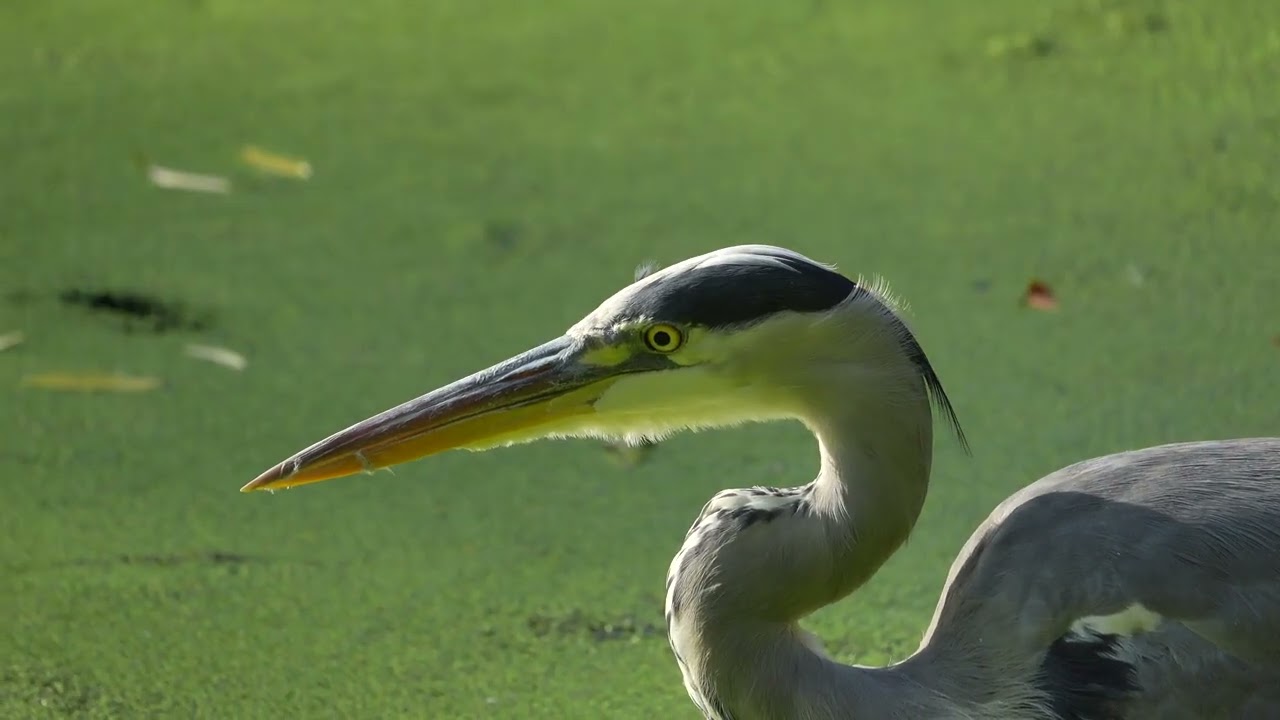
The Sony RX10 V is a competent hybrid camera, capable of recording 4K or FHD video at 60fps, and slow-mo 4K video at 120fps — the Nikon Coolpix P1100 can shoot 4K video at 30fps only. You can see a compilation of clips filmed at 4K/60fps above. I think the video looks great. Movement is fluid and smooth, while all the subjects remain in focus. The clips are fairly stable and not too shaky given that I was shooting handheld.
Similar to Sony’s vlogging cameras, you also get S-Log3 which captures a wide dynamic range, making it easier to color grade in post-production. If you want straight-out-of-camera slow-mo video, the camera’s slow-and-quick (S&Q) mode captures already slowed video (without any audio) which can be shared instantly without any need for editing in post.
Sony RX10 V review: Battery life

Unlike the NP-FW50 battery pack used by the Sony RX10 IV, the Sony RX10 V utilizes the NP-FZ100 battery pack. It’s the same battery used by the likes of the Sony A1 II and the Sony A7 V. Thanks to the NP-FZ100 battery, the RX10 V now lasts longer than the RX10 IV. It’s CIPA-rated for 630 shots (versus 400) when using the monitor or 570 shots (versus 370) with the EVF.
CIPA testing is conducted under strict conditions and the ratings are usually conservative. More often than not, your camera will last you longer in the field. In my testing, I was able to get over 3,000 shots, which included a mix of burst sequences and RAW images, and I walked away with just under 50% battery. Take this with a pinch of salt, though, as your mileage will vary depending on your settings and shooting conditions.
The RX10 V lasts much longer than the Nikon Coolpix P1100 which is CIPA-rated for just 260 shots, and the Panasonic Lumix DMC-FZ2000/FZ2500 which yields 270 shots on a single charge. The RX10 V also upstages mirrorless beasts, like the Sony A1 II (520 shots) and the Canon EOS R6 Mark III (620 shots).
Sony RX10 V review: Verdict

If you want a powerful bridge camera that feels like a mirrorless camera, I can’t recommend the Sony RX10 V enough. It packs a long-reaching lens with a 25x optical zoom, letting you get close-up shots of far-away birds. The RX10 V feels sublime to use and handle, thanks to improved ergonomics and controls. It’s got long battery life to boot, too.
What makes the RX10 V worth the premium is its fantastic and accurate autofocus, as well as 30fps blackout-free high-speed drive. Combined, both of these features make the RX10 V a formidable camera for sports and wildlife photography — or videography, as the camera is capable of recording 4K/60fps video.
While the camera doesn’t feature the best high ISO performance, given its small 1-inch sensor that can’t take on full frame beasts, this small complaint is overshadowed by everything else on offer. The RX10 V blurs the line between bridge and Sony’s Alpha lineup to deliver one of the best cameras of 2026.