Tom's Guide Verdict
The SL3-P is Leica’s most refined and well-rounded full frame camera, at the time of writing. Packing a 44MP sensor that captures highly detailed images with stunning colors, and now featuring 8K Open Gate video, the SL3-P is a powerful and capable hybrid camera. 40fps high-speed drive ensures you never miss the action, and a strong autofocus system quickly locks onto your subjects. The SL3-P also boasts strong dynamic range performance, and it’s a delight to handle. It’s one of the most luxurious cameras you can buy… if you’ve got the dough.
Pros
- +
44MP sensor for highly detailed images
- +
Leica’s best autofocus system yet
- +
40fps high-speed drive
- +
Wide dynamic range
- +
8K Open Gate video
Cons
- -
Still expensive
- -
Blackout-free EVF would have been nice
- -
Middling CIPA-rated battery life
Why you can trust Tom's Guide Our writers and editors spend hours analyzing and reviewing products, services, and apps to help find what's best for you. Find out more about how we test, analyze, and rate.
Leica continues to refine its SL-System of full frame mirrorless cameras and has now delivered its most comprehensive shooter yet. The Leica SL3-P joins the SL3 and the SL3-S, and it introduces handy upgrades that make it a capable hybrid camera. Its 44MP sensor captures beautiful images with plenty of detail, so you can easily create extreme crops. A new hybrid autofocus system and 40fps drive (fastest on a Leica camera yet) make the SL3-P great for wildlife and sports photography, too.
And that’s not all. For the first time, a Leica camera features 8K/30fps Open Gate video, and alongside that, you get up to 5-stops of IBIS, as well as strong dynamic range performance. If you can afford it, the SL3-P is one of the best mirrorless cameras you can buy.
To find out how I got on with the camera, read my full Leica SL3-P review.
Leica SL3-P review: Specs
Price |
|
Sensor |
44MP BSI CMOS full frame |
Processor |
Leica Maestro IV |
Stabilization |
5-axis IBIS, up to 5 stops |
AF system |
Intelligent Hybrid AF |
Focus modes |
Intelligent AF, Continuous AF, Single AF, Touch AF, Manual focus |
Viewfinder |
OLED EVF, approx. 5.76 million dots |
Display |
3.2-inch backlit LED touchscreen, approx. 2.33 million dots |
ISO range |
50-200,000 |
Max video resolution |
8.1K/25fps Open Gate | 8K/30fps full frame | 7.2K/30fps Open Gate | 6K/60fps |
Ports |
USB-C, HDMI Type-A, 3.5mm audio out/in, 1x CFExpress Type-B, 1x SD/SDHC/SDXC UHS-II |
Wireless/bluetooth |
Wi-Fi, Bluetooth |
Max shooting speed |
40fps (electronic) | 7fps (mechanical) |
Max shutter speed |
30s to 1/16,000s (stills, electronic) | 30m to 1/8,000s (stills, mechanical) |
Battery life (Stills, CIPA) |
383 shots | 1,431 shots (adapted shooting cycle) |
Size |
5.96 x 4.25 x 3.33 inches |
Weight |
1.69lbs (body only) |
Leica SL3-P review: Price & availability

Leica’s SL-System of full frame mirrorless cameras welcomed a new family member in June 2026. The Leica SL3-P joins the hybrid SL3 ($7,485) and the video-first SL3-S ($5,665). Though it carries a premium price tag, the SL3-P sits between both cameras with a retail price of $6,690 / £5,150.
As is the nature of Leica cameras and glass, you’ll need to splurge to get a functioning kit. For example, I tested the Vario-Elmarit-SL 28-70 f/2.8 ASPH lens which costs $2,190 at Adorama / £1,750 at Clifton Cameras. There are more expensive lenses available, but the 28-70 is a good starting point, as it’s priced similarly to many of the professional standard zoom lenses from Canon and Sony.

The SL3-P is a hybrid camera that can capture 44MP stills as well as 8K Open Gate video, so on specs alone, it competes with the likes of the Canon EOS R5 Mark II ($4,299) and the Canon EOS R6 Mark III ($2,799). You’ve also got other full frame wonders like the 50MP Sony A1 II ($6,499) which can also shoot 8K/30fps video. Price is a different matter, as the SL3-P is priced like a medium-format shooter, like the Hasselblad X2D II 100C ($7,400) or the Fujifilm GFX100RF ($4,899).
Leica SL3-P review: Design

All three Leica SL3 bodies share similar designed philosophies. The SL3-P, just like its siblings, is covered in a faux leather-like material that makes it look premium and like you’ve spent a lot of money on it (which you will have). Leica forgoes the classic red dot on the SL3-P, though, and the only branding you get is the brand’s name in big bold lettering above the sensor.

What the SL3-P does retain, though, is the ginormous sculpted grip which is spacious enough for you to wrap your fingers around. This makes the camera a joy to handle, whether you’re using it one-handed or with both.
The SL3-P’s body is slightly bigger than the base SL3 as it now measures 5.96 x 4.25 x 3.33 inches, but still weighs 1.69lbs (without cards and battery). The overall handling will naturally depend on the lens you use. The Vario-Elmarit-SL 28-70 lens I tested weighs 1.26lbs, so I didn’t find the kit too heavy or unwieldy to use.
Viewfinder

Another similarity between the SL3 and the SL3-P is the OLED EVF with a resolution of approximately 5.76 million dots. In my testing, I found it easy and reliable to look through and frame my subjects. You get a refresh rate of either 60Hz or 120Hz which can be changed via the camera’s menu system. 120Hz is more than sufficient for most kinds of photography, including tracking fast-moving subjects like birds or sportspersons — it will naturally have a detrimental effect on the battery life, though.
But I have the same complaint I had with the SL3: I wish the SL3-P’s viewfinder had a higher resolution, especially for the price. The SL3-P’s EVF resolution is the same as that of the Canon EOS R5 Mark II, the Hasselblad X2D II 100C, and the Fujifilm GFX100RF. However, the Sony A1 II and A7R VI have 9.44-million dot EVFs, which are phenomenal, and help make the most of their high-res sensors when focus checking.
The SL3-P is, essentially, another version of the SL3, so I can understand why Leica has kept the same viewfinder — perhaps we’ll see a better one on the next standalone camera, as and when it comes. SL4th time’s the charm?

Even though Leica has added 40fps burst shooting to the SL3-P — up from 15fps on the SL3 and 30fps on the SL3-S — the EVF isn’t blackout-free. This means that, when viewing and photographing subjects through the EVF, you get short black screens between shots. When you’re shooting at a blistering 40fps, you won’t always notice them, but this will certainly be an issue for professional wildlife and sports photographers. If you’re one of those people, you may want to grab the Sony A1 II or the Sony A7R VI ($4,499), both of which boast blackout-free sequential shooting.
Monitor / Displays

The SL3-P sports dual displays. You get a 3.2-inch backlit LED touchscreen monitor on the back, with a resolution of 2.33 million dots — almost as much as the Hasselblad X2D II 100C (2.36M dots) and higher than the Canon EOS R6 Mark III (1.6M dots). In most lighting conditions, I’ve found it plenty bright and easy to read, even in direct sunlight. Similar to the SL3, the SL3-P’s monitor features an anti-fingerprint and anti-scratch coating — reassuring given how much this camera costs.
Similar to the Hasselblad X2D II 100C’s monitor, the SL3-P’s rear display can be tilted up and down by 90°, enabling you to shoot at awkward angles, such as with the camera at your hip — great for street photography when you want to capture candid moments without drawing attention to yourself.

Then you’ve got a 1.28-inch top display, located next to the dials on the top plate’s right-hand corner. This screen shows your active settings: shutter speed, ISO, aperture, AF mode, and so on and so forth. Its trans-reflective monochrome design makes the display easy to read, especially outdoors. You’ll find a similar display on the Hasselblad X2D II 100C, too.
Ports

There are barely any differences, if any at all, between the ports on the SL3-P, SL3 and SL3-S. Located on the camera’s left edge, you’ll find HDMI 2.1 Type-A, USB-C for charging and data transfer, and 3.5mm audio output and input ports. All of these do their job as intended.

On the left edge, you’ll find slots for SD/SDHC/SDXC UHS-II/UHS-I as well as CFExpress Type-B cards. I shot on the Lexar 128GB Gold Series ($198) which boasts up to 1750MB/s read and 1500MB/s write speeds. CFExpress support is welcome, as these cards ensure faster read and write speeds versus SD cards, which is needed for the 44MP files as well as sustaining the 40fps drive. You can essentially shoot for longer before filling buffers.
Weather-sealing

Just like the SL3 and the SL3-S, the SL3-P is IP54-rated, which means it’s protected against dust, moisture and light rain. That’s thanks to an entirely sealed full-metal housing. This is similar weather-sealing you’ll find on the Canon EOS R5 Mark II and the Sony A1 II. Meanwhile, the Hasselblad X2D II 100C isn’t fully weather-sealed, so the SL3-P has the upper hand here.
Obviously, you'll need to ensure you're using a weather-sealed lens for any of that to matter. The Vario-Elmarit-SL 28-70 f/2.8 ASPH I tested is, in that regard, weatherproof.
Leica SL3-P review: Controls

The Leica SL3-P is basically the SL3 but more refined and well-rounded, and it sports practically the same control scheme you’ll find on the base model. By that I mean it’s stripped-back, keeping in line with Leica’s minimalist ethos.
I’ve loved using the SL3-P as much as I did the SL3. The buttons and dials feel well-placed and within easy reach, and they add to the sublime user experience. I’m happy to see the rubber-covered joystick make an appearance on the SL3-P too, as it feels comfortable to use for long periods of time. I’ve found it more enjoyable to use than the textured joysticks on the Canon EOS R5 Mark II and the Sony A1 II.

Leica’s menu system deserves a shoutout too, as it’s uncomplicated and effortless to navigate. The eight settings tiles can be customized to complement six customizable physical buttons, which makes the camera highly personalizable. And it doesn’t stop there. The SL3-P features six customizable profiles for photo and another six for video, making the camera ideal for hybrid shooters.
Leica SL3-P review: Autofocus

One of the biggest upgrades to the Leica SL3-P comes in the form of a new autofocus system. In addition to utilizing a combination of phase-detection for speed and contrast-detection for accuracy, like the SL3, the SL3-P also uses depth mapping. It borrows depth mapping from the Leica Q3 43 ($7,380), and it basically builds a 3D digital map of subjects to instantly lock onto them, regardless of unpredictable movements.
The result is an intelligent AF system that quickly detects and locks onto birds, animals, and humans. You can choose from Single AF (AFs), Continuous AF (AFc) and Manual Focus, or you can select Intelligent AF where the camera will decide whether to use AFc or AFs — handy for when you’re photographing sports or wildlife, or when you know your subject’s movements can be unpredictable.


The SL3-P’s autofocus worked extremely well in my testing, regardless of the subject I was photographing or the lighting conditions. When subject detection is set to Human Eye/Body, the camera cycles through the subject’s different body parts. If it can’t find eyes, for instance, it’ll look for the face, then the whole body, in a similar way to AF systems from other manufacturers. It worked effectively when I photographed my friends at a birthday party. In the photos in the gallery above, the SL3-P was quick to lock onto their eyes and faces, and the resulting images are crisp and sharp.


Animal/bird detection works just as well, too, making the SL3-P a formidable wildlife camera. Whether I was capturing birds in flight, while they were diving, or when they were stationary, the camera never let me down. In the first photo in the gallery above, even though the moorhens were slightly obscured by the grass, the SL3-P quickly locked onto them.
The second photo of the duck was taken in burst mode (more on that shortly) and I’d been tracking it as it dove underwater and then broke the surface, and the SL3-P locked onto it as soon as it came back out. I was also impressed by the SL3-P locking onto the heron’s wing in the third slide, and I was able to capture an in-focus shot of the park’s resident elusive bird.

I found the SL3-P’s focus joystick extremely responsive in my testing too. Like I mentioned earlier, it’s comfortable, and it promptly registers your commands. I’ve used it plenty of times to reset focus points, or focus on particular subjects — like the second pigeon flapping its wings in the photo above.
Leica SL3-P review: Stabilization


The Leica SL3-P retains the SL3’s 5-axis in-body image stabilization (IBIS) and offers up to 5-stops, enabling you to capture images at slow shutter speeds and in low-light environments. The Vario-Elmarit-SL 28-70 lens I tested doesn’t feature stabilization so I had to rely on the camera’s IBIS when taking photos at slow shutter speeds.
In the gallery above, the first image was captured at 1s and it’s sharp and stable, with no blurry edges. Any slower than that, such as at 1.5s in the second slide, and the images came out blurry, impacted by camera shake. I’ve been satisfied with this performance. For a frame of reference, on a camera with up to 8.5-stops of IBIS, like the Canon EOS R6 Mark III, I’ve been able to shoot at speeds as slow as 4s.
Leica SL3-P review: Image quality

I can’t remember the last time I complained about a Leica’s imaging prowess — that’s because I’ve never done so. It’s really difficult to fault it, and the Leica SL3-P is no different. The camera packs a 44MP BSI CMOS full frame sensor. That’s down from 60.3MP on the SL3 (and up from 24.6MP on the SL3-S) but remember, the SL3-P introduces features like 8K Open Gate as a trade-off, which I’ll discuss in detail shortly.


Working in conjunction with the Leica Maestro IV processor, the photos the SL3-P captures are nothing short of spectacular. Colors are vibrant and bright without appearing oversaturated or too heavy in contrast, and they appear true to life. I love how much detail the SL3-P’s sensor captures, especially when you’re using a sharp lens like the Vario-Elmarit-SL 28-70 f/2.8 ASPH. with it. The water droplets on the swan’s head and the individual feathers in the first image, for instance, appear extremely sharp, adding depth and texture to the image.


The SL3-P’s 44MP sensor provides plenty of resolution, especially for making tight crops. In the gallery above, the first image is an extreme crop of the second, and the third of the fourth. As you can see, I’ve been able to crop in a lot without losing much detail. The pigeon’s feathers and face still look sharp, and the clock’s features and the bricks surrounding it appear detailed.


Similar to many other Leica cameras, the SL3-P features a few Leica Looks or color profiles, including Natural, Vivid, Monochrome, and Monochrome High Contrast. Monochrome High Contrast is my favorite, and I like it almost as much as Fujifilm’s Acros black-and-white film simulation. The first two photos in the gallery above were captured in this filter, and I love how cinematic the photos look with deep blacks. It’s the perfect color profile for portraits.
The third photo was captured in the Monochrome profile, and it appears more flat and balanced, making it great for architecture and street photography. The final photo of the fern leaves was shot in Vivid, and it made the greens look more saturated and high on contrast, and that’s given the image a three-dimensional effect.
Just like on the SL3-S, you get access to Multishot Mode on the SL3-P too. The camera uses pixel-shift technology to produce an image that’s four times larger than the sensor. Basically, it takes eight to 16 individual frames and stacks them to create a 176MP image. If you’re taking photos with the SL3-P mounted on a tripod, this is a fantastic feature to have, especially for portraits and product photography. Naturally, these files are massive, with a JPEG around 230MB, and due to website limitations, I unfortunately can’t show you how detailed they look.
High-speed drive


40fps high-speed drive is one of the SL3-P’s headline features, and as I mentioned earlier, it’s up from just 15fps on the SL3 and 30fps on the SL3-S. The 40fps sequential images are captured in 12-bit color depth, which means they comprise over 68 billion shades. If you want 14-bit color depth, you’ll need to drop the frame rate to 25fps.
Being able to capture 40 frames per second is enough for photographing most wildlife and sports, at least at an amateur or hobbyist level. Obviously, though, pros may need more than that, like the 120fps drive offered by the Sony A1 II or OM System OM-1 Mark II ($2,399). I found 40fps more than sufficient in my testing. The electronic shutter with its faster shutter speed of 1/16,000s gave me plenty of wiggle room too.


Thanks to 40fps sequential shooting and the reliable autofocus, I was able to capture many photos of birds in action, like the two photos of the seagulls fighting over a piece of bread. The camera was quick to focus and lock onto them. As the seagull on the right started to fly away, I started tracking it and the SL3-P, again, kept focused on the bird.


It’s important to note that unlike professional wildlife or sports cameras like the Canon EOS R5 Mark II, Sony A7R VI or the Sony A1 II, the SL3-P doesn’t feature pre-burst capture, where the camera starts buffering images when you half-press the shutter button. If you’re a professional, you may want to consider either of those cameras. For hobbyists, though, the SL3-P should suffice.
ISO performance


The SL3-P has an ISO range of 50 to 200,000, and the top-end of that range is double that of the SL3’s (100,000). Instead of capturing RAW files, the SL3-P captures DNGs alongside JPEGs, and these files are 15-20% smaller than RAW files. The difference is hardly noticeable though.
Images are as noise-free as you’d expect at ISO6400, so let’s talk about high ISO values instead. The images in the gallery above were shot at ISO12,500: the first is a JPEG export of the DNG file while the second is the straight-out-of-camera (SOOC) JPEG. As you can see, the DNG file is fairly noisy but the SL3-P has done a good job of reducing the grain, and there’s very little loss in sharpness either.


I then increased the ISO to 25,000 and the camera still did a decent job of smoothening out the noise in the SOOC JPEG (second slide). But you start to lose a little sharpness here, as can be seen in the bobblehead’s chin and the sculpted creases in its trousers. It’s still a usable image, though.


I wouldn’t really recommend pushing past ISO32,000 on the SL3-P. The images above were shot at ISO32,000, and as you can see in the SOOC JPEG (second slide), the edges of the bobblehead’s hair don’t look as sharp anymore. The book in the background is quite noisy too. This is similar to the Sony A1 II’s and the Canon EOS R5 Mark II’s high ISO performance.
Dynamic range


One of the things I was most impressed by when testing the SL3 was the camera’s dynamic range performance, and the SL3-P hasn’t let me down either. Offering up to 14+ stops at base ISO50, the SL3-P enables you to make extensive adjustments in post-production.
The first photo in the gallery above is the unedited version of the second. It was an extremely bright day and the flowers were backlit by the sun. I brought the highlights all the way down and lifted the shadows in Adobe Photoshop Lightroom, and as you can see in the second slide, the camera’s done a great job of retaining highlight detail. The clouds in the sky don’t appear blown out and reducing the highlights has revealed a spot of blue sky. I like that the flowers still look lovely and pink, even in the edited image.


The SL3-P keeps shadows noise-free too, as you can see in the gallery above. When I boosted the shadows and reduced the highlights, it revealed many details, such as the shrubs and bushes down the path, and leaves and branches in the tree closest to the camera.
Leica SL3-P review: Video

Striking a balance between the SL3 and the video-first SL3-S, the Leica SL3-P packs impressive video capabilities. You can shoot 8.1K/25fps Open Gate video in 3:2 format, HDMI RAW 8K Open Gate, and 8K/30fps using the full size of the sensor. There’s also 6K/60fps for smooth motion as well as 4K/120fps for slow-mo footage.
All of these resolutions and frame rates are recorded in 4:2:2 10-bit (in MOV) which means the camera can capture 1.07 billion individual hues. Leica has also added two new in-camera LUTs, Leica Pure and Leica Cinema, for the L-Log color space, giving you lots of freedom in post-production and color grading. An important distinction between the SL3-S and the SL3-P is that the former can shoot ProRes RAW, making it a strong choice for professional video work.
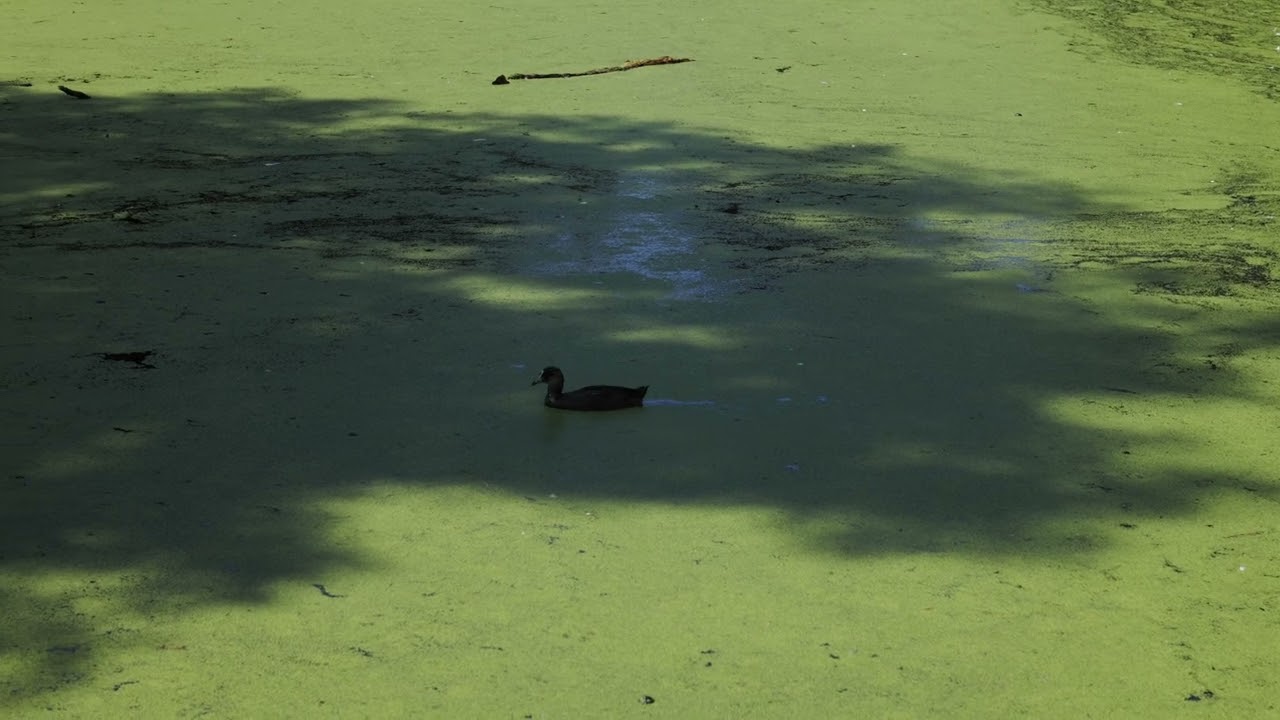
The compilation of clips above was shot in 4K at 60fps, and it looks beautiful. The colors look great; all the subjects are in focus thanks to the SL3-P’s excellent autofocus; and the video looks smooth throughout. I also like that even though the wind was blowing, there’s no noticeable buffeting, and the SL3-P’s built-in mic has done well to record the birds chirping or squawking.
I was also impressed with the SL3-P’s cooling system. I didn’t experience any severe overheating while recording at 4K/60fps outdoors. 8K Open Gate takes a toll on recording times, though, and Leica says the SL3-P can record for approximately 20 minutes at 77°F / 25°C. You may want to consider the Leica SL3-S instead if you’re a videographer, as it can typically expect 45 to 60 minutes of continuous 6K recording.
Leica SL3-P review: Battery life

Leica has made improvements to its SL-System’s battery life as the SL3-P is now CIPA-rated for 383 shots — up from 260 shots on the SL3. When using Leica’s adapted shooting cycle, the German manufacturer claims the camera’s BP-SCL6 battery pack can yield 1,431 stills.
In my testing, I was able to capture over 2,000 photos (including burst shots) and a few minutes of 4K/60fps video before needing to charge the camera. Your mileage will, of course, depend on your shooting settings, so it’s best to take the CIPA rating as the baseline.
The SL3-P’s CIPA-rated battery life puts it on a level playing field with the Canon EOS R5 Mark II (340 shots). The Sony A1 II and the Sony A7 V can still last longer, with 420 and 630 CIPA-rated batteries respectively. Meanwhile, the Hasselblad X2D II 100C is CIPA-rated for 466 frames, and we managed 246 shots (RAW + JPEG) from around 55% of battery in our testing.
Leica SL3-P review: Verdict

The Leica SL3-P is the most complete SL-System camera Leica has produced to date, and it successfully blends high-resolution photography with advanced video capabilities. Its 44MP full frame sensor captures stunning images while retaining plenty of detail, and there’s enough resolution for aggressive cropping, too. The new hybrid autofocus system and 40fps burst shooting make it more than capable for wildlife, sports and action photography.
In addition to all this, the SL3-P delivers strong dynamic range performance, dependable in-body image stabilization, and videographers will appreciate the 8K Open Gate capabilities. The premium build quality, intuitive controls, and the refined shooting experience reinforce the SL3-P’s appeal.
As is the nature of Leica cameras, the SL3-P doesn’t come cheap, but it’s priced similarly to pro snappers from Canon and Sony. Professional photographers may be put off by the lack of a blackout-free EVF, too. But if these are compromises you’re willing to make, the SL3-P’s strengths are far too many to be overlooked. It’s an exceptional camera and it finally puts Leica on a level playing field with Canon and Sony.