Google spent much of Google I/O 2026 making it clear that AI is now the future of search. But according to DuckDuckGo, not everyone is thrilled about it.
The privacy-focused search company says it saw a significant spike in installs and traffic following Google’s developer conference, particularly among users looking for ways to avoid AI-generated search features altogether.
According to data shared with us by DuckDuckGo, U.S. installs increased an average of 18.1% week-over-week between May 20 and May 25, with growth sustained for six straight days and peaking at 30.5% on May 25.
The company says iOS growth was even stronger, averaging 33% week-over-week and peaking at nearly 70% on May 25.
Meanwhile, visits to noai.duckduckgo.com — DuckDuckGo’s version of search with all AI features disabled by default — rose an average of 22.7% week-over-week, peaking at 27.7% on May 24.
The timing is hard to ignore
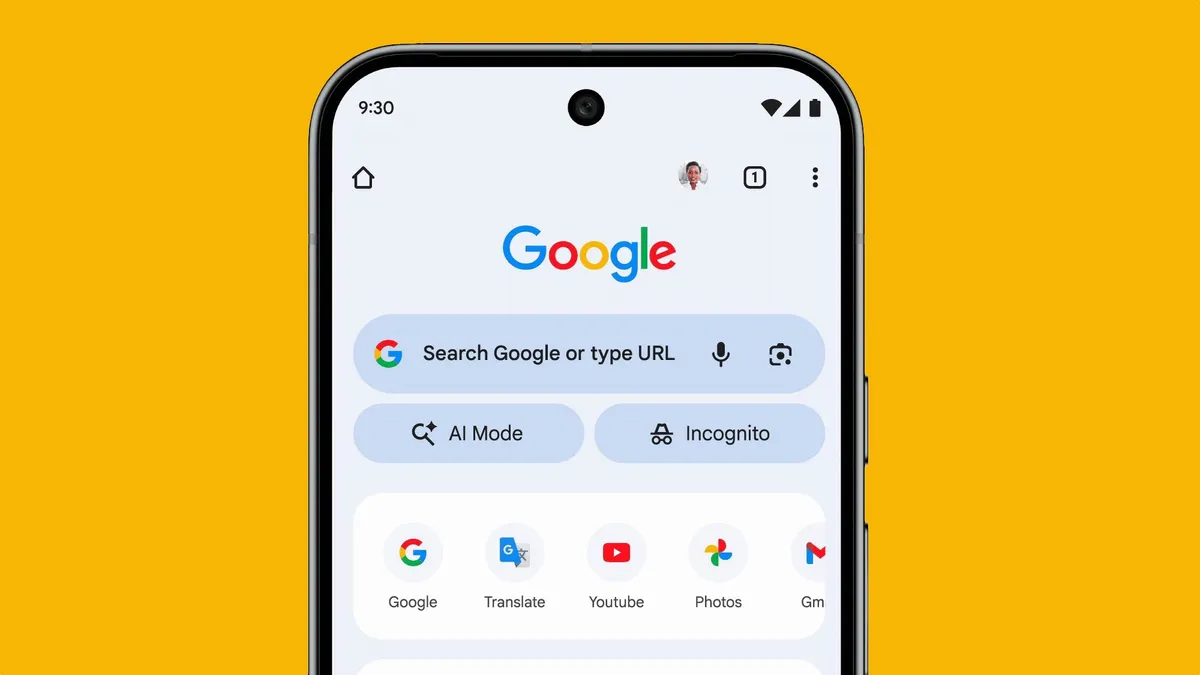
At Google I/O, Google doubled down on AI-powered search experiences, including expanded AI Overviews, conversational AI search tools and deeper Gemini integration across its ecosystem. Interestingly, DuckDuckGo says U.S. growth dramatically outpaced international markets immediately after Google I/O, suggesting at least some users were reacting specifically to Google’s AI-heavy announcements.
“US growth ran multiples of the international rate, which suggests this is a response to Google's US-centric announcement, not a global trend,” the company said.
For some users, those changes represent the future of the internet. For others, they may represent something else entirely: a loss of control. DuckDuckGo’s messaging around the surge is interesting because the company is not positioning itself as anti-AI.
In fact, it actively uses AI in several of its own search features. Instead, the company says the issue is whether users can opt out.
Google is force-feeding AI with no way to opt out. As result, their results are getting worse, not better.
Gabriel Weinberg, founder and CEO of DuckDuckGo
“Google is force-feeding AI with no way to opt out. As result, their results are getting worse, not better,” said Gabriel Weinberg, founder and CEO of DuckDuckGo.
“We want to be the place that puts users in charge and allows them to decide how much or how little AI they want. That's why we're seeing a spike in people coming to DuckDuckGo this week, it's as simple as that.”
Weinberg also emphasizes privacy concerns, saying DuckDuckGo does not collect search histories or chats for AI training. The company’s communications chief, Kamyl Bazbaz, argued that users are embracing AI features selectively rather than rejecting them outright.
“One of the most popular search features we’ve launched in years is a filter that removes AI images from image results,” Bazbaz said.
“The other most popular feature? Search Assist, which uses AI to anonymously generate answers to search queries at the top of the search page. People just want a choice.”
AI search backlash may be becoming mainstream
Until recently, most criticism of AI-heavy search experiences came from publishers, artists, regulators and privacy advocates. But the broader public conversation appears to be shifting to every day users.
From AI-generated slop and hallucinations, inaccurate summaries and the increasingly synthetic feel of the web have become more common over the past year as companies race to integrate generative AI into search engines, browsers and operating systems.
Of course, a few days of growth doesn’t suddenly threaten Google’s dominance. But the numbers do hint at something Silicon Valley has mostly ignored so far: the simple fact that some users may not want AI injected into every search experience by default.
Let me know in the comments: Do you like Google's new AI tools in its browser?

Follow Tom's Guide on Google News and add us as a preferred source to get our up-to-date news, analysis, and reviews in your feeds. Subscribe to Tom's Guide on YouTube and follow us on TikTok.
More from Tom’s Guide