Your hips have a lot of responsibilities, from helping you walk, run, and climb to keeping your body stable and balanced during movement.
As we get older, our hips become especially vulnerable to injury or even worse, fracture. According to the CDC, there are an estimated 300,000 hip fracture-related hospitalizations each year, with senior adults who’ve experienced serious falls making up a majority of those cases.
Strengthening your hips should be a main focus for any fitness regimen, but especially if you’re over 60. As a certified personal trainer who works with a lot of seniors, I recommend these 4 resistance band exercises that target the glutes, hip abductors, hip adductors, and other important lower body muscles. They’re not only a mainstay in my clients’ routines, but my own as well.
How to do the 4 resistance band hip exercises
These exercises are appropriate for most fitness levels and abilities, but you should always get clearance from your doctor before trying any new activity. Beginners should consider meeting with a certified personal trainer to ensure correct exercise form and execution. A trainer can also provide modifications, progressions, or alternative exercises if necessary.
You’ll need a moderately-heavy looped resistance band, a yoga mat, and a little bit of space to move for this workout. If you have balance issues, you may also want a chair nearby.
Start by doing 1-2 sets of 10-12 reps for each exercise. If you’re unable to complete at least 10 reps before needing to rest, choose a lighter resistance band. If you can perform 12 reps without feeling fatigued, choose a heavier resistance band.
After a few weeks, you can add a set and increase your reps to 15. You may also choose to work with a heavier resistance band as you build strength. Aim to complete this workout three times per week, either on its own or as a part of a more comprehensive lower-body routine.
The exercises are:
1. Banded clamshells
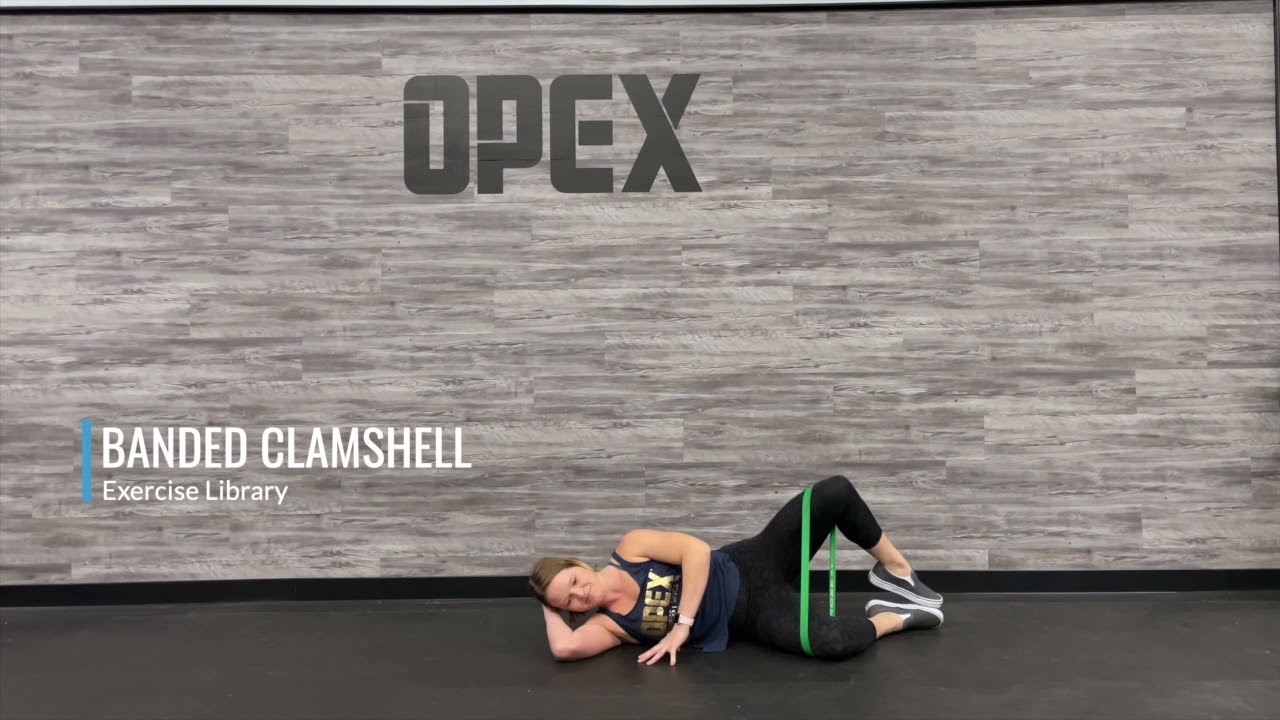
- Place a looped resistance band around your legs, slightly above the knee.
- Lie on a yoga mat on your right side. If you’re unable to get onto the floor, lie on your bed or couch instead.
- Bend your knees and bring them in front of you, aligning your heels with your tailbone.
- Engage your core.
- Rotate your left knee towards the ceiling, keeping your feet stacked on top of each other.
- Pause briefly.
- Lower your left knee back to the starting position.
- Continue for 10-15 reps, then repeat on the other side.
2. Banded lateral walks
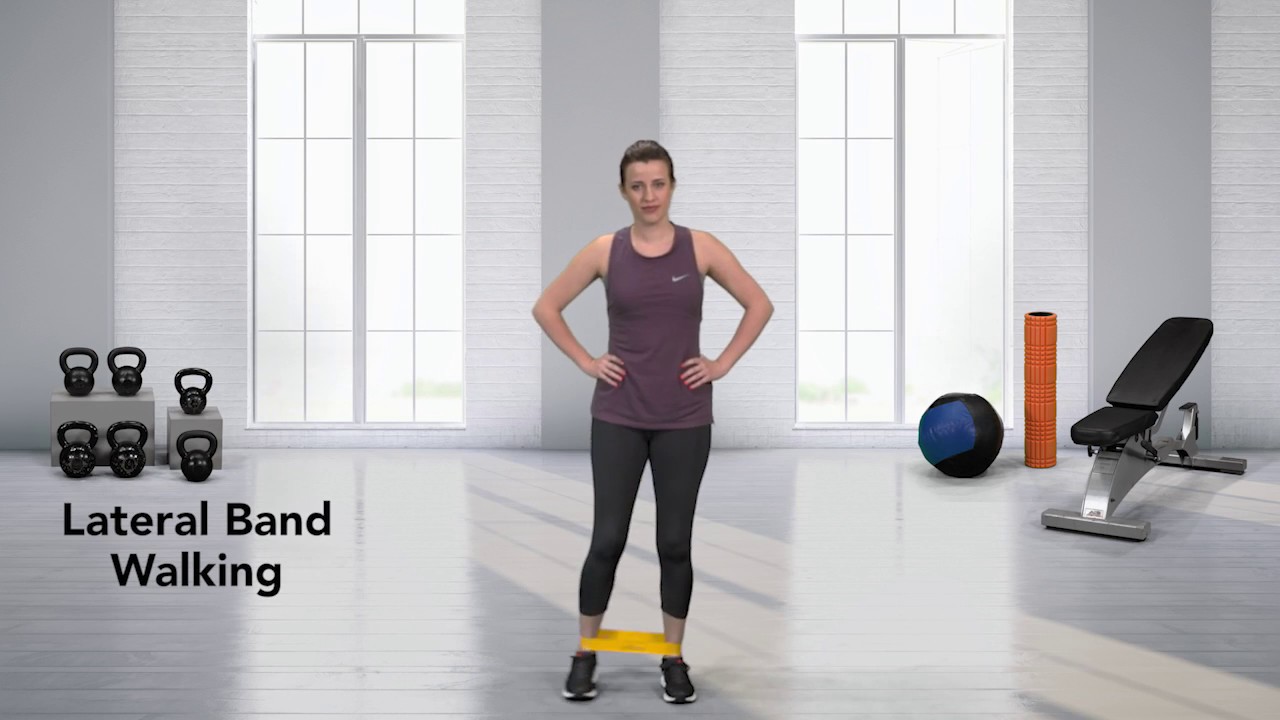
- Place a looped resistance band around your ankles.
- Stand tall and engage your core.
- Step your left foot to the left, keeping your toes pointed forward.
- Follow with your right foot.
- Continue stepping to your left for 10-15 reps (or until you run out of room), then repeat in the other direction, stepping your right foot to the right and following with your left foot.
3. Banded glute kickbacks
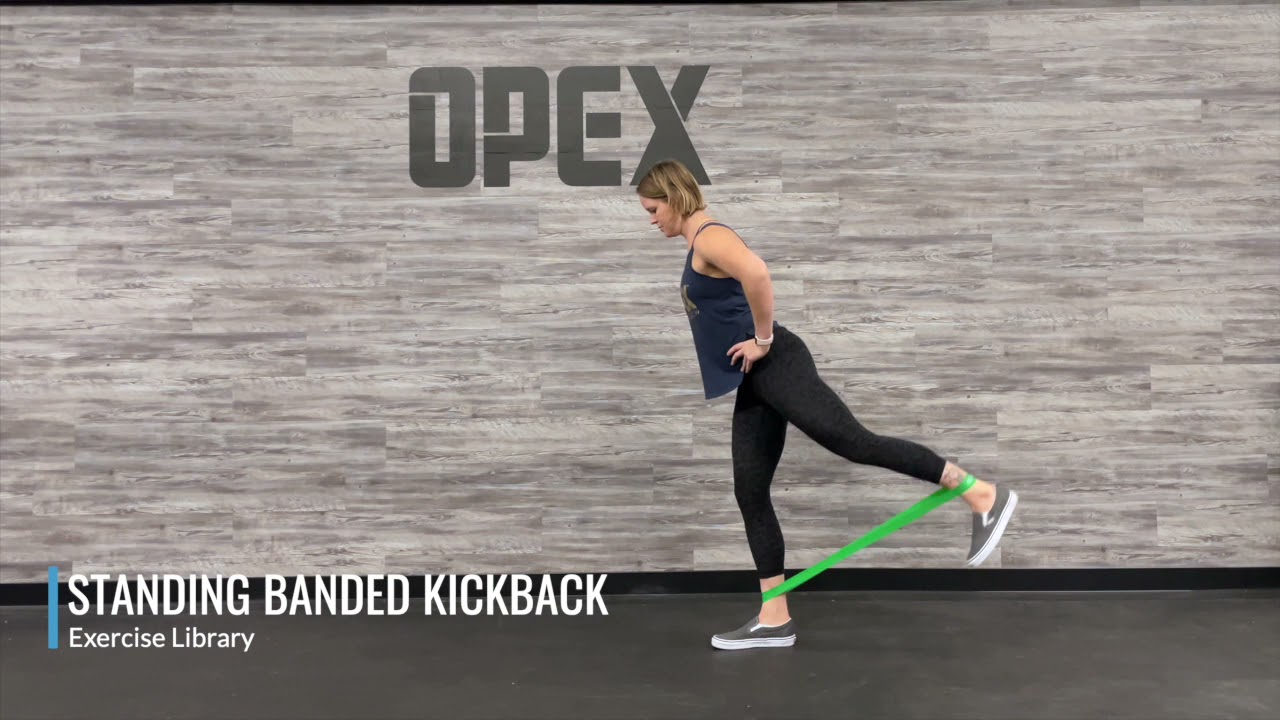
- Place a looped resistance band around your ankles.
- If you have balance issues, place your hands on the back of a chair or against the wall for additional support.
- Stand tall and engage your core.
- Squeeze your glutes and kick your left heel behind you.
- Pause briefly.
- Bring your left foot back to the starting position.
- Continue for 10-15 reps, then repeat on the right side.
4. Banded squats
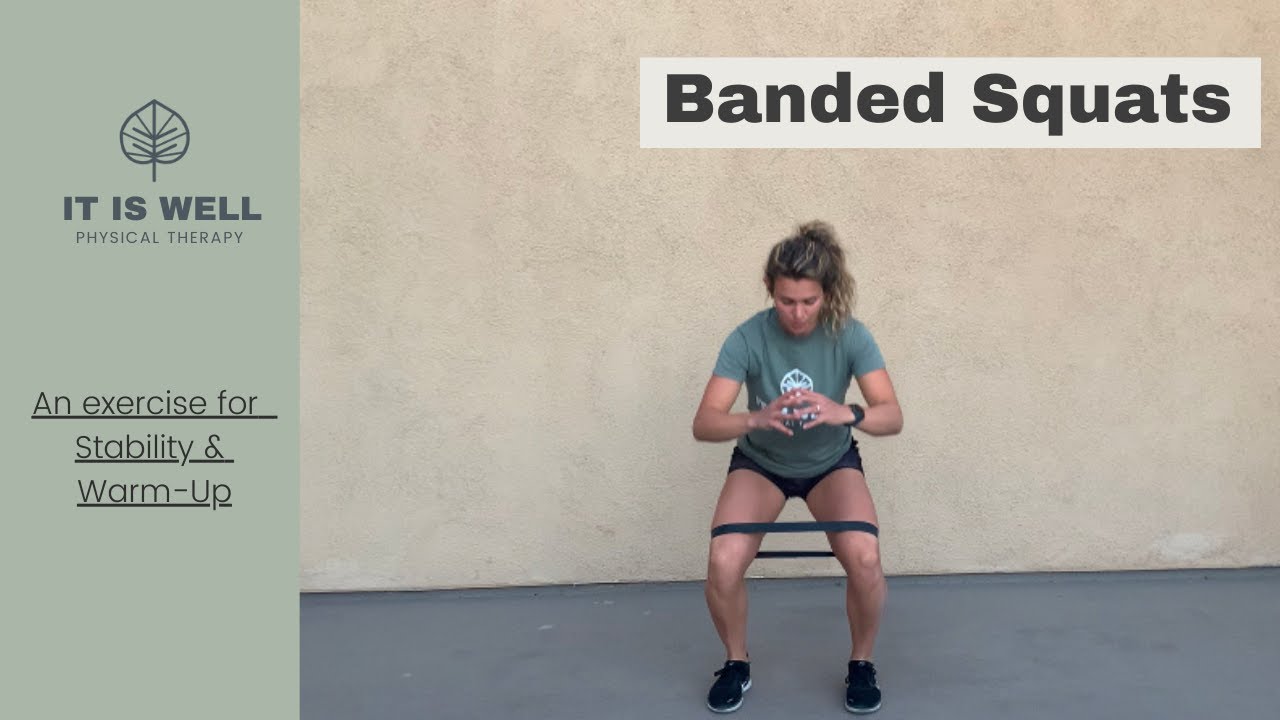
- Place a looped resistance band around your legs, slightly above the ankle.
- Stand tall and engage your core.
- Press your knees against the band to create tension.
- Hinge your hips behind you, as if you were about to sit down.
- Bend your knees and lower your tailbone towards the floor.
- Once you’ve reached the end of your range, stand back up.
- Continue for 10-15 reps.
- If you have any mobility issues or knee injuries, place a chair behind you, sit all the way down, then stand back up again.
Benefits of the resistance band exercises
These exercises effectively target the glutes and hip abductors – muscles that are responsible for stabilizing the pelvis and facilitating lower body movement. Everyday activities like walking, running, climbing stairs, and getting up from a seated position are easier when these muscles are strong and conditioned.
The glutes and hip abductors also play a huge role in overall balance. Since serious falls often result in hip fractures, having strong glutes and hip abductors can safeguard your full body stability and lower your risk for injury.
The banded squat exercise targets the quadriceps, hamstrings, and hip adductors as well. The squat is a functional movement that mimics getting up from a seated position, and the use of a resistance band forces your hip abductors to engage and keep the knees in a neutral position.

Follow Tom's Guide on Google News and add us as a preferred source to get our up-to-date news, analysis, and reviews in your feeds.
More from Tom's Guide
- I’m a physical therapist who works with seniors: Here are the 5 bodyweight exercises I recommend
- No, not planks! I'm a personal trainer for seniors, and these are the 4 best exercises you can do for core stability at every age
- Over 60? I’m a personal trainer, and these 3 floor exercises will show you how strong your core is