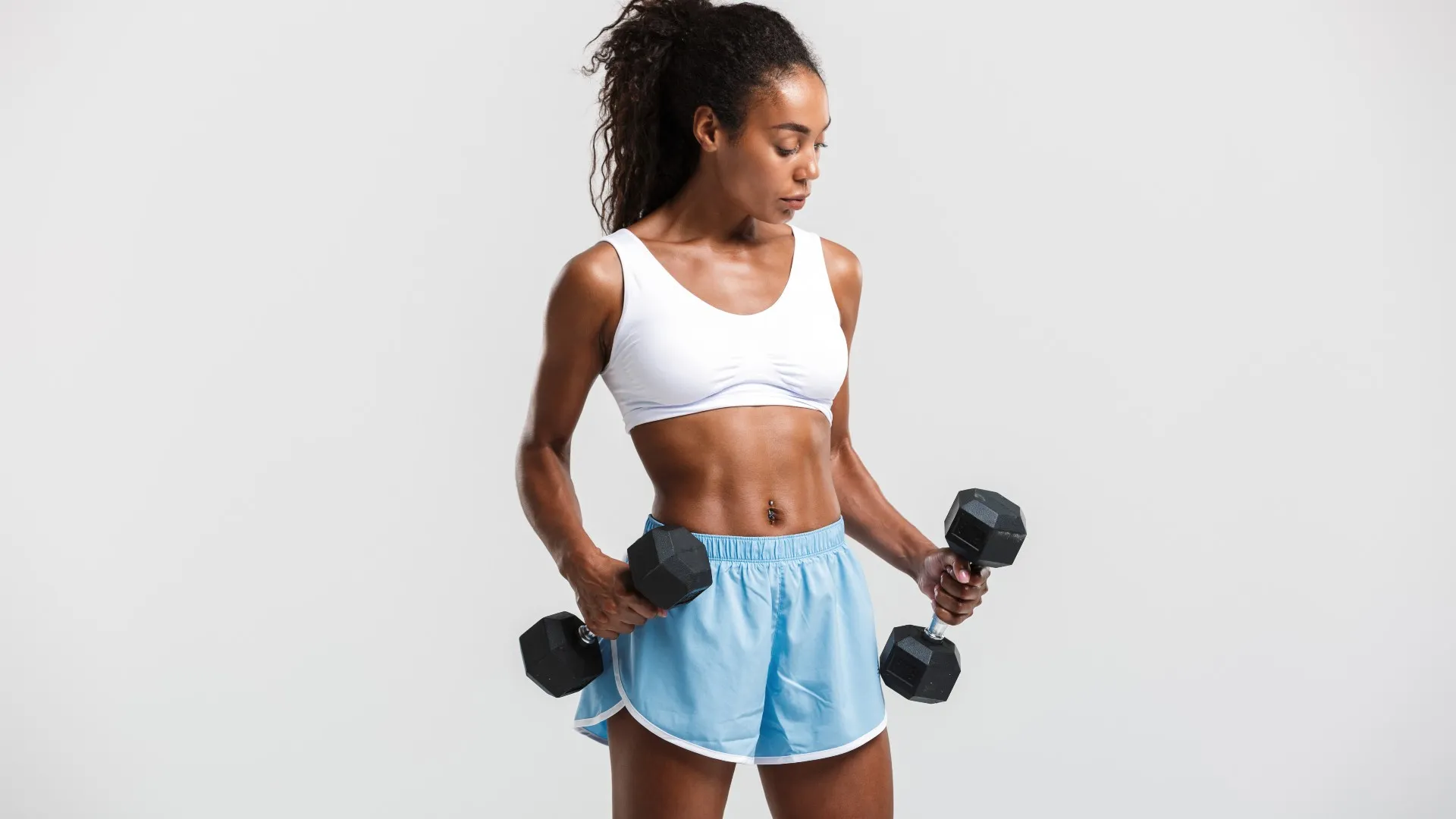
It can be intimidating swiping through social media and catching a glance at all those challenging dumbbell workouts promising a snatched waist or torched abs. I know, because despite working in this industry, I feel the same way.
However, my goal as a trainer is to make people feel good as a priority, with looking good as an added benefit. For that reason, I like to encourage people from all walks of life to enjoy core workouts.
This routine is beginner-friendly and perfect for those with limited mobility, which means you won't spend this dumbbell abs workout getting up and down or moving around your mat loads.
You just need a light set of weights (you can go heavy if you wish), and I recommend the best adjustable dumbbells so that you can adapt as you go. But that's optional. Equally, you can work with your bodyweight.
Check out the routine below, and it only has three moves.
Watch: 3-move dumbbell abs
You can do more for less by getting clever with your programming — prioritizing the “bang for your buck” exercises while limiting the amount of time you spend moving around your mat.
For this abs workout, try to focus on the quality of your movements and engage your core muscles, rather than testing how heavy you can lift. As you move, think about drawing your navel in, directing your breath toward your stomach to help engage your diaphragm and bracing your stomach as if you're waiting for an impact.
I put together a quick 5-minute bracing routine here if you need further guidance.
This is all about creating and holding tension in your core muscles, so move slowly and with control.
- Round 1: 45 on/ 15 off
- Round 2: 50 on/ 10 off
- Round 3: 20 on/10 off
- The moves: Curl-ups, Toe touches w/ leg raise, Pass-arounds
Use either one or two weights, and take extra rest if you need it. During the first round, you'll work for 45 seconds, then take 15 seconds of rest, completing all three moves; on the second round, complete 50 seconds of work, then rest for 10; the third round is 20 on and 10 off for all three exercises, then you can repeat from the top if you have time.
I strongly advise speaking with a personal trainer or medical professional if you are returning from injury, are working with a health condition, or are pregnant or post-natal.
The moves
The curl-up
Roll-ups work the spine as you use your core muscles to lift your shoulder blades and peel your upper back away from the mat, then lower again. This can improve spinal mobility. If you spend a lot of time sitting behind a desk, this is a great exercise to try.
Your deep transverse abdominis and internal obliques help you scoop up and protect your lower back. Unlike sit-ups, the eccentric contraction that happens as you lower down will help build strength and control.
Toe touches with leg raise
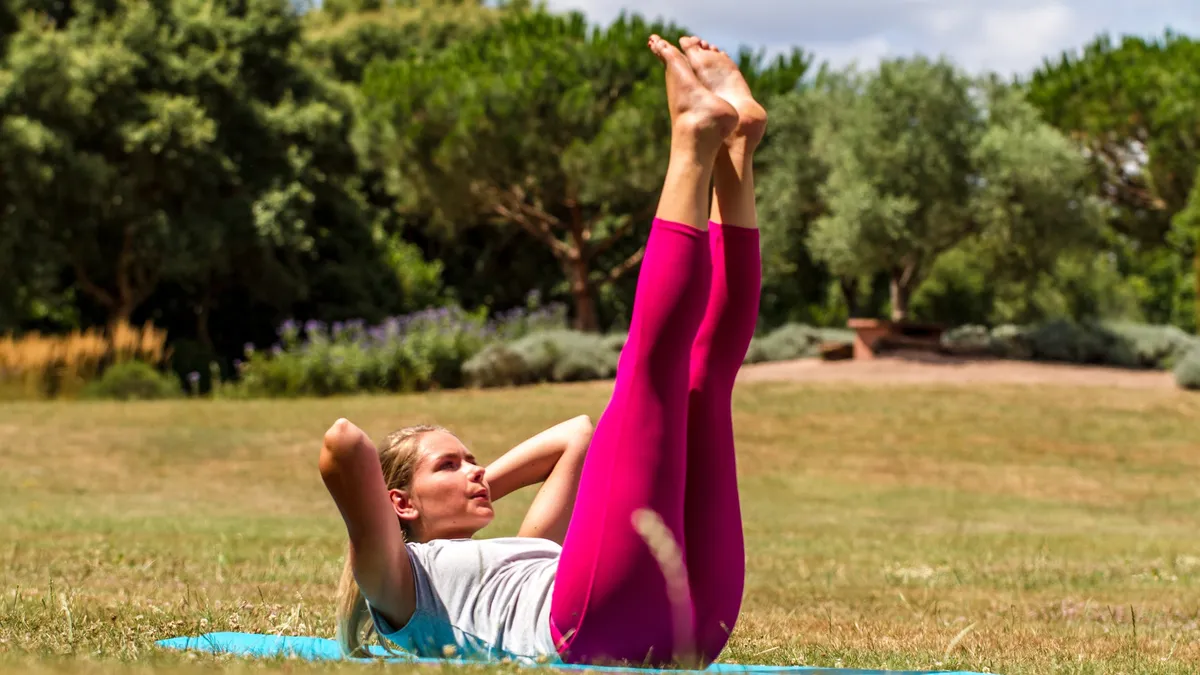
Toe touches are low-impact; your lower back stays planted on the mat as you reach your weight toward your toes. You can bend your knees if you have tight hamstrings, but keeping your legs straight will help stretch these muscles.
Leg raises stretch the hip flexors and work the deep core (internal obliques and transverse abdominis) as well as the more superficial abs (to prevent your back arching) and the external obliques. Together, these muscles use isometric contraction to stabilize the body and prevent any twisting, rotation or swaying. You'll also feel this in your quads and hamstrings.
To make the exercise more challenging, try lifting and lowering both legs at the same time, putting more tension on your core as you press your lower back down.
Pass-arounds
Finally, you'll crunch as you pass a dumbbell behind your legs in a circle, changing direction as you go. Try to keep your gaze neutral, looking ahead or slightly toward the ceiling, depending on what feels more comfortable.
Focus on squeezing your stomach to keep tension in your midsection as you pass the weight; your arms are secondary to this motion, and most of the work should be happening in your core.
To make this exercise more challenging, see if you can extend your legs and test hamstring flexibility; the higher your legs, the easier the exercise; the lower to the ground, the harder.
- Follow Tom's Guide fitness on Instagram for more workouts, routines, tips, and tricks.
More from Tom’s Guide
- Build a stronger core in just 30 minutes with this 8-move bodyweight abs workout
- I walked 3,000 steps with the Fitbit Air vs Garmin Forerunner 70 — and I’m seriously amazed by the results
- I found a stretch that feels better than pigeon pose for releasing tight hips and glutes, and it's a game-changer for me